

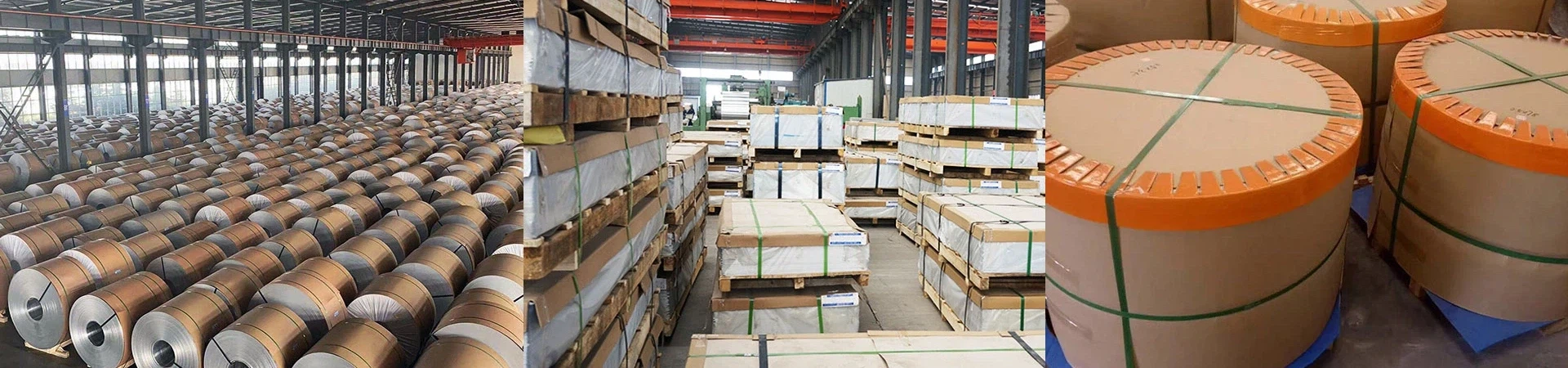
When high corrosion resistance, excellent formability, and reliable conductivity matter more than high strength, 1050 aluminum plate is a trusted choice across industries. With a purity of 99.5%, this commercially pure aluminum alloy delivers stable performance in chemical processing, food equipment, electrical systems, and heat transfer applications. Contact GNEE today to request specifications, pricing, or customized 1050 aluminum plate solutions for your project.
Overview of 1050 Aluminum Plate
1050 aluminum plate is a non-heat-treatable aluminum alloy belonging to the 1xxx series, known for its high aluminum content and minimal impurities. Although it offers relatively low mechanical strength, it can be strengthened through cold working while maintaining excellent ductility and surface quality.
This alloy is widely recognized for:
- Outstanding corrosion resistance
- High thermal and electrical conductivity
- Excellent reflectivity
- Superior forming capability
These characteristics make 1050 aluminum plate ideal for applications where durability, cleanliness, and workability are essential.
1050 Aluminum Plate Global Equivalents
International Equivalent Standards
| Region | Equivalent Grade |
|---|---|
| Europe | EN AW-1050A |
| USA | AA 1050 |
| Japan | A1050 |
Importance of 1050 Aluminum Plate Equivalents
These equivalent standards ensure global compatibility and simplify international sourcing. While minor specification differences may exist, all equivalents retain the same core properties, including high purity, corrosion resistance, and formability.
Advantages and Disadvantages of 1050 Aluminum Plate
Key Advantages of 1050 Aluminum Plate
Excellent resistance to corrosion
High thermal and electrical conductivity
Very good cold formability
High ductility for complex shaping
Limitations of 1050 Aluminum Plate
Low mechanical strength
Reduced strength at welded joints
Susceptibility to chemical attack in aggressive acidic or alkaline environments
Corrosion Resistance of 1050 Aluminum Plate
Thanks to its high purity, 1050 aluminum plate naturally forms a stable oxide layer that protects it from corrosion. This makes it well suited for applications where corrosion resistance is a critical requirement.
Environmental Performance
Excellent resistance in atmospheric conditions
Additional protection recommended for marine environments
Less suitable for strong acidic or alkaline exposure without surface treatment
Improving Corrosion Resistance
Anodizing is commonly applied to enhance corrosion protection, surface hardness, and appearance, extending the alloy's service life in more demanding environments.
Chemical Composition of 1050 Aluminum Plate
Typical Chemical Composition (%)
| Element | Content |
|---|---|
| Aluminum (Al) | ≥ 99.5 |
| Iron (Fe) | ≤ 0.40 |
| Silicon (Si) | ≤ 0.25 |
| Copper (Cu) | ≤ 0.05 |
| Manganese (Mn) | ≤ 0.05 |
| Zinc (Zn) | ≤ 0.07 |
The controlled impurity levels help maintain excellent conductivity and corrosion resistance while supporting consistent forming performance.

Physical Properties of 1050 Aluminum Plate
Typical Physical Properties
| Property | Value |
|---|---|
| Density | 2.71 g/cm³ |
| Melting Point | 643–654 °C |
| Thermal Conductivity | 222–252 W/m·K |
| Electrical Conductivity | ~62% IACS |
These properties make 1050 aluminum plate particularly suitable for lightweight structures, heat dissipation, and electrical applications.
Mechanical Properties of 1050 Aluminum Plate
Typical Mechanical Performance
| Property | Typical Range |
|---|---|
| Tensile Strength | 60–100 MPa |
| Yield Strength | ~20–30 MPa |
| Elongation | High (excellent ductility) |
High ductility allows extensive forming, bending, and drawing operations without cracking.
Forming and Machining of 1050 Aluminum Plate
Common Forming Methods
Deep drawing
Spinning
Bending and rolling
Machining Recommendations
Use sharp cutting tools and proper lubrication
Higher cutting speeds help reduce material adhesion
Cold working increases strength through work hardening
Common Applications of 1050 Aluminum Plate
-
Chemical Industry
Used for chemical containers, tanks, and equipment due to excellent corrosion resistance.
-
Food Processing Industry
Non-toxic and easy to clean, making it suitable for food containers, utensils, and packaging.
-
Heat Transfer Equipment
High thermal conductivity supports use in heat exchangers, radiators, and cooling systems.
-
Electrical Applications
High electrical conductivity makes it ideal for busbars, transformer strips, and conductors.
-
Reflective and Decorative Uses
High reflectivity suits lighting fixtures, reflective signs, and decorative panels.
1050 Aluminum Plate Tempers: H24 vs H14
1050 H24 Aluminum Plate
Partially annealed
Higher ductility
Commonly used in architectural and decorative applications
1050 H14 Aluminum Plate
Strain-hardened to half-hard condition
Balanced strength and formability
Widely used for signage, HVAC ducting, and general sheet metal work
Standard Sizes of 1050 Aluminum Plate from GNEE
Available Dimensions
| Item | Range |
|---|---|
| Thickness | 0.3 – 12 mm |
| Width | 800–2600 mm |
| Length | Up to 11,000 mm |
| Supply Forms | Plate, Sheet, Coil |
Custom cutting, surface finishing, and packaging services are available upon request.
Conclusion: Choose GNEE for High-Quality 1050 Aluminum Plate
1050 aluminum plate stands out for its high purity, excellent corrosion resistance, superior conductivity, and outstanding formability. It is a dependable material for chemical processing, food equipment, heat exchangers, electrical systems, and reflective applications. Understanding its properties, tempers, and global equivalents ensures the right selection for long-term performance and cost efficiency.
Contact GNEE today to receive expert advice, detailed technical data, and competitive pricing on premium 1050 aluminum plates tailored to your specific requirements.


