

Aluminum EN AW-1050A: Composition, Properties, Temper Guide & Applications
Looking for a high-purity aluminum alloy with excellent conductivity, corrosion resistance, and formability? GNEE, a professional aluminum material supplier, provides EN AW-1050A aluminum products in a wide range of tempers and forms to meet industrial, electrical, and architectural needs. Contact GNEE today for technical support and competitive quotations.
EN AW-1050A Aluminum Overview
EN AW-1050A belongs to the 1xxx series of aluminum alloys and is classified as commercially pure aluminum, with a minimum aluminum content of approximately 99.5%. This alloy contains only trace amounts of silicon, iron, and other elements, which helps maintain the inherent characteristics of pure aluminum. EN AW-1050A is not heat-treatable; instead, its mechanical strength is achieved through cold working (strain hardening).
Key characteristics of EN AW-1050A aluminum include relatively low mechanical strength, very high electrical and thermal conductivity, excellent resistance to atmospheric corrosion, superior cold-forming capability, and outstanding weldability.
Because of these properties, EN AW-1050A is widely used in electrical conductors, busbars, chemical and food processing equipment, reflective surfaces, architectural decoration, and thin packaging materials. Engineers typically choose this alloy when conductivity, surface quality, and formability are more critical than high structural strength.
EN AW-1050A Temper Variants and Strength Levels
Since EN AW-1050A does not respond to heat treatment, cold working is the primary method used to increase its strength. Different H-tempers represent varying degrees of strain hardening, while the O temper indicates a fully annealed condition.
- EN AW-1050A O Temper: Fully annealed, offering maximum ductility and excellent formability
- EN AW-1050A H12: Lightly strain-hardened with good forming capability
- EN AW-1050A H14: Medium cold-worked temper commonly used for sheets
- EN AW-1050A H16: Higher strength due to increased work hardening
- EN AW-1050A H18: Heavily strain-hardened for maximum strength with limited formability
- EN AW-1050A H112: Non-heat-treated condition with variable mechanical properties, often used for extrusions
As the temper designation increases, tensile and yield strength rise while elongation and formability decrease.
EN AW-1050A Chemical Composition
The near-pure chemistry of EN AW-1050A is responsible for its high conductivity and excellent corrosion resistance. Typical composition limits include:
| Element | % Range | Notes |
|---|---|---|
| Si | ≤ 0.25 | Typical impurity from processing; low enough to retain high conductivity |
| Fe | ≤ 0.40 | Main impurity; affects strength and surface finish at higher levels |
| Mn | ≤ 0.05 | Minimal; negligible strengthening contribution |
| Mg | ≤ 0.05 | Minimal; not used for age hardening in this alloy |
| Cu | ≤ 0.05 | Kept very low to preserve corrosion resistance and conductivity |
| Zn | ≤ 0.05 | Low; avoids significant galvanic effects and maintains conductivity |
| Cr | ≤ 0.05 | Trace levels; may refine grain if present |
| Ti | ≤ 0.03 | Often used for grain control in cast/extruded products |
| Others | ≤ 0.15 total | Includes trace impurities; Al remainder ≥ 99.5% |
Low alloying content minimizes intermetallic formation, preserving ductility, surface quality, and electrical performance.

EN AW-1050A Mechanical Properties
EN AW-1050A aluminum exhibits low yield and tensile strength compared with alloyed aluminum grades but offers exceptional elongation in the annealed condition. Strength increases with cold work, while ductility decreases accordingly. Hardness values are relatively low, and fatigue strength is modest, making surface condition and fabrication history important design considerations.
EN AW-1050A Typical mechanical property ranges include:
| Property | O/Annealed | Key Temper (H14/H16) | Notes |
|---|---|---|---|
| Tensile Strength | Typical 60–110 MPa | Typical 95–140 MPa | Values vary with thickness and degree of cold work |
| Yield Strength | Typical 25–55 MPa | Typical 60–120 MPa | Yield increases significantly with H-temper designation |
| Elongation | Typical 30–45% | Typical 6–20% | The annealed condition yields the highest elongation; H18, the lowest. |
| Hardness | Typical 15–30 HB | Typical 20–40 HB | Hardness rises with work hardening; surface-dependent |
EN AW-1050A Physical Properties
The physical characteristics of EN AW-1050A explain its widespread use in electrical and thermal applications:
| Property | Value | Notes |
|---|---|---|
| Density | 2.71 g/cm³ | Typical for near-pure aluminium |
| Melting Range | ~ 660 °C (approx.) | Alloy is nearly pure aluminium; narrow melting range near pure Al |
| Thermal Conductivity | ~ 230 W/m·K | High among engineering metals; dependent on purity and temperature |
| Electrical Conductivity | ~ 58–62% IACS | Very good electrical conductor; varies with temper and impurities |
| Specific Heat | ~ 900 J/kg·K | High specific heat useful in thermal buffer applications |
| Thermal Expansion | ~ 23.5 ×10 ⁻⁶ / K | Relatively high thermal expansion compared with steels |
These properties make EN AW-1050A ideal for conductors, heat transfer components, and reflective products, while requiring attention to thermal expansion in multi-material assemblies.
EN AW-1050A Product Forms
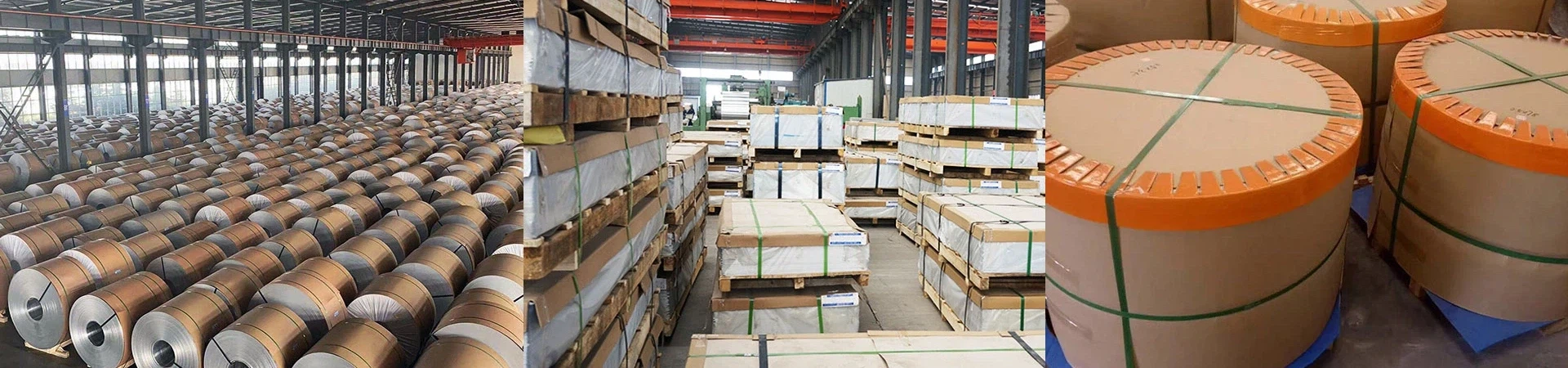
GNEE supplies EN AW-1050A aluminum in multiple product forms, including:
- EN AW-1050A Sheet: Widely used for deep drawing, reflectors, and decorative panels
- EN AW-1050A Plate: Thicker sections for corrosion-resistant components
- EN AW-1050A Extrusions: Architectural profiles and electrical busbars
- EN AW-1050A Tubes: Chemical equipment and heat exchanger applications
- EN AW-1050A Bars and Rods: Machined parts where conductivity is required
Sheets are the most common form, while extrusions and tubes often use H112 or light H tempers for dimensional stability.
EN AW-1050A Equivalent Grades
EN AW-1050A corresponds closely to several international standards:
- AA 1050A (USA)
- EN AW-1050A (Europe)
- JIS A1050 (Japan)
- GB/T 1050 (China)
Although these grades are broadly comparable, differences in impurity limits, testing methods, and surface quality requirements may exist. Certification to the specified standard is recommended.
EN AW-1050A Corrosion Resistance
EN AW-1050A offers excellent general corrosion resistance due to the formation of a stable aluminum oxide film. It performs well in indoor, rural, and mildly corrosive environments. While resistance to pitting in chloride-rich conditions is lower than that of some 5xxx series alloys, proper design and surface treatment can extend service life.
The alloy is not highly prone to stress-corrosion cracking, though heavily cold-worked areas in aggressive environments should be evaluated carefully. Galvanic corrosion should also be considered when EN AW-1050A is in contact with more noble metals.
EN AW-1050A Fabrication Characteristics
Weldability:
EN AW-1050A welds easily using TIG or MIG processes, with low risk of hot cracking. High-purity filler metals are commonly recommended.
Machinability:
Machinability is fair due to the alloy's softness. Sharp tools, positive rake angles, and proper cutting speeds help achieve good surface finishes.
Formability:
Formability is a major advantage. EN AW-1050A in O temper supports deep drawing, spinning, and tight bending radii, making it ideal for complex formed parts.
EN AW-1050A Heat Treatment Behavior
As a non-heat-treatable alloy, EN AW-1050A does not gain strength from solution treatment or aging. Annealing is used to soften cold-worked material, typically at temperatures between 350°C and 415°C. Strength adjustments are achieved exclusively through controlled cold working.
EN AW-1050A High-Temperature Performance
Mechanical strength decreases noticeably above 100–150°C. While oxidation resistance remains good, EN AW-1050A is generally not selected for sustained high-temperature structural applications. Dimensional stability can be maintained with proper thermal design and allowance for expansion.
EN AW-1050A Typical Applications
Common uses of EN AW-1050A aluminum include:
- Electrical busbars and conductors
- Chemical and food processing containers
- Architectural reflectors and decorative panels
- Packaging and food-contact materials
- Heat sinks and thermal spreaders
The alloy is favored when conductivity, formability, and corrosion resistance are more important than strength.
EN AW-1050A Selection Guidelines
Choose EN AW-1050A when your application requires high electrical or thermal conductivity, excellent surface quality, and easy forming at a competitive cost. Annealed material is best for severe forming, while H tempers provide modest strength improvements without compromising weldability. Compared with higher-strength alloys such as 5052 or 6061, EN AW-1050A sacrifices strength but excels in purity-driven performance.
EN AW-1050A Summary
EN AW-1050A aluminum remains a reliable and cost-effective solution for applications demanding purity, conductivity, corrosion resistance, and superior formability. Its predictable behavior in forming and welding makes it a practical choice across many industries.
If you are sourcing EN AW-1050A sheets, plates, tubes, or extrusions, GNEE is ready to support your project with professional advice, a stable supply, and competitive pricing. Contact GNEE today to request specifications, samples, or a customized quotation.


