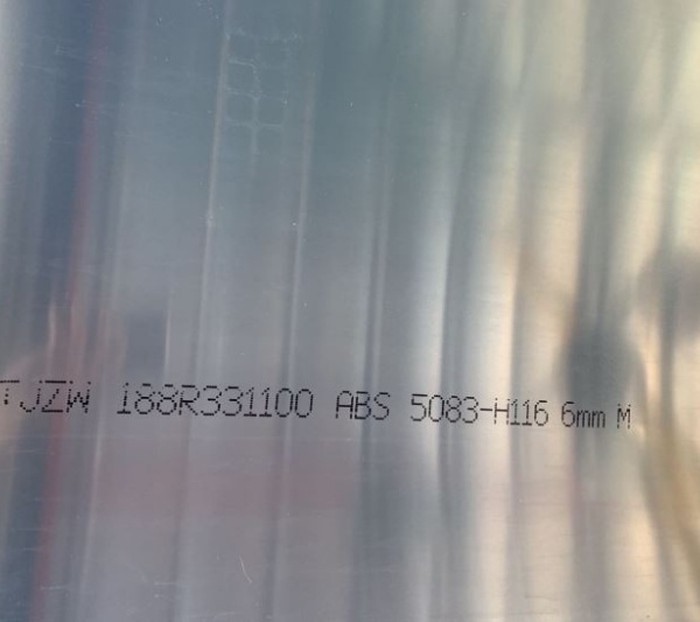

In marine engineering and offshore applications, selecting the correct material is the most critical decision a naval architect can make. While Marine Grade Aluminum Plate 5083 is the globally recognized standard, a common and dangerous misunderstanding exists regarding its tempers.
Specifically, buyers often confuse the 5083-O and 5083 H116 tempers. Note: These two designations are mutually exclusive. An aluminum plate cannot be both "O" (annealed/soft) and "H116" (strain-hardened/hard) at the same time. Choosing the wrong temper will lead to manufacturing failures like cracking during bending or catastrophic structural failure in saltwater.
As a direct marine aluminum plate manufacturer, GNEE supplies fully certified 5083 plates in all major tempers. This technical guide will clarify the exact differences, explain where to use each temper, and help you specify the right material for your next shipbuilding or industrial project.
Difference between 5083-O vs. 5083-H116 Aluminum Plate
While both are made from the same 5083 alloy block, their mechanical properties are completely different due to how they are processed at the mill.
1. 5083-O Aluminum Plate (Annealed / Fully Soft)
- The Process: The "O" temper means the aluminum plate is fully annealed. It is heated to a specific temperature and then slowly cooled, which relieves all internal stress and makes the metal extremely soft and ductile.
- Mechanical Properties: Yield Strength: ~125 MPa. Elongation: ≥ 16%.
- When to Use a 5083-O Aluminum Plate: The O temper offers maximum formability. You MUST use 5083-O if your factory needs to perform heavy cold working, deep drawing, or bending the plate into complex cylindrical shapes. It is the standard for LNG transport tanks, chemical storage vessels, and pressure vessel heads.
2. 5083-H116 Aluminum Plate (Strain-Hardened / Marine Grade)
- The Process: The "H116" temper is a high-strength, strain-hardened (cold-rolled) condition. The mill strictly controls the rolling temperature to lock the internal grain structure and provide guaranteed resistance against seawater exfoliation corrosion (flaking).
- Mechanical Properties: Yield Strength: ≥ 215 MPa. Elongation: ≥ 10%.
- When to Use 5083-H116 Aluminum Plate: H116 is the mandatory choice for heavy structural applications that will be submerged in saltwater. Its high yield strength is designed to withstand the immense hydrodynamic forces of ocean waves. Use 5083-H116 for ship hulls, bulkheads, decks, and offshore oil rig components.
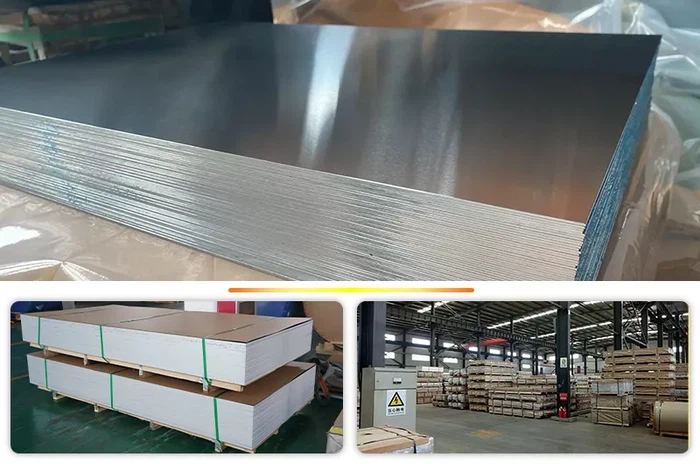
5083-H116 Aluminum Chemical Composition and Standards
The exceptional performance of 5083 aluminum comes from its high magnesium content. GNEE adheres strictly to international standards like ASTM B209 and ISO 6361 to ensure every plate meets these chemical limits.
| Element | Content (%) | Role in the Alloy |
| Magnesium (Mg) | 4.0 – 4.9 | Primary strengthening agent; provides marine corrosion resistance. |
| Manganese (Mn) | 0.4 – 1.0 | Increases toughness and stabilizes the grain structure. |
| Chromium (Cr) | 0.05 – 0.25 | Prevents stress corrosion cracking (SCC). |
| Iron (Fe) & Silicon (Si) | ≤ 0.4 each | Strictly limited to prevent brittleness. |
| Aluminum (Al) | Balance | Base metal. |
Core Functions and Applications of 5083 Aluminum
By replacing heavy marine steel with 5083 aluminum, vessels drastically reduce their weight, which lowers fuel consumption and increases top speeds.
- Shipbuilding: Hulls, decks, superstructures, and keels for commercial ferries, naval patrol boats, and luxury yachts. (Specify H116 or H321).
- Offshore Platforms: Structural walkways, helipads, and accommodation modules where maintenance-free anti-corrosion materials are essential. (Specify H116 or H321).
- Cryogenic & Pressure Vessels: LNG (Liquefied Natural Gas) transport tanks and chemical storage containers. 5083 performs exceptionally well at sub-zero temperatures without becoming brittle. (Specify O-temper for formability).
- Heavy Transportation: Fuel tanker trucks and railway carriages. (Specify O or H111 for bending).
Class Certifications and the Importance of MTC
For any marine or pressure vessel application, uncertified metal is unusable. GNEE provides fully traceable plates backed by major international classification societies.
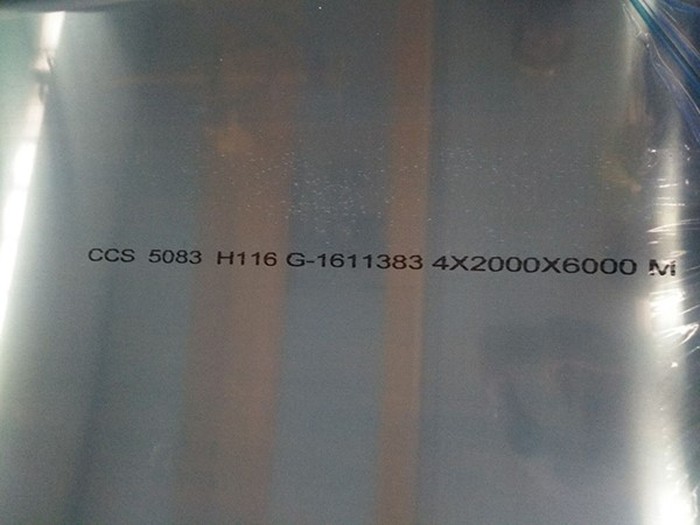
- Marine Approvals: We supply DNV certified aluminum 5083, alongside ABS, LR, BV, KR and CCS certifications.
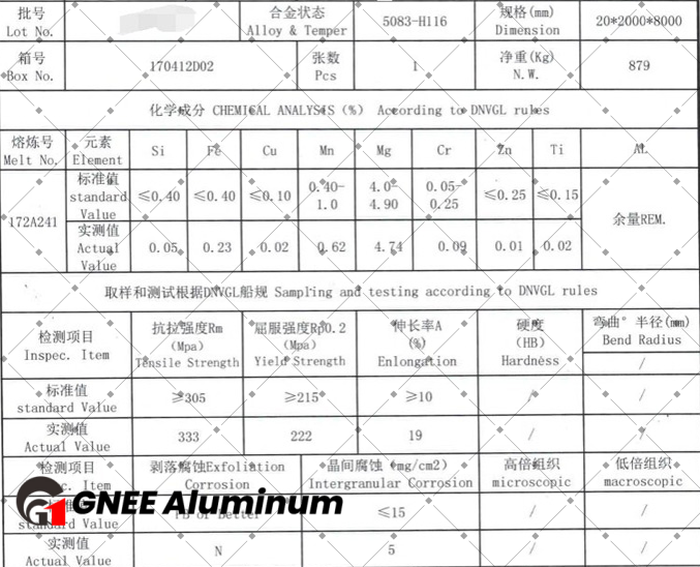
- Mill Test Certificate (MTC): Every plate is shipped with an EN 10204 3.1 or 3.2 MTC, verifying the exact chemical composition, tensile/yield strength results, and successful completion of marine corrosion tests (ASTM G66).
Critical Safety Warning: Due to its high magnesium content, never use 5083 aluminum in continuous service environments where temperatures exceed 65°C (150°F). High heat causes the magnesium to precipitate to the grain boundaries, which destroys the plate's corrosion resistance and leads to catastrophic stress corrosion cracking.
Partner with GNEE as Your 5083-O Aluminum Plate Supplier
Whether you need highly formable sheets for tank fabrication or high-strength certified plates for a new vessel build, GNEE is your direct manufacturing partner. We supply standard marine dimensions (e.g., 2000mm x 6000mm) and custom thicknesses ranging from 3mm up to 200mm.
Get Your Precise Material Quote Today
Do not risk your project with incorrectly specified materials. Are you looking for a reliable supply chain to keep your factory running on schedule?
Contact GNEE today. Send us your required thickness, temper (O, H116, H321, etc.), dimensions, and total tonnage. Our technical sales engineers will provide an exact quote within 24 hours.