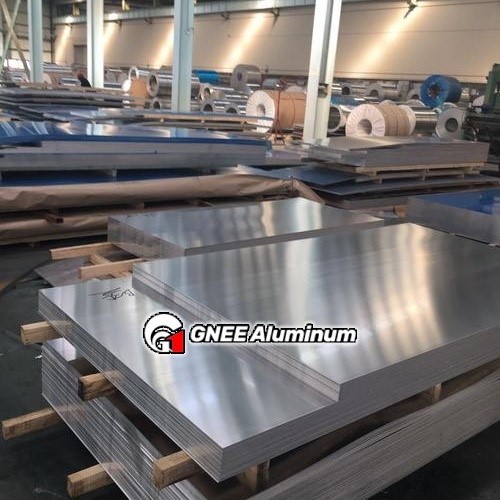
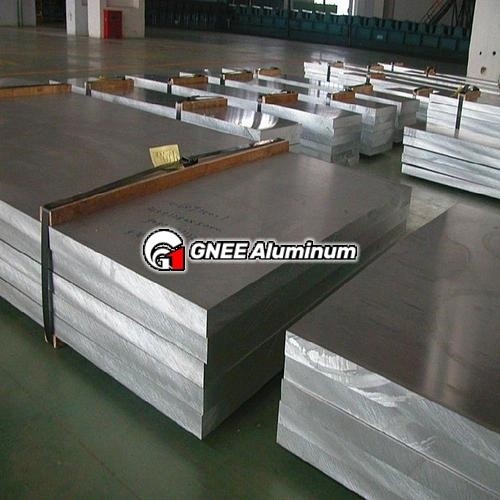
1. Is 5083 aluminum plate easy to bend in all tempers?
The bendability of 5083 aluminum plate largely depends on its temper. Among the most common tempers:
5083-O aluminum plate (annealed) has the best bendability and formability.
5083-H111 aluminum plate is slightly strain-hardened and still suitable for moderate bending.
5083-H321 and 5083-H116 aluminum plates, commonly used in marine applications, offer higher strength but are less formable and may crack if bent sharply.
For complex forming and tight radius bends, 5083-O aluminum sheet or 5083-H111 are recommended.
2. What is the minimum bending radius for 5083 aluminum?
The minimum bend radius of 5083 aluminum alloy depends on its thickness and temper. As a general guideline:
For 5083-O aluminum sheet, the minimum bend radius can be as small as 1x the material thickness.
For 5083-H111, a radius of 1.5–2x thickness is safer.
For harder tempers like 5083-H321 or 5083-H116, a minimum bend radius of 3–5x thickness is often required to prevent cracking.
It is essential to test bendability on a sample piece of 5083-H321 aluminum plate before full-scale forming, especially for load-bearing applications.
3. Is 5083 aluminum better for bending than 6061 aluminum?
Yes, in many cases, 5083 aluminum plate is more suitable for bending than 6061-T6 aluminum plate, especially when using the O or H111 tempers. While 6061-T6 aluminum plate has higher strength, it is more prone to cracking during bending and may require heat treatment post-bending. On the other hand:
5083-H111 aluminum sheet offers a balance between strength and formability.
5083-O aluminum plate bends cleanly and easily, even for intricate shapes.
For marine and tank fabrication, AlMg4.5Mn0.7 (5083) is often preferred over 6061-T6 when bending is involved.
4. Can 5083 aluminum plate be bent after welding?
Bending 5083 aluminum plate after welding requires careful control. The heat from welding can alter the material's mechanical properties around the heat-affected zone (HAZ). In general:
Post-weld bending of 5083-H116 or 5083-H321 aluminum plate may result in cracking or reduced accuracy.
If bending is necessary after welding, use 5083-O aluminum sheet or perform post-weld heat treatment and testing.
Always perform a test bend on a welded section before finalizing the production process.
At GNEE, we supply pre-tested, certified 5083 aluminum sheets for weld-and-bend applications.
5. What precautions should be taken when bending 5083 aluminum plate?
To achieve optimal results when bending 5083 alloy aluminum plate, consider the following:
Use a large enough bend radius, especially for harder tempers like 5083-H116.
Perform bending operations perpendicular to the rolling direction to reduce cracking risk.
Ensure edges are smooth and free of notches or micro-cracks.
Use proper bending tools and press brakes to distribute stress evenly.
For production involving 5083-H321 aluminum plate or 5083-H111 aluminum plate, consult GNEE's technical team for custom guidelines and bending specifications.
Conclusion
Yes, 5083 aluminum plate is bendable, especially in softer tempers like 5083-O and 5083-H111. However, bendability varies with temper, thickness, and processing method. For applications requiring both strength and moderate formability, 5083-H111 aluminum sheet offers a good compromise. When corrosion resistance and structural integrity are prioritized, 5083-H116 aluminum plate and 5083-H321 aluminum sheet remain top choices, albeit with stricter bending limitations.
GNEE supplies a full range of 5083 aluminum plates, including AA5083, EN AW-5083, and AlMg4.5Mn0.7, tailored to your bending and fabrication needs. Contact us for expert consultation, cutting-to-size services, and global shipping.