

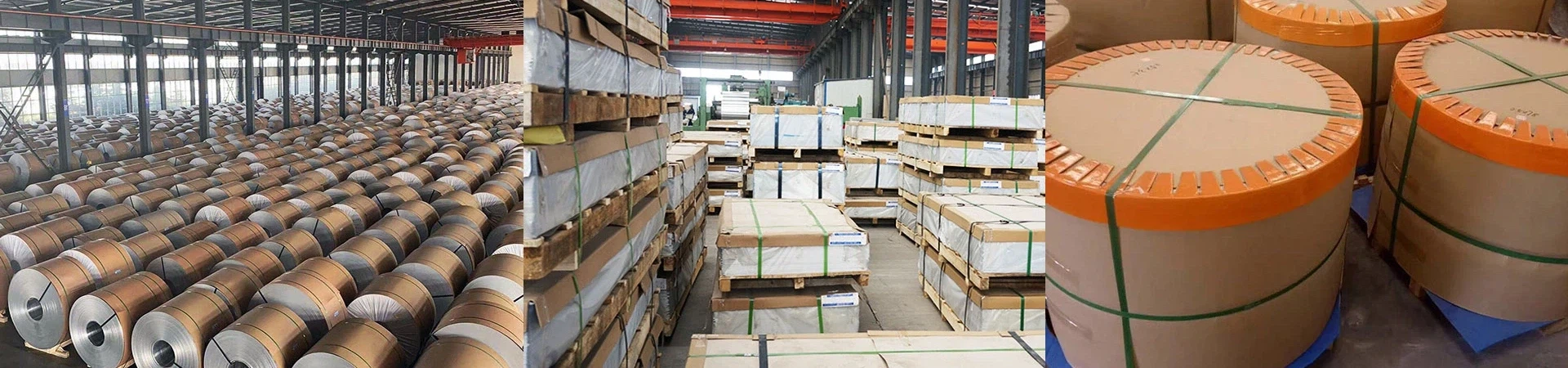
5083 aluminum plate is a high-strength, corrosion-resistant aluminum-magnesium-manganese alloy widely used in marine, structural, transportation, and pressure vessel applications. Customers often ask about the equivalent grades, performance in different standards, and comparison with other materials.
1. What are the international equivalents of 5083 aluminum alloy?
The 5083 aluminum plate is known globally by several equivalent designations across standards. These equivalents share similar chemical composition and mechanical properties:
AA5083 – USA Aluminum Association standard
EN AW-5083 – European EN 573 standard
AlMg4.5Mn0.7 – German DIN standard
UNS A95083 – Unified Numbering System
JIS A5083 – Japanese Industrial Standard
Despite regional variations in temper and tolerances, these designations refer to the same base alloy, known for its excellent corrosion resistance and weldability, especially in 5083-H116 and 5083-H321 marine-grade aluminum plate.
2. What is the difference between 5083-H116 and 5083-H321 aluminum plate?
Both 5083-H116 aluminum plate and 5083-H321 aluminum plate are commonly used in the marine industry, but they differ in how they're stabilized:
5083-H116 is strain-hardened and specially treated for excellent corrosion resistance in marine environments.
5083-H321 is strain-hardened and thermally stabilized to resist softening after welding, making it ideal for pressure vessels and chemical storage tanks.
Both tempers of 5083 aluminum plate offer high tensile strength and saltwater corrosion resistance, with AA5083-H321 preferred for applications with post-welding exposure.
3. Is 5083 aluminum equivalent to 6061 aluminum?
While 5083 aluminum plate and 6061 aluminum plate are both widely used, they are not equivalent in composition or performance:
5083-H116 aluminum plate has higher corrosion resistance, particularly in saltwater, making it ideal for shipbuilding and offshore structures.
6061-T6 aluminum plate is heat-treatable and offers superior machinability and higher strength but is less corrosion resistant than 5083.
Therefore, for marine or chemical applications, 5083 aluminum sheet is preferred. For structural parts requiring complex machining or welding, 6061 aluminum plate may be more suitable.
4. Can 5083 aluminum plate be used as a substitute for steel in structural applications?
Yes, 5083 aluminum plate is often used as a lightweight, corrosion-resistant alternative to mild steel or stainless steel in marine and structural applications. Compared to carbon steel:
5083-H321 aluminum sheet provides excellent fatigue strength.
Its density (approx. 2.66 g/cm³) is one-third of steel, allowing substantial weight reduction.
It does not rust, reducing long-term maintenance costs.
However, it's essential to verify that the mechanical properties of AlMg4.5Mn0.7 aluminum plate meet the design requirements, especially in load-bearing structures.
5. Which applications require specific tempers like 5083-H111 or 5083-O aluminum plate?
Different 5083 aluminum plate tempers suit different industries:
5083-O aluminum plate is annealed, offering maximum ductility. It's used in forming applications like tanks and cryogenic storage.
5083-H111 aluminum plate is lightly strain-hardened and used in automotive panels and lightweight transportation.
5083-H116 and H321 are designed for harsh environments and ship hulls.
At GNEE, we provide a wide range of 5083 alloy aluminum plates, including 5083-O, 5083-H111, 5083-H116, and 5083-H321, each with traceable international equivalents such as EN AW-5083, AA5083, and AlMg4.5Mn0.7.
Conclusion
The 5083 aluminum plate is an internationally recognized marine-grade alloy with multiple equivalents like EN AW-5083, AA5083, and AlMg4.5Mn0.7. Its excellent corrosion resistance, weldability, and strength make it a top choice for shipbuilding, pressure vessels, cryogenics, and chemical transport. Understanding the different tempers like 5083-H116, 5083-H321, and 5083-O helps ensure the best match for your project.
GNEE supplies premium-grade 5083 aluminum plates certified to ASTM B209, EN, JIS, and GB standards. Contact us for custom sizes, mill certificates, and alloy recommendations based on your industry needs.


