


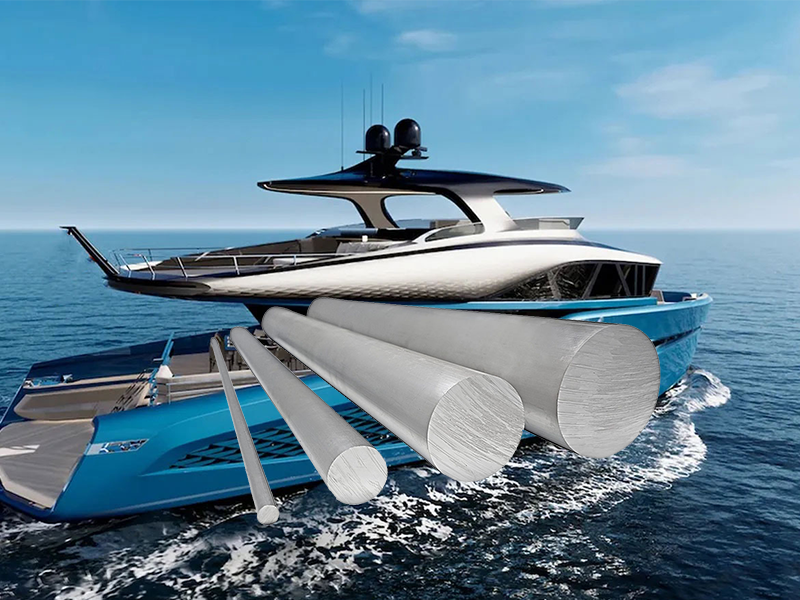
GNEE Marine Aluminum Bars are essential materials widely used in maritime and offshore industries for their excellent combination of strength, corrosion resistance, and versatility. Manufactured from aluminum alloys specifically designed to endure harsh saltwater environments, these bars are critical components in structural frameworks and fastening systems aboard vessels, offshore platforms, and coastal infrastructure.
Why Choose Marine Aluminum Bars?
Marine environments are highly demanding due to constant exposure to seawater, salt spray, humidity, and mechanical stress. GNEE marine aluminum bars address these challenges by offering:
Outstanding Corrosion Resistance: Alloys like 5083, 5086, and 6061 naturally resist pitting, crevice corrosion, and salt spray, outperforming traditional metals such as carbon steel.
High Strength-to-Weight Ratio: Lightweight aluminum reduces vessel weight while providing structural strength, improving fuel efficiency and payload capacity.
Excellent Weldability and Fabrication: Compatible with TIG, MIG, and friction stir welding, and easily machined, bent, or formed.
Long-Term Durability: Maintains performance under marine fatigue and mechanical wear, ensuring long-lasting structural integrity.

Common Marine Aluminum Alloys for Bars
| Alloy | Key Characteristics | Typical Applications |
|---|---|---|
| 5083 | High magnesium (~4–4.9%), excellent corrosion resistance, good mechanical strength | Hull reinforcements, bulkheads, framing bars |
| 5086 | Superior corrosion resistance and weldability | Structural stiffeners, platform support bars |
| 6061 | Heat-treatable, strong, good machinability | Fasteners, brackets, load-bearing components |
| 5052 | Excellent formability and corrosion resistance | Non-structural fittings, light-duty bars |
Structural Applications
Hull and Superstructure Framework: Used for stiffeners, stringers, cross-members, and support beams. High stiffness-to-weight ratio and corrosion resistance maintain hull integrity while minimizing weight.
Deck and Bulkhead Reinforcements: Adds strength and rigidity to decks and bulkheads, ensuring durability under mechanical and environmental stress.
Offshore Support Structures: Forms key components in walkways, platforms, railings, and equipment framing on oil rigs, wind farms, and coastal installations.
Fastening and Joining Applications
Bolts, Studs, and Pins: Raw material for lightweight, corrosion-resistant fasteners essential in marine construction.
Mounting Brackets and Clamps: Machined into brackets and clamps for securing pipes, cables, and equipment while resisting marine corrosion.
Custom Connectors and Joinery: Precision-machined bars provide durable connectors and joining elements that withstand saltwater exposure.
Manufacturing and Processing
Hot and Cold Rolling/Extrusion: Produces bars with precise dimensions and mechanical properties.
Heat Treatment: Solution heat-treated and artificially aged (T6 temper) for enhanced strength where applicable.
Fabrication: Easily cut, welded, machined, bent, or drilled using standard marine industry tools.
Surface Treatments: Anodizing or marine-grade painting can be applied for improved corrosion protection and aesthetics.
Advantages Compared to Traditional Materials
| Feature | GNEE Marine Aluminum Bars | Steel Bars | Stainless Steel Bars |
|---|---|---|---|
| Corrosion Resistance | Excellent in marine environments | Poor without coatings | Very good but heavier and costlier |
| Weight | Light (~2.66 g/cm³) | Heavy (~7.85 g/cm³) | Heavy (~7.7–8.0 g/cm³) |
| Maintenance | Low, minimal rusting | Requires frequent upkeep | Moderate |
| Fabrication Ease | Easy machining and welding | More difficult and heavy | Hard to machine, costly |
| Cost | Moderate upfront cost | Low material cost, higher lifecycle cost | High upfront and maintenance cost |
Maintenance Tips
Rinsing: Regularly wash with fresh water to remove salt deposits.
Cleaning: Use mild detergents and non-abrasive tools to avoid surface damage.
Inspection: Check for corrosion, mechanical damage, and weld integrity.
Surface Protection: Reapply anodizing or marine-grade coatings as needed.
Prevent Galvanic Corrosion: Insulate aluminum from dissimilar metals.
GNEE Marine Aluminum Bars provide strong, lightweight, and corrosion-resistant solutions for vessel frameworks and fastening systems. Their mechanical strength, ease of fabrication, and durability ensure long-lasting performance in harsh marine environments.
For alloy selection, custom fabrication, and sourcing of marine aluminum bars tailored to your project requirements, contact GNEE's marine metals specialists for professional guidance.


