


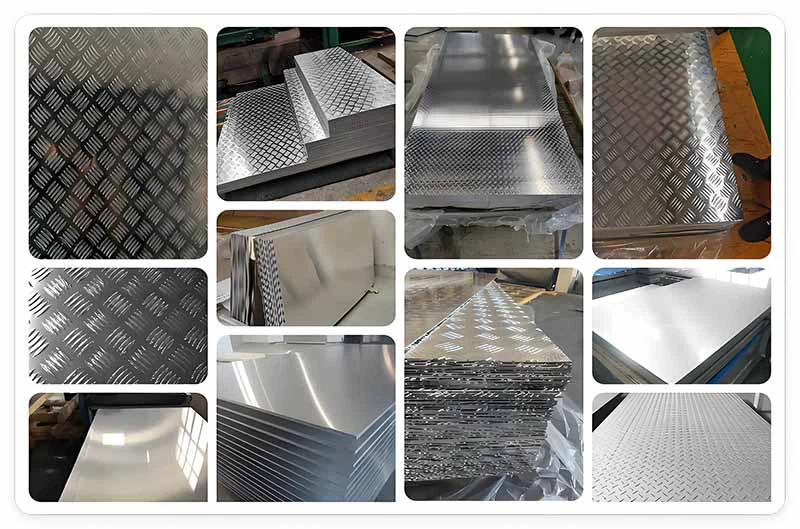
1100 aluminum tread plate is a commercially pure aluminum checker plate (≥99.0% aluminum) with a raised anti-slip pattern on the surface. It is designed for light-duty flooring, decorative applications, and corrosion-resistant environments where high strength is not required. As a basic and highly formable metal material, it is an economical choice for non-structural projects.
1. Material Composition of 1100 Pure Aluminum Plate
To understand how a metal will perform, you must look at its chemical composition. The 1100 alloy belongs to the 1000-series pure aluminum family.
| Element | Content (%) |
| Aluminum (Al) | ≥ 99.0 |
| Silicon (Si) + Iron (Fe) | ≤ 0.95 |
| Copper (Cu) | 0.05 – 0.20 |
| Manganese (Mn) | ≤ 0.05 |
| Zinc (Zn) | ≤ 0.10 |
Why is this composition important?
Because of its high purity (over 99% pure aluminum) and very low alloying elements, 1100 aluminum has excellent corrosion resistance. It naturally forms a strong oxide layer that prevents rust. However, the lack of strengthening elements like magnesium or manganese means it has relatively low mechanical strength.
2. Key Features of 1100 Aluminum Checker Plate
When buying aluminum materials in bulk, it is critical to match the product features with your project needs. Here is what makes the 1100 series stand out:
- Excellent corrosion resistance: It will not rust when exposed to moisture, water, or general weather conditions. It requires very little maintenance, even in damp environments.
- Lightweight and easy to handle: Aluminum is about one-third the weight of steel. This makes 1100 diamond plates easy to load, transport, and install manually, saving labor costs.
- Good formability and bending performance: Because it is commercially pure and soft, it is extremely easy to work with. You can bend, cut, drill, and shape it without the metal cracking or breaking.
- Anti-slip surface: Available in diamond, 5-bar, or 3-bar patterns, the raised surface provides essential friction to prevent slipping accidents in working areas.
- Economical compared to alloyed plates: Since it does not require expensive alloying metals or complex heat treatments, 1100 aluminum is one of the most cost-effective checker plates on the market.
3. Where NOT to Use 1100 Alloy
- Heavy load flooring: It cannot support the weight of heavy forklifts, industrial trucks, or massive machinery. The raised patterns will flatten, and the plate will dent under heavy pressure.
- Structural load-bearing parts: It does not have the tensile or yield strength to be used as a supporting beam or main structural platform.
- High-impact industrial environments: If heavy tools or cargo are frequently dropped on the floor, the 1100 plate will bend and deform easily.
If your project involves any of the heavy-duty conditions above, you should consider higher-strength alloys like 3003 or 5052.
4. Typical Applications of 1100 Aluminum Diamond Plate
Because of its excellent rust resistance, beautiful appearance, and easy processing, 1100 aluminum is perfect for daily life and light-duty commercial uses. Common applications include:
- Truck interior flooring (light-duty): Used in the cargo areas of light delivery vans and box trucks where only manual loading or hand-trucks are used. It protects the original floor and stops boxes from sliding.
- Anti-slip stairs and walkways: Installed on indoor and outdoor foot-traffic stairs, ramps, and maintenance walkways where water might be present, providing a safe walking surface.
- Cold storage flooring: Pure aluminum maintains its toughness at very low temperatures. It will not become brittle in commercial freezers or refrigerated transport trucks.
- Decorative wall panels: Widely used as wainscoting and wall protection in commercial garages, gyms, workshops, and retail stores to prevent damage from carts and provide an industrial look.
- Elevator interior panels: The bright, clean diamond pattern is often used for elevator floors and lower wall panels because it is lightweight and easy to clean.
- Trailer and RV interior use: Used for stone guards, interior trim, and toolbox making for recreational vehicles.
Material Comparison of 1100 vs 3003 vs 5052 Aluminum Tread Plate
Buyers often hesitate between different aluminum grades. Understanding the differences is the key to getting the right balance between performance and price.
| Alloy | Strength | Corrosion Resistance | Cost | Best Use Cases |
| 1100 | Low | Excellent | Low | Decoration, light-duty flooring, wall panels, custom shaping. |
| 3003 | Medium | Very Good | Medium | General industrial use, standard trailer floors, toolboxes, everyday anti-slip applications. |
| 5052 | High | Excellent (Marine grade) | High | Marine environments, heavy-duty truck beds, high-impact industrial load-bearing platforms. |
Summary for Buyers:
If you need it for decoration or walking areas, and want to save money: Choose 1100.
If you need moderate strength for general use and vehicle floors: Choose 3003.
If you are building a heavy-duty platform or working near saltwater: Choose 5052.
How to Choose Thickness for 1100 Aluminum Sheets
Thickness directly determines both the load-bearing capacity and the overall cost of the order. As a reliable supplier, we recommend the following thickness ranges based on real-world applications:
- 1.0 – 2.0 mm (Thin Plates): Perfect for decoration, wall panels, corner guards, and trailer trims. Since these applications do not carry weight, thin plates are the most cost-effective and are very easy to bend by hand or simple machines.
- 2.0 – 3.0 mm (Medium Plates): The standard choice for light-duty flooring, pedestrian stairs, and cold storage room floors. It is thick enough to withstand daily foot traffic without bending.
- 3.0 – 6.0 mm (Thick Plates): Designed for low-load industrial platforms, workshop walkways, and light delivery truck floors. The extra thickness prevents the plate from denting when light hand-carts roll over it.
What Affects the Price of 1100 Aluminum Checker Plates?
- Thickness and Weight: Aluminum is sold by weight (per metric ton). Thicker plates use more raw aluminum, increasing the price per square meter.
- Pattern Type: Different patterns require different embossing rollers. The standard 5-bar and diamond patterns are mass-produced and cheaper. Custom or rare patterns (like 1-bar or lentil) might have higher processing costs.
- Alloy Grade: As discussed, 1100 pure aluminum is generally cheaper than alloyed grades like 3003 or 5052 because it requires fewer raw materials and simpler processing.
- Surface Treatment: A standard mill finish is the most economical. If you require anodizing, PVC film protection, or color coating, the price will increase due to the extra manufacturing steps.
- Order Quantity: Like all industrial materials, bulk orders significantly reduce the manufacturing and shipping costs per ton.
Why Choose GNEE Aluminum as Your Supplier?
Finding a stable and trustworthy factory is the most important step for your business. Here is why buyers from all over the world choose GNEE for their aluminum supply:
- Stable supply of 1100 aluminum tread plates: We keep a large inventory of raw aluminum coils, ensuring we can produce and deliver your orders on time, every time.
- Custom sizes and patterns available: We don't just sell standard 4x8 sheets. We provide precise cut-to-size services and multiple pattern options to match your exact project requirements.
- Strict quality control system: Quality is our promise. We strictly test the chemical composition and guarantee thickness tolerances. You will never receive defective or short-weight plates from us.
- Fast delivery for bulk orders: Our efficient production lines and direct access to major shipping ports allow us to process and dispatch wholesale orders rapidly.
- Export experience in 100+ countries: We know international trade. From proper seaworthy wooden packaging to handling all customs and export documents, we make your purchasing process completely hassle-free.

Get a Quote for 1100 Aluminum Tread Plate
Please send us:
- Thickness (e.g., 2.0mm, 3.0mm)
- Size (e.g., 1219x2438mm or custom sizes)
- Quantity (e.g., 3 tons, 1x20ft container)
- Application (So we can ensure the alloy is correct for you)
Email us now! We will reply within 24 hours with the best price and shipping options.


