

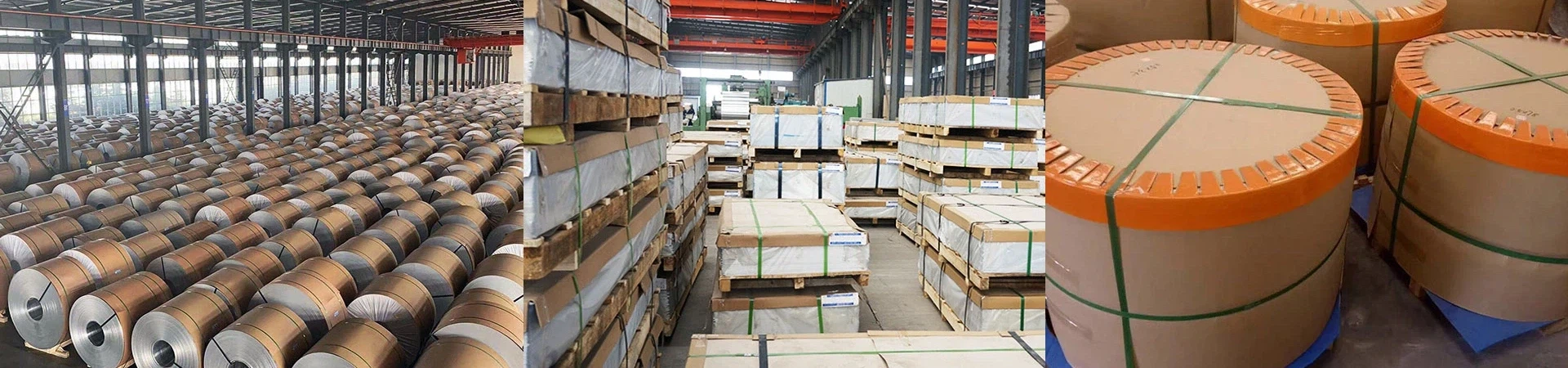
Modern construction demands lightweight, durable, and weather-resistant cladding. For roofing, wall panels, and curtain walls, 3003 aluminum delivers the perfect balance of strength, formability, and cost. This guide explains how to select the right 3003 aluminum specifications for your architectural projects.
Why 3003 Aluminum for Building Cladding?
When contractors and fabricators choose metal for building envelopes, they usually avoid 1000-series pure aluminum because it is too soft to handle wind pressure. They also often avoid 5000-series aluminum for standard building panels because it is more expensive and harder to bend into sharp corners without cracking.
3003 aluminum (an Al-Mn alloy) hits the sweet spot. It is about 20% stronger than pure aluminum, highly corrosion-resistant in rain and humid environments, and easily formed into complex architectural shapes. Whether you are roll-forming continuous roofing sheets or fabricating flat cassettes for high-rise curtain walls, 3003 aluminum is the industry standard.

Standard Specifications for 3003 Architectural Panels
Before placing an order for a construction project, you need to match your design requirements with standard material specs.
| Parameter | Standard Specification | Practical Meaning for Fabrication |
| Alloy Grade | 3003 Aluminum (Al-Mn) | Standard anti-rust architectural metal. |
| Common Tempers | H14 / H24 | H14 for roll-forming, H24 for rigid flat panels. |
| Thickness Range | 0.6 mm – 3.0 mm | Thin for roofing, thick for curtain walls. |
| Width Range | Up to 2650 mm | Supports large-format seamless building designs. |
| Surface Options | Mill Finish / PE / PVDF | Determines weather resistance and aesthetics. |
| Application | Roof / Wall / Curtain Wall | Exterior building envelope systems. |
Solving the "Oil-Canning" Problem in Curtain Walls
One of the biggest headaches in the architectural cladding industry is "oil canning." This is when a large, flat metal panel looks wavy or buckled after installation, especially under direct sunlight when the metal expands. This ruins the visual appeal of modern commercial buildings.
How 3003 Aluminum Solves This:
Oil-canning happens when the material is too thin, too soft, or holds internal rolling stress. To prevent this, fabricators choose 3003 H24 aluminum sheets in thicknesses of 2.0mm to 3.0mm. The H24 temper provides higher yield strength to resist wind loads, while the proper thickness absorbs thermal expansion without buckling. Furthermore, sourcing from a mill with strict tension-leveling lines ensures the sheets arrive dead-flat.
Thickness Guide for Roofing and Wall Panels
Using material that is too thick wastes the project budget. Using material that is too thin risks structural failure during heavy storms. Here is the standard thickness guide based on actual construction usage:
| Application | Recommended Thickness | Key Requirement |
| Corrugated Roofing Panels | 0.6 mm – 1.5 mm | Lightweight, easy to roll-form continuously. |
| Interior / Exterior Wall Panels | 1.0 mm – 2.0 mm | Good flatness, moderate impact resistance. |
| High-Rise Curtain Walls | 2.0 mm – 3.0 mm | Maximum wind pressure resistance, strict flatness. |

How to Choose Between 3003 H14 and 3003 H24?
Choosing the right temper prevents cracking during fabrication. Both H14 and H24 are half-hard tempers, but they react differently in the workshop.
3003 H14 Aluminum Coil (Strain Hardened):
This is the flexible choice. It is mainly supplied in coils for continuous roll-forming lines. If you are producing standing seam roofing, the metal must bend smoothly through multiple rollers without fracturing the paint. 3003 H14 handles this perfectly.
3003 H24 Aluminum Sheet (Strain Hardened and Partially Annealed):
This is the stable choice. It offers slightly higher yield strength and better resistance to deformation. Curtain wall manufacturers use CNC machines to route grooves into flat sheets and fold the edges 90 degrees to create installation cassettes. 3003 H24 bends sharply and holds its flat shape under high wind loads on the sides of skyscrapers.
Are you experiencing edge cracking when folding your architectural panels, or struggling with wavy sheets? Send us your required panel dimensions and bending angles. Our technical team will recommend the exact 3003 aluminum temper (H14 or H24) and thickness to solve your fabrication issues. Request a material test sample today.
Surface Coatings: Mill Finish vs. PE vs. PVDF
Aluminum used on building exteriors must be coated, not just for color, but to withstand decades of UV radiation and acid rain.
Mill Finish 3003 Aluminum:
This is the raw, uncoated silver aluminum. Buyers choose this when they plan to cut and fabricate the panels first, and then send the finished cassettes to a local powder coating facility.
PE Coated (Polyester):
PE coating is cost-effective and offers a wide range of bright colors. However, it is sensitive to UV rays. It is typically used for interior wall panels, ceiling grids, or low-rise temporary commercial buildings where a 5 to 10-year color lifespan is acceptable.
PVDF Coated (Polyvinylidene Fluoride):
If you are building a hospital, an airport, or a commercial high-rise, PVDF coated 3003 aluminum sheet is mandatory. PVDF resin is highly resistant to weathering, chalking, and UV fading. It ensures the building color remains vibrant for 15 to 25 years. When buying pre-coated coils, always specify a 2-coat or 3-coat PVDF system for exterior use.

Mechanical Properties of 3003 H14 and 3003 H24
For structural engineers calculating wind loads and dead weights, here are the typical mechanical properties for building-grade 3003 aluminum:
| Property | 3003-H14 Temper | 3003-H24 Temper |
| Tensile Strength | 140 – 180 MPa | 160 – 200 MPa |
| Yield Strength | ≥ 115 MPa | ≥ 130 MPa |
| Elongation | ≥ 10% | ≥ 8% |
| Forming Method | Roll-forming / Stamping | CNC Routing / Folding |
Q&A
Q1: Can you supply extra-wide aluminum sheets for large seamless designs?
Yes. Modern architectural designs often require large-format panels to reduce visible seams. We can produce and supply 3003 aluminum sheets up to 2650 mm in width, maintaining strict flatness tolerances across the entire surface.
Q2: Will the material corrode in coastal cities?
3003 aluminum forms a natural oxide layer that protects it from rust. However, for buildings located near the sea (where salt spray is an issue), we strongly recommend using a minimum 3.0mm thickness with a heavy-duty PVDF coating to ensure decades of structural integrity.
Q3: How do you protect the coated surface during fabrication?
All our PE and PVDF coated 3003 aluminum coils and sheets come with a heavy-duty, easily removable PVC protective film. This film stays on the metal while you cut, route, and install the panels, protecting the paint from tool scratches. It is peeled off only after the building installation is complete.
Q4: How do you prevent water damage during ocean shipping?
Importing aluminum carries the risk of "white rust" if moisture enters the container. We use standard seaworthy packaging. Flat sheets are wrapped in waterproof plastic, sealed with desiccants, and strapped tightly to fumigated wooden pallets. Coils are packaged with eye-to-wall or eye-to-sky configurations with reinforced edge protectors to prevent transit damage.


