

What is 3003 H18 Aluminum Sheet
3003 H18 is a non-heat-treatable aluminum alloy in a fully hard temper. It is alloyed mainly with manganese, which makes it stronger than pure aluminum while keeping excellent rust resistance. The "H18" means the metal has been cold-rolled to its maximum hardness. It offers high structural strength and a flat surface but has very low formability, meaning it is not suitable for tight bending or deep drawing.
Basics of 3003 Aluminum Sheet Material
Aluminum 3003 belongs to the 3xxx series, which means its main alloying element is Manganese (Mn). It typically contains about 1.0% to 1.5% manganese. This small addition changes the metal completely. It gives the 3003 aluminum sheet about 20% more strength than the 1100 series pure aluminum.
More importantly, 3003 is a "non-heat-treatable" alloy. You cannot make it stronger by baking it in an oven (like you can with 6061). To make 3003 stronger, you have to physically roll it and work it at room temperature. It is widely known in the industry as the most popular "anti-rust aluminum" because it performs extremely well in wet and outdoor environments.
H18 Temper Meaning in 3003 Aluminum Plate
In the aluminum industry, temper codes tell you how the metal was processed.
- "H" stands for Strain Hardened (Cold Worked). This means the aluminum was made harder and stronger by rolling it through heavy rollers at room temperature.
- "1" means the metal was only strain-hardened. No additional heat treatment or annealing was applied to soften it.
- "8" indicates the degree of hardness. In this system, 8 means Full Hard.
So, when you buy a 3003 H18 aluminum plate, you are buying the hardest, strongest version of the 3003 alloy available. It has been rolled down to its final thickness with maximum pressure, locking high tension into the metal.

3003 H18 Aluminum Sheet Properties
When evaluating if this material fits your project, numbers matter. Below are the standard mechanical and chemical properties of 3003 H18 based on ASTM B209 standards.
Mechanical Properties of 3003 H18 Aluminum Sheet
Because it is fully hard, you will see high strength numbers but very low elongation (stretching) numbers.
| Property | Value |
| Tensile Strength | ≥ 200 MPa (approx. 29,000 psi) |
| Yield Strength | ≥ 170 MPa (approx. 24,600 psi) |
| Elongation | ≥ 2% |
| Hardness | High (maximum for 3003 series) |
Chemical Composition (%) of 3003 H18 Aluminum Sheet
The chemical makeup ensures it remains safe from rust and corrosion.
| Element | Content (%) |
| Aluminum (Al) | Balance |
| Manganese (Mn) | 1.0 – 1.5 |
| Copper (Cu) | 0.05 – 0.20 |
| Iron (Fe) | ≤ 0.70 |
| Silicon (Si) | ≤ 0.60 |
| Zinc (Zn) | ≤ 0.10 |
Key Characteristics of 3003 H18 Aluminum Panel
- Highest Strength in 3003: It provides the maximum structural rigidity you can get from a basic, low-cost manganese alloy.
- Excellent Corrosion Resistance: It handles rain, humidity, and mild chemicals without rusting.
- Lightweight: Like all aluminum, it is only one-third the weight of steel, reducing transport and installation costs.
- Good Weldability: You can weld it using standard MIG or TIG methods without major issues.
- Poor Formability: Because it is so hard, it resists changing shape. It stays flat, which is great for panels, but bad if you need to bend it.
3003 H18 vs H14 vs H16 Aluminum Sheet
Choosing the wrong temper is a common mistake that wastes money. Let's compare H18 with its softer brothers, H14 (Half Hard) and H16 (Three-Quarter Hard).
- Strength: H18 is much stronger (Tensile ≥ 200 MPa) than H14 (140-180 MPa).
- Ductility: H14 stretches better (Elongation ≥ 8%) compared to H18 (≥ 2%).
- Application: Use H18 for flat, load-bearing surfaces. Use H14 if you need to bend the sheet into a box or an angle.
- Hardness: H18 is fully hard, while H16 is 3/4 hard. H16 is a middle ground.
- Flexibility: H16 offers slightly more flexibility than H18, making it suitable for very gentle curving, whereas H18 prefers to remain perfectly flat.
Can You Bend 3003 H18 Aluminum Sheet?
- Cutting & Machining: Easy. You can shear, laser cut, or route this material cleanly because the hard metal doesn't stick to cutting tools.
- Welding: Good. It joins well with other aluminum parts.
- Bending: Poor.
Let us be completely straightforward: You should not try to bend 3003 H18 at tight angles. Because the elongation is only 2%, the metal has no stretch left. If you put it in a press brake and try to fold it 90 degrees, the outside line of the bend will crack and break instantly. If you absolutely must bend H18, you need a very large inner bend radius to prevent cracking.
Tooling & Design Hook: Unsure about your bending radius?
Don't waste money buying a temper that will crack in your press brake. Send our engineering team your CAD drawing or bend angle requirements. We will review your design for free and tell you exactly whether 3003 H18 will work or if you need to switch to H14.
Contact Our Engineers for a Free Review
Common Applications of 3003 H18 Aluminum Roofing Sheet
Because of its specific mix of high rigidity and rust resistance, 3003 H18 is used in practical, everyday applications where flat, strong metal is needed.
- Roofing Sheets: This is the most common use. The full-hard temper prevents the roof from denting under heavy rain, hail, or snow.
- Wall Panels and Cladding: Used on the outside of industrial buildings because it stays flat and resists weather.
- Storage Tanks: Used to build the walls of tanks holding water, food liquids, or mild chemicals.
- Insulation Jacketing: Rolled around industrial pipes as a hard, protective outer skin.
- Decorative Panels: Used for flat advertising billboards and signs that must withstand strong winds.

Limitations of 3003 H18 Aluminum Plate
- Not for Deep Drawing: You cannot press 3003 H18 into deep cup shapes (like a cooking pot). It will tear. You need the "O" (annealed) temper for that.
- Not for High-Stress Structures: While it is strong for a 3000 series, it cannot replace 5083 or 6061 in heavy marine or aerospace structures.
ASTM B209 3003 H18 Aluminum Sheet Standards
Quality matters. When buying this material globally, ensure your supplier follows the ASTM B209 standard. This is the internationally recognized specification for aluminum flat sheet and plate. It guarantees that the manganese content is correct and that the factory has rolled the metal hard enough to meet the 200 MPa tensile strength requirement. Always ask your supplier for a Mill Test Certificate (MTC) proving ASTM B209 compliance.
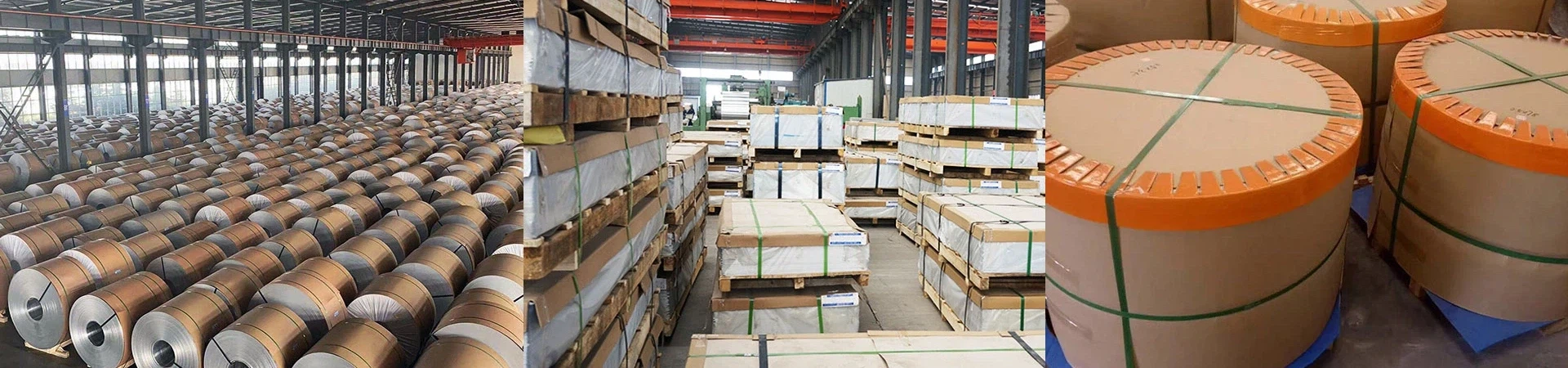
Available Forms: 3003 H18 Aluminum Sheet and Coil
Depending on your production line, 3003 H18 is supplied in two main forms:
- 3003 H18 Aluminum Sheet/Plate: Pre-cut flat rectangles. Best for low-volume jobs, laser cutting, or panel installation.
- 3003 H18 Aluminum Coil: Huge rolls of metal. Best for continuous production lines, like roll-forming machines making corrugated roofing.

Need custom widths? We slit and cut 3003 aluminum coils to your exact factory requirements.
View our custom-size capabilities
Get Your 3003 H18 Aluminum Sheet Price Today
Now that you know exactly what 3003 H18 aluminum is, the next step is securing a reliable supply. We are a direct manufacturer supplying ASTM B209 compliant 3003 H18 sheets and coils. We cut to your exact sizes, eliminating your scrap waste.
Request a Free Sample
Want to feel the stiffness and test the flat surface of our H18 sheets yourself? Contact us today with your required thickness. We offer fast, competitive pricing and will ship a free A4-sized test sample directly to your office.


