

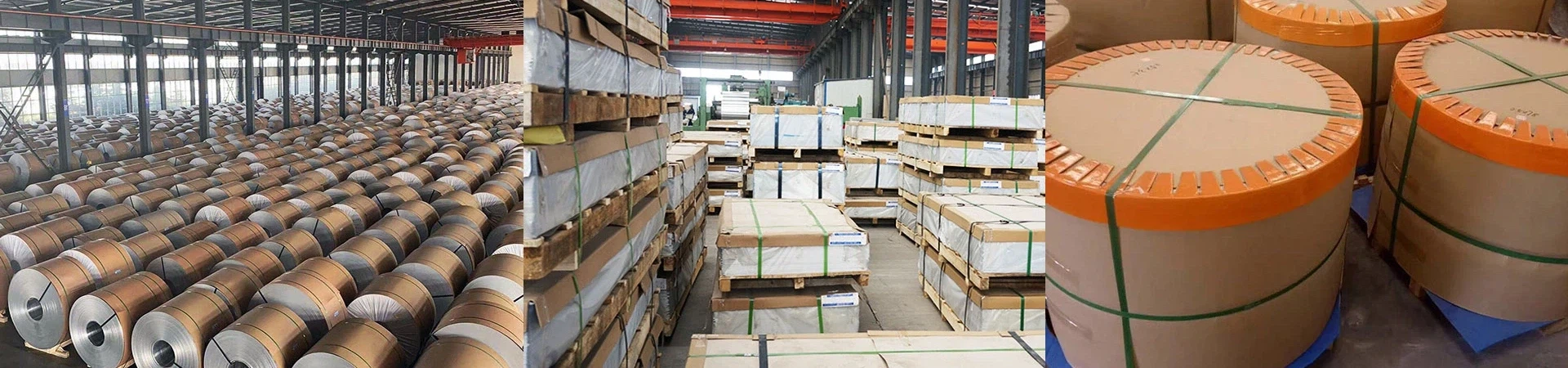

1050 aluminum foil is commonly used in the production of electrolytic capacitors due to its specific properties and advantages for this application:
High purity: 1050 aluminum foil is a commercially pure aluminum alloy with a minimum aluminum content of 99.5%. Its high purity ensures minimal impurities that could affect the performance and reliability of the electrolytic capacitors.
Excellent electrical conductivity: 1050 aluminum foil exhibits excellent electrical conductivity, allowing for efficient current flow. In electrolytic capacitors, the foil is used as one of the electrodes, enabling the storage and discharge of electrical energy.
Good formability: 1050 aluminum foil is soft and highly malleable, making it easy to shape and form into the desired electrode configuration for electrolytic capacitors. It can be uniformly and tightly wound, ensuring a compact and efficient capacitor design.
Uniform thickness: The manufacturing process for 1050 aluminum foil ensures consistent and uniform thickness, which is crucial for maintaining consistent capacitance values and electrical performance in capacitors.
High surface area: The foil is often treated or etched to increase its surface area, maximizing the contact area between the electrolyte and the aluminum foil electrode. This increased surface area enhances the capacitor's capacitance and energy storage capabilities.
Good compatibility with electrolytes: 1050 aluminum foil is compatible with a wide range of electrolytes commonly used in electrolytic capacitors. It can withstand the corrosive nature of the electrolytes and maintain its structural integrity and electrical conductivity over time.
Cost-effective: 1050 aluminum foil is readily available and relatively cost-effective compared to other aluminum alloys. This makes it a preferred choice for mass production of electrolytic capacitors.
Overall, the combination of high purity, excellent electrical conductivity, formability, uniform thickness, and compatibility with electrolytes makes 1050 aluminum foil a suitable and reliable material for electrolytic capacitors. It helps ensure the efficient and stable operation of these capacitors in various electrical and electronic applications.


