

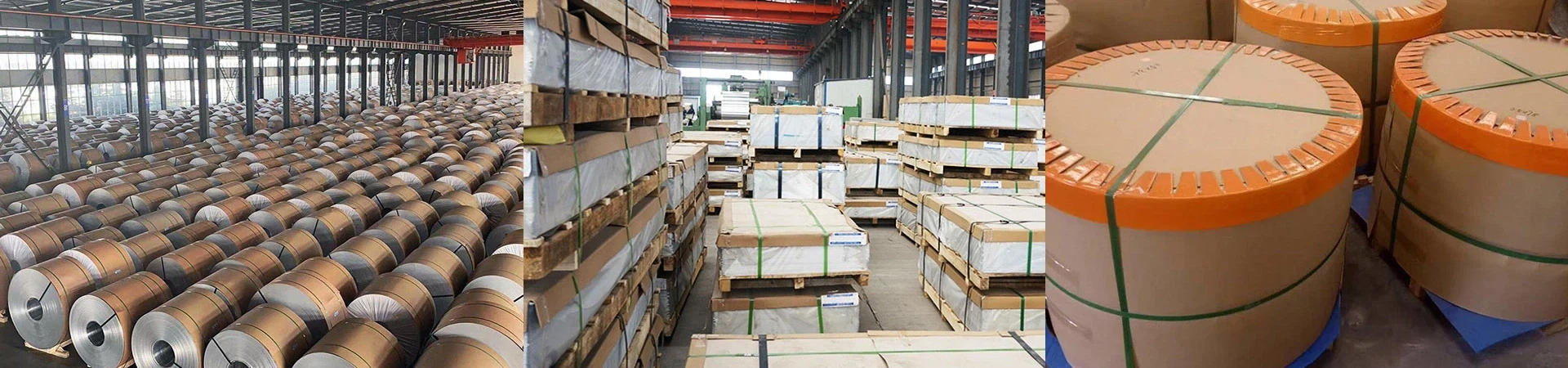
When sourcing metal materials for architectural or industrial projects, 3003 perforated aluminum sheet is one of the most popular choices. It is widely used for façade panels, ventilation grilles, and acoustic panels. However, many buyers and engineers struggle with a critical specification: choosing the right temper, specifically between 3003 H14 and 3003 H44.
Choosing the wrong temper can lead to metal warping, uneven surfaces, and installation failures. This guide provides all the core engineering data, mechanical properties, and manufacturing standards you need to specify the correct 3003 perforated aluminum sheet for your project.
What is 3003 Perforated Aluminum Sheet?
3003 is an Aluminum-Manganese (Al-Mn) alloy. The addition of about 1.0% to 1.5% manganese increases its strength by roughly 20% compared to pure 1100 series aluminum. It is a non-heat-treatable alloy, meaning it gains its strength through cold working (strain hardening), which results in an "H" temper.
Core Advantages of 3003 Alloy:
- High Corrosion Resistance: Excellent for outdoor environments.
- Good Formability: Easy to bend, roll, and shape.
- Cost-Effective: Lower raw material cost compared to 5000 series marine-grade aluminum.

What Does 3003 H14 vs. 3003 H44 Mean?
The "H" number indicates how the aluminum was processed to achieve its hardness and strength. Understanding this definition is the most important step before you buy perforated aluminum sheets.
| Temper | Manufacturing Meaning |
| H14 | Strain Hardened (Half Hard) |
| H44 | Strain Hardened + Stabilized |
The Key Difference:
- H14 is only cold-worked to reach a half-hard state. It has better ductility, making it easier to form and bend.
- H44 undergoes cold working followed by a low-temperature thermal treatment. This "stabilizes" the metal. Stabilized aluminum has a much stronger resistance to deformation and does not easily warp when its internal stress is changed.
Mechanical Properties Comparison of 3003 H44 and 3003 h14 aluminum
To understand why H44 acts differently than H14 during the manufacturing process, look at the mechanical data below.
| Property | 3003 H14 | 3003 H44 |
| Tensile Strength | 140 – 180 MPa | 160 – 200 MPa (Higher) |
| Yield Strength | ≥ 115 MPa | Higher than H14 |
| Elongation | ~ 5% – 8% | Lower than H14 |
| Hardness | Medium | Higher |
| Structural Stability | Standard | Extremely High |
Conclusion: If your project requires complex bending and forming, H14 is better. If your project requires the panel to remain perfectly flat and structurally stable, H44 is the clear choice.
Are you designing a building façade or acoustic ceiling? Material flatness is critical for your project's success. GNEE supplies premium 3003 H44 perforated aluminum sheets engineered specifically for flat, high-end applications. Send us your CAD drawings or required hole pitch, and our technical team will provide a fast, accurate price quote.
Perforation Performance Comparison
Punching thousands of holes into a solid metal sheet naturally releases internal stress. This stress release is the main reason why perforated sheets bend, bow, or look like ocean waves after production.
Here is how the two tempers react to the CNC punching process:
| Factor | 3003 H14 | 3003 H44 |
| Deformation Risk | Higher | Extremely Low |
| Panel Flatness | Standard | Excellent |
| Burr Control | Medium | Better (Cleaner cuts) |
| Suitability for High Open Area | Poor | Excellent (Safe for ≥40%) |
| CNC Punching Adaptability | ✔ | ✔✔ |
Because H44 is stabilized, it absorbs the stress of the punching press without losing its flat shape. This makes it mandatory for high-precision decorative panels.
Open Area and Structural Impact
The "Open Area" is the percentage of holes compared to the total solid metal. It dictates airflow, weight, and the remaining strength of the panel.
Standard Hole Pattern Examples:
| Hole Diameter | Pitch Distance | Pattern | Open Area |
| 2.5 mm | 5 mm | Staggered | ~ 35% |
| 3 mm | 6 mm | Staggered | ~ 40% |
| 5 mm | 8 mm | Straight | ~ 30% |
Engineering Rule: The higher the open area, the weaker the metal becomes. When the open area reaches 30% to 60%, a large amount of metal is removed. If you use H14 for a high open area, the sheet will almost certainly suffer from wave deformation. For any open area above 30%, you must use H44 to ensure the panel stays rigid and flat.

3003 aluminum Alloy Chemical Composition
The performance of 3003 relies heavily on precise chemical formulation. The inclusion of Manganese (Mn) is what sets it apart from standard commercial aluminum.
| Element | Content (%) |
| Manganese (Mn) | 1.0 – 1.5 |
| Copper (Cu) | 0.05 – 0.20 |
| Silicon (Si) | ≤ 0.6 |
| Iron (Fe) | ≤ 0.7 |
Manganese provides the core strength and improves the natural oxide layer, making it highly durable against rust and weather.
Common Application of 3003 Perforated Aluminum Sheet
Based on their mechanical stability, these tempers are used in very different real-world applications.
Typical Applications for 3003 H14:
- HVAC filter panels and ventilation covers.
- Light-duty indoor decorative panels.
- Industrial sorting sieves and machine guards.

Core Applications for 3003 H44:
- Architectural facade cladding (requires perfect visual flatness).
- Highway and railway acoustic barrier panels.
- Large suspended ceilings in airports and train stations.
- High-end exterior sunshade screens.

Surface Treatment
To match architectural designs and extend the lifespan of the metal, perforated sheets are usually coated after punching.
| Treatment Type | Feature |
| Anodized | Enhances the natural metallic look; strong corrosion resistance. |
| Powder Coated | Available in any color; provides a thick decorative layer. |
| PVDF Coating | The standard for outdoor facades; resists UV fading for 20+ years. |
Manufacturing Process
Producing high-precision perforated metal requires advanced machinery. Standard processes include:
- CNC Turret Punching: Fast, cost-effective for standard round, square, or slot holes.
- Laser Cutting: Used for custom, complex geometric patterns.
- Leveling & Tension Control: After punching, sheets pass through leveling rollers to eliminate minor warpage.
High-End Tolerance Standards:
Hole Pitch Tolerance: ±0.05 mm
Edge Burr: ≤0.03 mm
Packaging and Logistics
Shipping metal sheets overseas requires strict protective packaging to prevent surface damage and bending. GNEE's standard export packaging includes:
- PVC protective film on the panel surface.
- Anti-scratch paper between each sheet.
- Strong wooden pallets or steel pallets.
- Moisture-proof wrapping and tight steel strapping for secure ocean freight.
We support bulk flat panels, custom cut-to-size dimensions, and full project-based packaging.

Certifications
To meet global import and construction standards, our 3003 perforated aluminum sheets comply with:
ASTM B209
EN 485
ISO 9001
RoHS / REACH (Safe, environmentally compliant materials)

Why Choose GNEE?
GNEE is a professional aluminum supplier in China, trusted by international contractors and manufacturers.
- Focused Expertise: We specialize in 3003, 5052, and 5083 perforated aluminum panels.
- Custom Molds: We support fully customized hole shapes, LWD (Long Way Distance), and SWD (Short Way Distance).
- Rich Experience: We have supplied large-scale overseas façade and transportation projects.
- High Flatness Control: We specialize in processing H44 temper for demanding architectural requirements.
- Fast Delivery: Reliable global export and shipping.
Stop dealing with deformed panels and delayed shipments. Partner with GNEE for your next aluminum project. We guarantee strict flatness control and precise hole tolerances. Tell us your material requirements today, and let us help you lower your procurement costs.
Email GNEE Now for a Free Sample


