

Aluminum foil mechanical properties
The most important (mechanical) properties of films and tapes are tensile strength, yield strength and elongation. These properties are important both for single-layer foils (i.e., pure aluminum foil, for example) and for laminates.
With laminates, adhesion is also important. Adhesion is an indication of how well the layers stick to each other. Depending on the application, properties such as gloss, water and moisture permeability or emissivity also come into play.
Aluminum foil size and roll design

When purchasing aluminum foil and aluminum strips, you should indicate the thickness and width of the aluminum foil. For aluminum foil, thickness is in microns (μm = 1/1000 mm). The unit millimeter (mm) is also used for thicker aluminum strips. Width is usually expressed in millimeters, but centimeters (cm) or meters (m) are also common.
In addition to thickness and width, the presentation/format of the roll is also important. A spool is defined by weight, spool outside diameter (OD), and length or length of line per spool. These are often limited by further processing steps, for example, further processing machines can only pick up drums with a specific maximum weight or maximum outer diameter.
Additionally, there are different core materials. For aluminum reels of hundreds of kilograms, steel cores with an inner diameter (ID) of 150 mm or 152 mm are mainly used. For small reels with an inner diameter of 38mm, 40mm, 70mm or 76mm, cardboard cores are also used. The laminate is typically wrapped around a cardboard core with an internal diameter of 76 mm. Cores made of aluminum or plastic are rarely used.

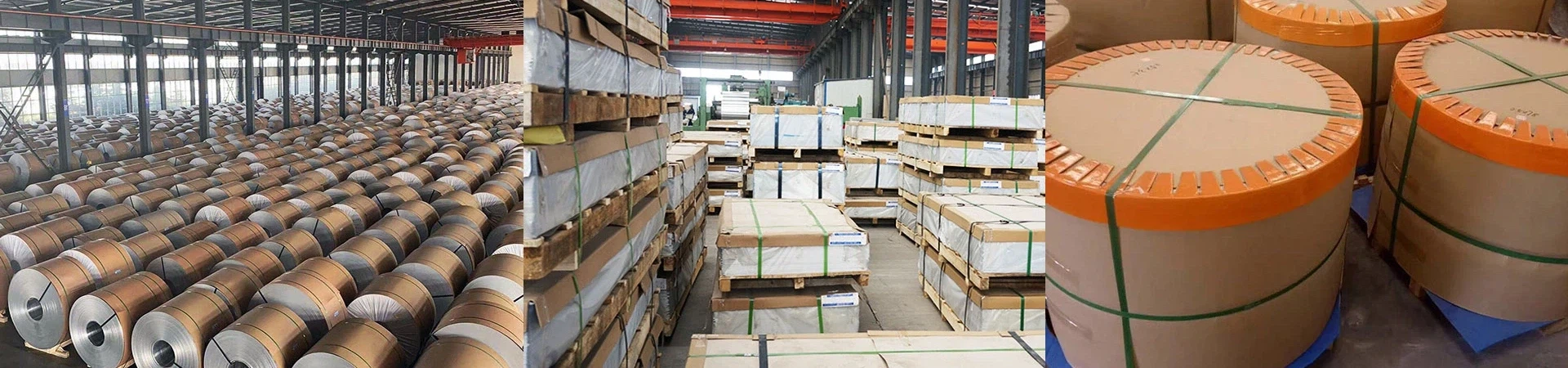
aluminum foil roll
GNEE supplies aluminum on large mother rolls weighing hundreds of kilograms and on "small rolls" that run over distances of several metres. In principle, aluminum foil on small reels (i.e. a few meters and light weight) is more expensive than aluminum foil on large reels (many meters and high weight), since more frequent reel changes during production mean production costs are much higher. This applies to aluminum foil and composite films.
When ordering in smaller quantities, aluminum foil is mostly taken from a parent roll and cut to the required width and length - this means one more step compared to the material on the parent roll, which makes the material more expensive.
Aluminum profiles and plates
For formats (also known as aluminum sheets for thicker materials), suitable for small reels. Formats are usually cut from aluminum foil or tape and are therefore more expensive than when using the same material as film or tape. Additionally, shipping is usually a little more expensive, especially if there are only a few formats.


