

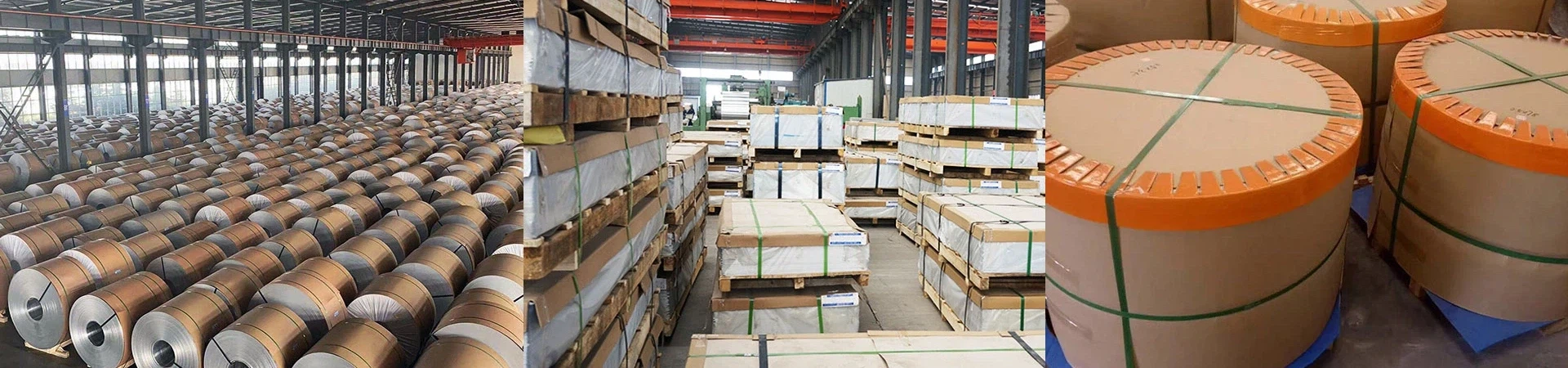
An automotive aluminum alloy is a lightweight metal material used to manufacture car structural parts, chassis components, and power systems. By replacing heavier traditional steel with an automotive aluminum sheet, car manufacturers can significantly reduce the total weight of the vehicle. This weight reduction leads to better energy saving, lower emissions, and improved safety performance.
GNEE has developed lightweight aluminum alloy products-including 5083, 5754, and 5052 alloy sheets-specifically for automotive components such as underbody shields and air reservoirs. Among these, 5083 and 5052 aluminum alloys are the most widely used for these parts, delivering excellent performance and receiving a positive market response.
Today, you will see this material commonly used in chassis protection plates, fuel tanks, electric vehicle (EV) battery casings, car body panels (like doors and hoods), and structural support parts.


Are you looking for a reliable automotive aluminum supplier for your next manufacturing run? Contact GNEE today for a quick, competitive quote. We support trial orders and full container shipments.
Core Advantages of Automotive Aluminum Alloy
1. Lightweight and Energy Saving
The density of aluminum is about one-third that of steel. Using aluminum can reduce the total weight of a vehicle by 8% to 12%.
For every 100 kg of weight reduced, a car saves about 0.4 liters of fuel per 100 km.
CO₂ emissions drop by about 1 kg for every 100 kg saved.
Overall energy efficiency improves by 6% to 8%.
2. Excellent Corrosion Resistance
Aluminum naturally forms a tough aluminum oxide (Al₂O₃) film on its surface when exposed to air. This makes the lightweight aluminum automotive parts highly resistant to salt spray corrosion and wet environments. It is perfect for underbody chassis parts and vehicles used near the sea.
3. Better Safety Performance
Safety does not drop when weight drops. Aluminum alloy for automotive parts is designed to absorb energy. During a crash, aluminum structures deform and absorb the impact energy better than rigid steel. Also, lighter materials lower the car's center of gravity, which improves driving stability.
4. High Recyclability
Aluminum has a recycling rate of over 95%. The material loss during the recycling process is only about 5%. This perfectly matches the global trend for electric vehicles (EVs) and carbon neutrality goals.
Aluminum Alloy Performance Guide
Choosing the right automotive aluminum plate means balancing strength, corrosion resistance, forming ability, and welding performance. Here is a comparison of the most common grades we supply:
| Alloy Grade | Strength | Corrosion Resistance | Forming Ability | Welding Ability | Typical Auto Use |
| 5052 | Medium-High | Very Good | Good | Excellent | Fuel tanks, general body parts |
| 5754 | Medium-High | Very Good | Very Good | Excellent | European standard body frames |
| 5083 | Very High | Excellent | Medium | Good | Chassis guards, air tanks |
| 6061 | High | Good | Medium | Good | Wheel hubs, strong structural supports |
| 3003 | Medium | Excellent | Excellent | Excellent | EV battery casings, heat shields |
Chemical Composition of Automotive Aluminum
| Alloy | Si | Fe | Cu | Mn | Mg | Cr | Zn | Al (Balance) |
|---|---|---|---|---|---|---|---|---|
| 5052 | ≤0.25 | ≤0.40 | ≤0.10 | ≤0.10 | 2.2–2.8 | 0.15–0.35 | ≤0.10 | Balance |
| 5754 | ≤0.40 | ≤0.40 | ≤0.10 | ≤0.50 | 2.6–3.6 | ≤0.30 | ≤0.20 | Balance |
| 5083 | ≤0.40 | ≤0.40 | ≤0.10 | 0.40–1.0 | 4.0–4.9 | 0.05–0.25 | ≤0.25 | Balance |
| 3003 | ≤0.60 | ≤0.70 | ≤0.20 | 1.0–1.5 | – | – | ≤0.10 | Balance |
| 6061 | 0.40–0.80 | ≤0.70 | 0.15–0.40 | ≤0.15 | 0.8–1.2 | 0.04–0.35 | ≤0.25 | Balance |
Mechanical Properties of Automotive Aluminum
| Alloy | Temper | Tensile Strength (MPa) | Yield Strength (MPa) | Elongation (%) | Hardness (HB) |
|---|---|---|---|---|---|
| 5052 | H32 | 210–260 | 130–200 | 7–15 | 60–75 |
| 5754 | H22 | 190–240 | 110–180 | 10–18 | 55–70 |
| 5083 | H111/H116 | 275–350 | 125–275 | 10–16 | 75–95 |
| 3003 | H14 | 120–170 | 95–140 | 5–12 | 35–45 |
| 6061 | T6 | 260–320 | 240–275 | 8–12 | 90–100 |
Common Automotive Applications
Different parts of a car require different material strengths and forming abilities. Here is how we break down the applications based on real-world auto manufacturing.
1. Body and Structural Parts
When stamping car doors or hoods, you need a material that bends easily without cracking but remains strong after forming.
| Application Area | Specific Auto Parts | Recommended Alloy | Thickness (mm) | Width (mm) |
| Body Structure | Door inner panels | 5182 / 5083 / 5754 | 0.15 – 6.0 | 20 – 2600 |
| Exterior Panels | Hoods, trunks, fenders | 5052 / 5754 | 0.5 – 4.0 | 500 – 2200 |
| Interior Parts | Window lifters, brackets | 5052 | 0.3 – 3.0 | 500 – 2000 |
| SUV Parts | Side-step boards (pedals) | 5052 / 5754 | 1.0 – 3.0 | 800 – 2200 |

2. Chassis and Safety Structures
The chassis faces road debris, water, and salt. It needs high-strength, rust-proof materials.
| Application Area | Specific Auto Parts | Recommended Alloy | Thickness (mm) |
| Chassis System | Engine guards, bottom crash plates | 5083 / 5754 | 2.0 – 6.0 |
| EV Platforms | EV battery aluminum plate (Floor) | 3003 / 5052 | 1.0 – 4.0 |
| Structural Parts | Wheel hubs, support beams | 6061-T6 | 3.0 – 600 |


3. Power System Components
For tanks and battery casings, strong weldability and good formability are the primary requirements.
| Application Area | Specific Auto Parts | Recommended Alloy | Key Features |
| Fuel System | Fuel tanks | 5083 / 5052 | Anti-corrosion + great welding |
| Air System | Air storage tanks (Trucks) | 5083 / 5052 | Safe under high pressure |
| Battery System | Battery casings / shells | 3003 | Deep drawing ability |
| Battery Cells | Battery aluminum foil | 1060 / 1070 / 1235 | High purity, excellent conductivity |


Need advice on which alloy is best for your specific auto parts? Send your drawings or technical requirements to the GNEE engineering team, and we will provide a free material matching suggestion.
Standard Specifications
| Parameter | Available Range |
| Thickness | 0.15 mm – 600 mm |
| Width | 20 mm – 2650 mm |
| Length | Custom cut to your exact request |
| Temper (State) | O, H14, H24, H32, T6, etc. |
| Surface Finish | Mill finish, Anodized, Color Coated |
Production Process
- Melting and Casting: High-purity aluminum ingots are melted with precise alloy elements (like Magnesium or Silicon).
- Hot Rolling: The metal slab is pressed into a thinner coil under high temperatures.
- Cold Rolling: The coil is rolled at room temperature to reach the exact final thickness.
- Heat Treatment: Depending on your needs, the metal is annealed (made soft, "O" temper) or hardened (like T6).
- Tension Leveling: The sheet is stretched slightly to make it perfectly flat.
- Inspection: We check the surface and internal structure.
- Cutting: Slitting into narrow strips or cutting into flat sheets.
- Packing: Protected and boxed for safe transport.


Quality Control System
Our testing includes:
- Chemical Composition: 100% spectrometer testing for every furnace batch.
- Mechanical Testing: Tensile strength and yield strength tests to ensure the metal can handle crashes.
- Hardness Testing: HB / HV checks.
- Salt Spray Testing: 72 to 1000 hours of testing to prove rust resistance.
- Dimension Check: Full inspection of thickness, width, and length.
- Surface Inspection: AI visual cameras detect oil spots, scratches, or rolling marks.

Our materials meet major global standards:
ASTM B209
EN 485
GB/T 3880
We can align with IATF 16949 requirements for automotive industry clients.
Strict Tolerance Standards
When you feed an automotive aluminum sheet into a robotic welding line or an automated stamping machine, the thickness and flatness must be perfect. If the sheet is wavy, the robot will fail. GNEE strictly controls tolerances:
| Test Item | Tolerance Range |
| Thickness | ±0.02 mm to ±0.10 mm (Depends on base thickness) |
| Width | ±1.0 mm to ±2.0 mm |
| Flatness | ≤ 3 mm per meter |
| Surface Defects | No oil spots, no cracks, no pressure marks, no scratches |
Does your automated production line require strict thickness tolerances? GNEE guarantees precision rolling. Contact us to get our detailed tolerance data sheet for your target alloy.
Packaging and Shipping
- Inner layer: Moisture-proof kraft paper.
- Middle layer: Waterproof PE plastic film.
- Fixing: Steel straps secure the aluminum to strong wooden pallets.
- Outer: Export-grade fumigated wooden boxes (if required).
- For coils: Special anti-shock eye-to-sky or eye-to-wall packaging.
Shipping and Delivery:
- Loaded in 20GP or 40HQ containers.
- We support Sea, Rail, and Air freight (for urgent samples).
- Global door-to-port service.
- Lead Time: 15–25 days for regular orders; 25–35 days for special custom orders.


How the Price Is Calculated
- Final Price = Aluminum Ingot Price (SMM) + Processing Cost + Certification/Testing Cost
- Ingot Price: Based on daily market rates (like SMM in China or the London Metal Exchange).
- Alloy Grade: The 5000 series (like 5083) costs more to process than the 3000 series (like 3003) because it is harder to roll.
- Temper: Heat treatments like T6 require more time and energy, adding to the processing cost.
- Dimensions: Very thin sheets take longer to roll, meaning a higher processing fee per ton.
Why Choose GNEE?
- Flexible Supply: We support multi-specification and small-batch trial orders for automotive testing.
- Full Range: We cover the entire 1000 to 8000 series of aluminum alloys.
- Automotive Customization: We customize exact dimensions, tempers, and surface finishes for car parts.
- Certified Quality: We provide MTC (Material Test Certificates) and support SGS or BV third-party inspections.
- Global Experience: We have years of experience supplying bulk orders to auto parts factories worldwide.
- EV Ready: We have mature solutions for electric vehicle battery floors and casings.


Send your inquiry to GNEE today. Our sales engineers will reply within 24 hours with a comprehensive quotation.


