

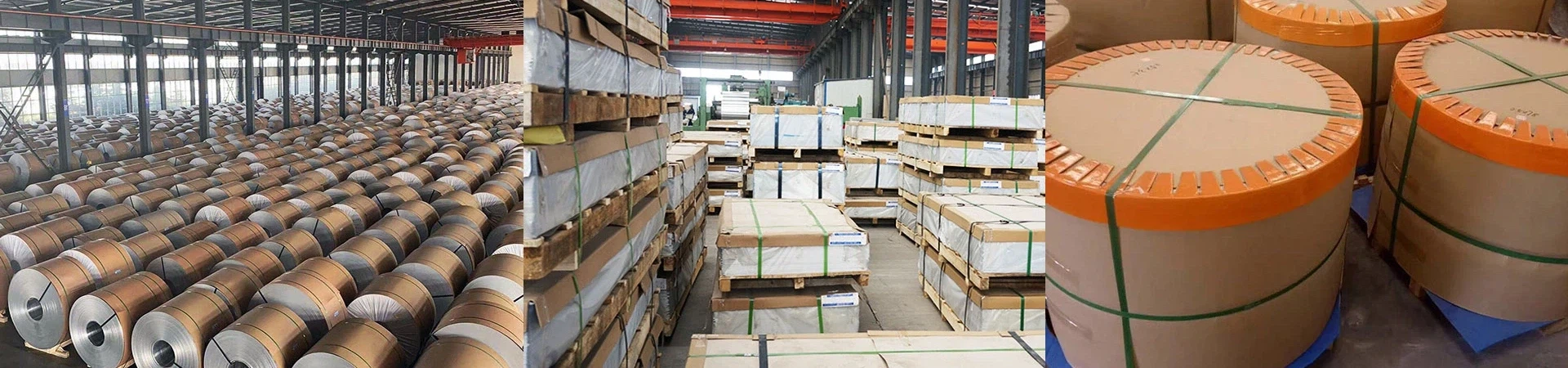

What is 5454 Aluminum Plate?
5454 aluminum plate is a high-performance aluminum-magnesium (Al-Mg) alloy. In the industrial manufacturing sector, it is highly regarded for its excellent corrosion resistance, reliable weldability, and outstanding stability at elevated temperatures.
Unlike some other marine-grade aluminum alloys that lose strength or become prone to stress corrosion cracking when exposed to heat, 5454 is specifically engineered to maintain its structural integrity in hot environments. This makes it the absolute standard material for pressure vessels and road tanker trucks that transport hot liquids, fuel, asphalt, and active chemicals. At GNEE, we supply premium 5454 aluminum plates designed directly for the heavy-duty transportation industry.

Why Use 5454 Aluminum for Tanker Trucks?
When manufacturing an oil tanker truck or a chemical transport vehicle, the choice of material directly affects the payload capacity, vehicle lifespan, and road safety. Here is why commercial tanker manufacturers choose 5454 aluminum:
- High-Temperature Performance: Vehicles transporting hot asphalt or heated chemicals operate in high-temperature environments. 5454 aluminum does not suffer from severe thermal softening compared to standard alloys like 5052.
- Strong Corrosion Resistance: The inner walls of the tank are constantly exposed to crude oil, refined fuel, or industrial chemicals. 5454 prevents rust and material degradation, keeping the cargo clean.
- High Welded Joint Strength: Tankers require hundreds of meters of welding. 5454 offers excellent weldability, and the welded joints retain high mechanical strength to prevent leakage under pressure.
- More Payload, Less Dead Weight: Aluminum is significantly lighter than steel. Using 5454 aluminum reduces the empty weight of the truck trailer, allowing fleet operators to carry more liquid cargo legally, saving fuel and increasing transport profits.
- Stress Corrosion Cracking Resistance: Constant road vibration mixed with liquid sloshing puts immense stress on the tank body. 5454 resists cracking under these dynamic loads.

Why can't 5083 or 5052 aluminum be used for a High-Temperature Liquid tanker?
The answer lies in operating temperature. While 5083 is very strong, it becomes highly susceptible to stress corrosion cracking if operated constantly above 65°C. 5052 is cheaper, but its structural strength drops significantly when hot.
| Item | 5052 Aluminum | 5083 Aluminum | 5454 Aluminum (Recommended) |
|---|---|---|---|
| Alloy Type | Al-Mg | Al-Mg (high Mg) | Al-Mg (optimized for heat) |
| Strength at Room Temperature | Medium | High | Medium–High |
| Strength Retention (>100°C) | Significant loss | Noticeable reduction | Stable |
| Long-Term Heat Resistance | Not suitable | Risk present | Designed for high temp use |
| Sensitization Resistance | Good | Prone to sensitization | Excellent |
| General Corrosion Resistance | Good | Excellent | Excellent |
| Corrosion at Elevated Temp | Poor | Reduced performance | Stable |
| Weldability | Excellent | Excellent | Excellent |
| Typical Applications | General tankers | Marine, LNG, structures | Asphalt and hot liquid tanks |
| Suitability for Hot Asphalt | Not suitable | Not recommended | Industry standard |
Not sure which alloy or temper fits your specific tanker design?
Let GNEE's technical team review your material list. Tell us whether you are building a fuel tanker or a hot asphalt trailer, and we will recommend the most cost-effective 5454 aluminum plate specifications.
Email Us Your Project Details for Technical Support
5454 Aluminum Sheet Specifications
| Parameter | Details |
| Alloy | 5454 (UNS A95454 / EN AW-5454 / AlMg3Mn) |
| Tempers | O, H111, H112, H12, H14, H32, H34, H38 |
| Thickness | Sheet: 0.2–6 mm · Plate: 6–250 mm |
| Width | 1000–2650 mm |
| Length | Up to 6000 mm standard; custom cutting available (max 12 m) |
| Surface | Mill finish, anodized, sandblasted, laminated (blue / clear / B&W PE film) |
| Tolerance | Thickness: ±0.10 mm (≤3 mm) to ±0.75 mm (>20 mm); Flatness: ≤1.5 mm/m |
| Standards | ASTM B209, ASME SB-209, AMS 4025, EN 485 / 573, GB/T 3880 |
| Quality Systems | ISO 9001 / 14001, AS9100 (aerospace) |

The Advantage of 5454 Extra-Wide Aluminum Plates
A tanker truck is a massive cylinder. The width of the aluminum plate dictates how many plates you need to weld together to form the tank body.
Standard Width: 1000 mm – 2000 mm
GNEE Extra-Wide Plate Width: Up to 2650 mm
- Fewer Weld Seams: A wider plate means you need fewer pieces to roll a complete cylinder. This reduces the total length of weld seams.
- Higher Structural Strength: Every weld seam is a potential weak point. Fewer welds mean a safer, stronger tank that is less likely to crack during a road accident.
- Lower Manufacturing Cost: Welding takes time, labor, and expensive welding wire. Reducing weld seams directly cuts your factory's production time and labor costs.
- Better Appearance: Fewer joints make the final truck trailer look cleaner and more premium to your buyers.

5454 O vs. 5454 H111 vs. 5454 H32 Aluminum Plate for Oil Tanker Trucks
| Temper | Key Feature | Typical Tank Truck Application |
| 5454 O (Annealed) | Maximum formability, softest state | Tank heads / End caps. These parts require deep drawing and severe bending. O temper prevents cracking. |
| 5454 H111 | Medium strength, retains some formability | Tank shell (main body). It has enough strength to handle pressure but can still be rolled into a cylinder. |
| 5454 H32 | Higher strength, harder to bend | Reinforcement rings / Structural frames. Used for parts that require high rigidity and support. |
Thickness Guide of 5454 Aluminum Plate for Tank Bodies
Designing a safe tank truck requires using different thicknesses of aluminum for different parts of the vehicle. Using material that is too thin causes safety risks, while using material that is too thick increases vehicle weight and material cost.
Based on our years of supplying tanker manufacturers, here is the standard thickness design for tanker truck applications:
| Application Part | Recommended Thickness | Purpose |
| Tank Barrel (Shell) | 6.0 mm – 8.0 mm | Bears the main internal pressure and external impact. |
| Tank Heads (End Caps) | 6.0 mm – 8.0 mm | Encloses the tank, requires deep drawing and forming. |
| Baffle Plates | 5.0 mm – 6.0 mm | Reduces liquid sloshing impact during braking. |
| Partitions | 7.0 mm – 7.2 mm | Separates different liquid compartments safely. |
Note: The exact thickness depends on the total volume of the tank trailer and local transportation regulations.

Are you designing a new tanker truck trailer?
Material costs dictate your profit margin. Send us your required sizes (Thickness × Width × Length) and target tempers. The GNEE engineering and sales team will provide you with a fast, accurate raw material cost estimate within 24 hours.
Contact GNEE to Get a Free Material Quote Now
Surface Grade of 5454 Aluminum Plate for Tanker Applications
| Type | Mill Finish (Standard) | Bright Finish | Mirror Finish |
|---|---|---|---|
| Surface Quality | Basic industrial surface | Bright and smooth | Mirror-like reflective |
| Roughness Ra (μm) | 0.5 – 0.8 (typical) | 0.1 – 0.3 | ≤ 0.04 |
| Description | As-rolled surface, minor defects allowed within thickness tolerance | Polished surface with no visible defects | Highly polished, mirror reflectivity ≥ 86% |
| Standards | ASTM B209 / EN 485 / GB/T 3880 | ASTM B209 / EN 485 | ASTM B209 / EN 485 |
| Application | Brushing or further processing; tanker shell, baffles | Visible parts such as tanker head | High-end appearance applications |


Chemical Composition of 5454 Aluminum Plate (ASTM B209)
| Element | Content (%) |
|---|---|
| Aluminum (Al) | Balance |
| Magnesium (Mg) | 2.4 – 3.0 |
| Manganese (Mn) | 0.5 – 1.0 |
| Iron (Fe) | ≤ 0.40 |
| Silicon (Si) | ≤ 0.25 |
| Chromium (Cr) | 0.05 – 0.20 |
| Zinc (Zn) | ≤ 0.25 |
| Copper (Cu) | ≤ 0.10 |
| Others | ≤ 0.15 |
Mechanical Properties of 5454 Aluminum Plate
| Temper | Tensile Strength (MPa) | Yield Strength (MPa) | Elongation (%) |
| O | 190 – 240 | ≥ 80 | ≥ 16 |
| H111 | 215 – 275 | ≥ 110 | ≥ 12 |
| H32 | 250 – 305 | ≥ 180 | ≥ 10 |
5454 H32 provides the best balance between strength and structural safety.
Physical Properties of 5454 Aluminum
| Property | Value |
| Density | 2.69 g/cm³ |
| Melting Range | 600 – 650°C |
| Thermal Conductivity | 130 – 150 W/m·K |
| Electrical Conductivity | ~35% IACS |
| Elastic Modulus | 70 GPa |
Weldability & Fabrication Performance
| Property | Performance |
| Weldability | Excellent (MIG/TIG suitable) |
| Formability | Good (especially O temper) |
| Machinability | Moderate |
| Corrosion Resistance | Excellent (marine & chemical environments) |
High-Temperature Performance
| Temperature | Performance |
| ≤ 65°C | Stable mechanical properties |
| 65–150°C | Better strength retention than 5052 |
| ≥150°C | Suitable for controlled applications |
How to Calculate Your Cost
Base Aluminum Price (SMM) + Factory Processing Fee + Premium for Custom Specs
Factors that increase your processing fee:
- Thickness: Very thin plates cost more to roll per ton.
- Temper: H32 requires more processing steps than O temper.
- Extra-Wide Dimensions: Plates wider than 2200mm require specialized heavy-duty rolling mills, adding a small premium (but saving you money on welding later).
- Order Volume: Buying a full container (20-25 tons) drastically reduces the unit processing cost compared to buying 2 tons.
Crucial Tolerance Requirements
GNEE guarantees strict industrial tolerances for tanker manufacturing:
| Parameter | Standard Tolerance | Impact on Production |
| Thickness Tolerance | ±0.05 mm – ±0.15 mm | Ensures perfect alignment during robotic welding. |
| Cutting Tolerance | ±1.0 mm | Ensures exact fit-up for tank shell segments. |
| Flatness | ≤ 3 mm / meter | Prevents misalignment and clamping difficulties. |
If your factory uses highly sensitive laser welding, let us know. GNEE can provide ultra-high precision leveling upon request.
Packaging & Delivery Standards at GNEE
- Base: Strong fumigated wooden pallets.
- Moisture Barrier: Wrapped in thick plastic film and kraft paper with heavy desiccants inside to prevent ocean freight oxidation.
- Edge Protection: Hardboard corner protectors to prevent edge damage from lifting straps.
- Surface Protection: Anti-scratch PE film can be applied to the aluminum surface based on your requirement.

Why Choose GNEE as Your Aluminum Supplier?
- Flexible Custom Supply: We accept multi-size and mixed specification orders. You can buy O temper for heads and H111 for bodies in the same shipping container.
- Wide Size Range: We have the advanced rolling equipment to produce extra-wide plates up to 2650mm.
- Reliable Quality Assurance: ISO-certified production process. We support SGS, BV, and other third-party pre-shipment inspections.
- Full Traceability: Every batch comes with an authentic Mill Test Certificate (MTC) proving chemical composition and mechanical strength.


