
Strength vs. Marine-Grade Corrosion Resistance
6083 and 5083 aluminium plates are both high-performance alloys widely used in demanding industrial and structural applications. However, they are engineered for fundamentally different purposes and are not interchangeable.
The primary distinction is simple:
- 6083 aluminium plate is a heat-treatable alloy designed for higher strength in structural, land-based applications.
- 5083 aluminium plate is a non-heat-treatable alloy designed for superior corrosion resistance, especially in marine and saltwater environments.
Choosing the right alloy is critical for the safety, longevity, and cost-effectiveness of your project. The decision must be based on a clear understanding of your working environment and mechanical load requirements.
6083 vs. 5083 Aluminium
This table provides an at-a-glance comparison to guide your initial selection.
| Property | 6083 Aluminium Plate | 5083 Aluminium Plate |
| Primary Advantage | High Strength | Excellent Corrosion Resistance |
| Heat Treatable | Yes | No |
| Strength | Higher | Medium |
| Weldability | Good | Excellent |
| Machinability | Moderate | Moderate |
| Typical Temper | T6, T651 | H116, H321, H111 |
| Best Use Case | Structural, heavy load | Marine, corrosive environments |
6083 vs 5083 Aluminium Plate: Which One Should You Choose
Choose 6083 Aluminium Plate for High-Strength Applications
You should specify and buy a 6083 aluminium plate when your project's success depends on its ability to handle significant mechanical stress. Use it for:
- High Mechanical Strength: Its heat-treated T6 condition gives it superior tensile and yield strength compared to 5083, making it ideal for components that must resist bending and deformation.
- Load-Bearing Structures: Perfect for terrestrial applications like truck chassis, railcar frames, heavy machinery base plates, and industrial support beams.
- Thick Plates for Heavy-Duty Use: When you need thick, stable blocks for molds or equipment bases, 6083 T651 aluminum provides the necessary strength and internal stress relief to prevent warping during machining.
See technical data and request a quote for our 6083-aluminium-plate
Choose 5083 Aluminium Plate for Marine and Corrosion Resistance
You must specify and source a 5083 aluminium plate when your project will be exposed to corrosive elements, particularly saltwater.
Use it for:
- Seawater or Marine Environments: 5083 is the industry standard for marine applications. Its unique chemistry provides exceptional resistance to attack by both seawater and industrial chemicals.
- High Corrosion Resistance Requirements: It is also used for chemical processing equipment, pressure vessels, and storage tanks where material integrity over time is critical.
- Shipbuilding and Offshore Structures: From boat hulls and superstructures to LNG tanks and offshore oil rig platforms, 5083 (especially in H116 and H321 tempers) is certified for these demanding roles.
View marine certifications and get a price for our 5083-aluminium-plate

Performance Differences bewteem 6083 vs 5083 Aluminum Plates
The Strength Difference Explained
6083 aluminium plate is generally stronger than 5083. As a 6000-series (Al-Mg-Si) alloy, 6083 can be heat-treated. In the common T6 temper (solution heat-treated and artificially aged), it achieves a high level of hardness and strength. 5083 is a 5000-series (Al-Mg) alloy, which achieves its strength through strain hardening (work hardening) and cannot be strengthened by heat treatment.
6083 vs 5083 Aluminum Mechanical Property Comparison (Typical Values):
| Mechanical Property | 6083-T6 Aluminium | 5083-H116 Aluminium |
| Tensile Strength | ~310 MPa | ~305 MPa |
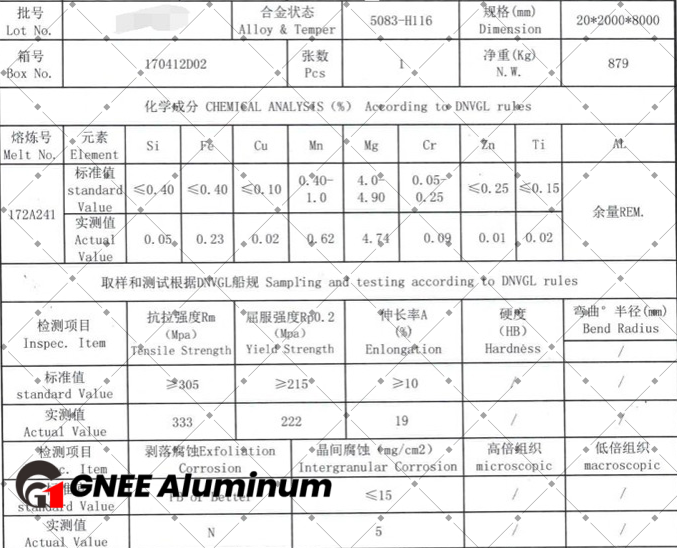
| Yield Strength | ~270 MPa | ~215 MPa |
| Elongation | ~10% | ~12% |
The key takeaway is the significantly higher Yield Strength of 6083-T6, meaning it can take much more load before permanently deforming.
The Corrosion Resistance Difference Explained
5083 aluminium performs significantly better in seawater and harsh chemical environments. This is due to two main factors:
Higher Magnesium Content: 5083 has a much higher percentage of Magnesium (typically around 4.0-4.9%) compared to 6083 (around 0.6-1.2%). Magnesium is the key element that provides excellent corrosion resistance in aluminum alloys.
Absence of Copper: 6083 contains trace amounts of other elements that can slightly reduce its resistance to certain types of corrosion compared to the highly optimized chemistry of 5083.
The Welding Performance Difference
Both alloys have good weldability. However, 5083 is often preferred for critical welded structures like ship hulls and pressure vessels. The weld zones of 5083 retain a very high degree of the parent metal's corrosion resistance and strength, which is essential for long-term structural integrity in marine environments. The H116 and H321 tempers are specifically designed to provide excellent strength and corrosion resistance even after welding.
Not sure which alloy to choose for your specific application? Send your project details, operating environment, and size requirements to our technical team. We'll provide a fast material recommendation and a comparative quote.
Application bewteem 6083 vs 5083 Aluminum Plates
- Shipbuilding & Marine:
Clear Winner: 5083 Aluminium Plate. Used for hulls, decks, superstructures, and masts. It is the only choice for components in direct, long-term contact with saltwater.
- Offshore Platforms & LNG Tanks:
Clear Winner: 5083 Aluminium Plate. Its reliability at low temperatures and resistance to the harsh offshore environment make it essential for LNG storage and platform construction.
- Heavy-Duty Structural Frames:
Clear Winner: 6083 Aluminium Plate. For land-based factory equipment, automation lines, and architectural supports, its higher strength allows for more efficient and lighter designs compared to 5083.
- Transportation & Heavy Equipment:
Clear Winner: 6083 Aluminium Plate. Used in truck bodies, trailers, and railcars where high strength-to-weight ratio is the main goal. Corrosion is a factor, but it is typically managed with coatings, as the environment is not as severe as open sea.
As a factory-direct supplier, GNEE controls quality from casting to shipment, addressing key buyer concerns.
- Marine Grade Certifications for 5083: When you buy 5083 aluminum plate for marine projects, it must come with classification society approvals. We provide plates certified by DNV (Det Norske Veritas), ABS (American Bureau of Shipping), LR (Lloyd's Register), and BV (Bureau Veritas). This is non-negotiable for shipbuilding.
- Stress-Free 6083 for Machining: We supply 6083-T651 thick plates that have been pre-stretched to remove internal stresses. This guarantees the plate will not warp during your CNC machining processes, saving you from costly rework and scrapped parts.
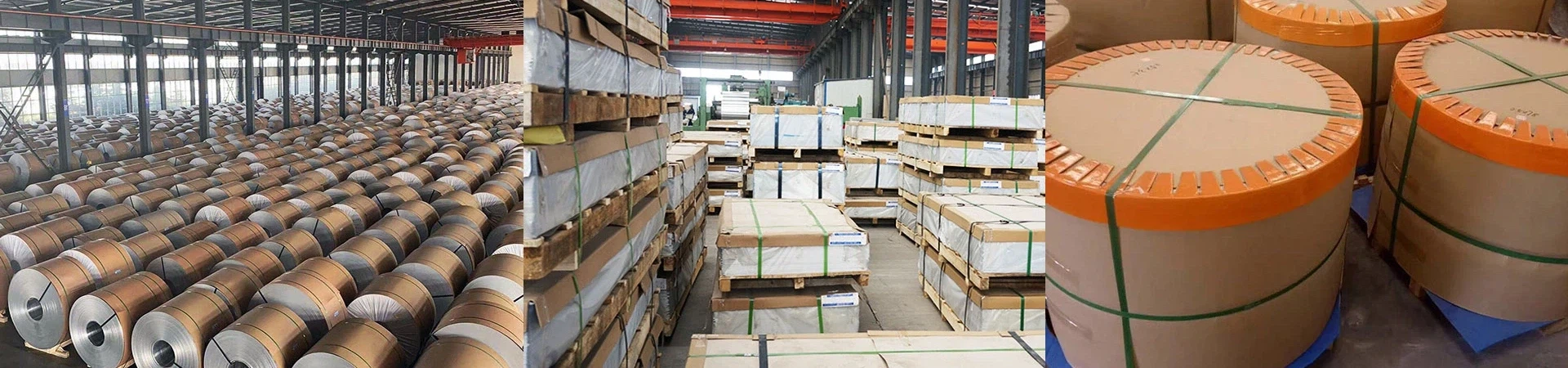
- Specialized Export Packaging: Shipping to coastal or humid regions requires extra protection. Our packaging process for marine-grade aluminum includes:
- Enhanced VCI (Vapor Corrosion Inhibitor) paper interleaving.
- Double-layer wrapping with thick, moisture-proof plastic.
- Extra desiccant packs to absorb all humidity inside the package.
- Sealing on ISPM 15 fumigated wooden pallets suitable for international sea freight.

FAQ Section: Common Procurement Questions
Q: Is 5083 better than 6083 aluminium?
A: Not always. They are engineered for different tasks. 5083 is definitively better for corrosion resistance, making it the choice for marine use. 6083 is better for pure mechanical strength, making it the choice for heavy structural loads.
Q: Can 6083 be used in marine environments?
A: 6083 has good general corrosion resistance and can be used in coastal areas if properly coated or anodized. However, for direct, prolonged exposure to saltwater (like a boat hull), 5083 is a much safer and more reliable choice and is the industry standard.
Q: Which aluminum plate is stronger, 6083 or 5083?
A: 6083 aluminium plate is generally stronger than 5083. In its T6 temper, 6083 has a significantly higher yield strength, meaning it can withstand more stress before it starts to permanently deform.
Q: Are there special tempers for 5083 marine grade aluminum?
A: Yes. The H116 and H321 tempers are specifically designed for marine sheet and plate. They indicate that the alloy has been strain-hardened and stabilized to provide an optimal balance of strength, formability, and resistance to exfoliation corrosion in a marine environment.
Working on a large-scale marine or structural project? We specialize in supplying certified materials for tenders. Send us your complete Bill of Materials (BOM). We support mixed orders of 6083 and DNV-certified 5083 plates in one consolidated shipment.