


6083 aluminum plate is a high-performance, heat-treatable alloy extensively specified in structural engineering for its combination of high strength, good general corrosion resistance, and reliable performance in load-bearing applications.
As engineers seek to reduce weight without compromising structural integrity, 6083 aluminum has become a preferred choice over traditional materials like steel for projects requiring strong, lightweight, and durable structural components. It provides a robust foundation for everything from heavy equipment platforms to complex bridge components.
Why Use 6083 Aluminum Plate for Structural Engineering?
For a material to be viable in structural engineering, it must meet a strict set of criteria. 6083 aluminum plate is suitable for structural use because it consistently delivers on these key requirements:
- High Tensile and Yield Strength: In its T6 temper, 6083 offers mechanical properties that can handle significant stress, making it reliable for primary structural members.
- Excellent Performance in Thick Plates: Unlike some alloys that lose properties in thicker sections, 6083 maintains its stable mechanical properties, making it ideal for heavy-duty components machined from thick blocks.
- Stable and Predictable Performance: Engineers can confidently design with 6083 because its properties under load are well-documented and consistent.
- Good Weldability for Fabrication: The alloy can be readily welded using standard methods, allowing for the fabrication of large and complex structural assemblies.
Explore the full technical specifications for our 6083-aluminium-plate
6083 Aluminum Mechanical Properties
| Property | Value (T6 Temper) |
| Tensile Strength | 320 MPa |
| Yield Strength | 290 MPa |
| Elongation (%) | 10-12% |
| Hardness (Brinell) | 95 HB |
| Shear Strength | 205 MPa |
| Fatigue Strength | 120 MPa |
These properties make 6083 aluminum a highly capable material for medium to heavy structural load scenarios, offering a significant advantage where weight is a critical design factor.
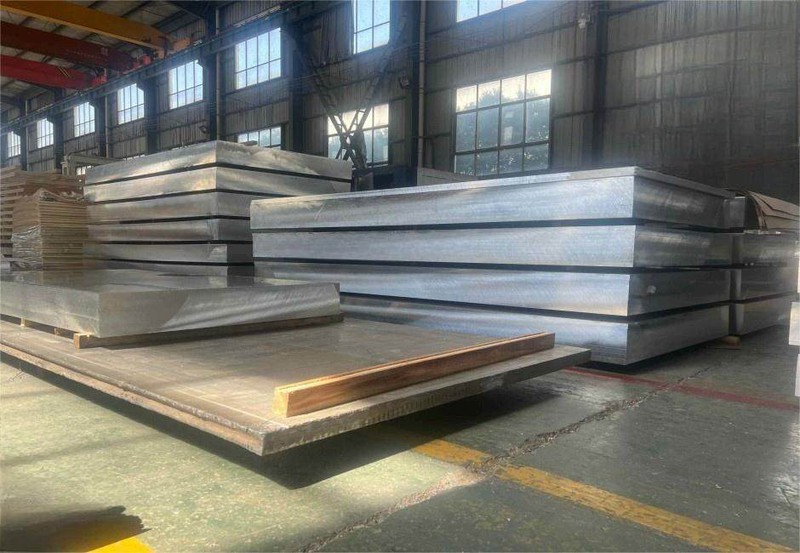
Typical Structural Engineering Applications
Heavy-duty 6083 aluminum plate is not used for decorative purposes; it is engineered for performance. Its applications are found where strength and reliability are paramount:
- Structural Frames and Supports: Primary and secondary support frames for industrial buildings, automation cells, and large-scale architectural structures.
- Heavy Equipment Platforms: Walking platforms, access ramps, and operator cabins on construction, mining, and agricultural machinery.
- Truck and Trailer Chassis: Main frame rails, cross-members, and other structural components of commercial vehicles where reducing vehicle weight directly increases payload capacity.
- Bridge Components: Pedestrian bridges, support elements, and decking where low maintenance and high strength-to-weight ratios are beneficial.
- Industrial Load-Bearing Structures: Bases for heavy machinery, support jigs for manufacturing lines, and load-bearing components in crane and lifting equipment.
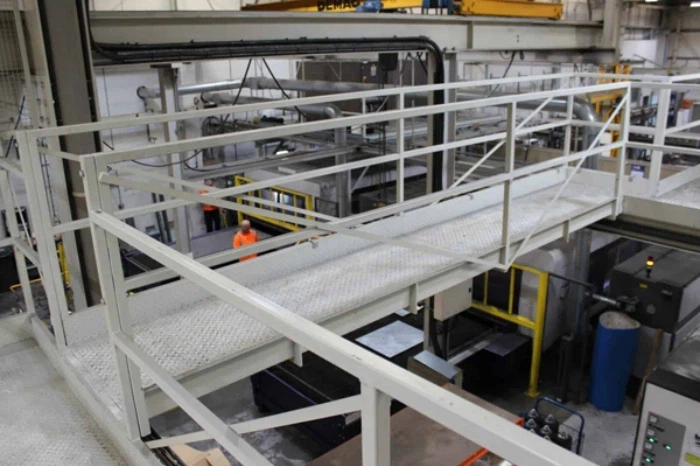
A Case Study of 6083 in Heavy Equipment Manufacturing
To truly understand the value of 6083, let's analyze a common real-world scenario.
The Client: A manufacturer of heavy-duty, off-road transport platforms used in mining operations.
The Problem: Their existing platforms, made from structural steel, were robust but extremely heavy. This limited the vehicle's payload capacity and increased fuel consumption. They needed to reduce the platform's weight by at least 30% without compromising its ability to withstand extreme loads and harsh operating conditions.
The Analysis & Solution:
- Material Comparison: The engineering team compared high-strength steel, 6061-T6 aluminum, and 6083-T6 aluminum. While 6061 offered good properties, the higher yield strength of 6083-T6 provided a greater safety margin for the shock loads experienced in off-road environments.
- Design Modification: A direct 1:1 replacement was not possible. The team redesigned the platform's main beams, using thicker 6083-T651 plates (specifically the T651 temper to ensure flatness after machining) to create deeper I-beam profiles. This design leveraged aluminum's lower density while achieving the required stiffness and strength.
- Fabrication Challenge: Welding thick aluminum sections requires expertise. The team specified a pulsed-GMAW (MIG) welding process with 5356 filler wire, which is compatible with 6000-series alloys and provides high-strength welds. All welders received specific training for aluminum fabrication.
- The Outcome: By switching to 6083 aluminum plate for their structural frames, the manufacturer successfully reduced the platform's weight by 35%. This resulted in a direct 1.5-ton increase in payload capacity per vehicle and a documented 12% reduction in fuel consumption, providing their customers with a significant competitive advantage. This case study highlights that 6083 is not just a material but a solution for advanced structural challenges.
Facing a similar structural challenge? Send us your required thickness, application details, and load requirements. Our engineers can help you assess if 6083 aluminum is the right specification for your project.
6083 vs. 6061 and 5083 for Structural Engineering
How does 6083 compare to other common alloys in a structural context?
6083 vs. 6061 for Structural Engineering
While both are excellent alloys, they are optimized for different tasks.
| Feature | 6083 Aluminium | 6061 Aluminium |
| Strength | Higher | Medium |
| Best Use | Primary structural loads | Machined components, secondary supports |
| Thick Plates | Better for thick plates (>20mm) | Excellent for general use up to medium thickness |
Verdict: For the main, load-bearing frame of a structure, 6083 is the superior choice. For smaller, machined brackets or non-critical supports within that structure, the more common 6061 aluminum plate is often sufficient.
6083 vs. 5083 for Structural Engineering
This comparison is about strength versus environmental resistance.
| Feature | 6083 Aluminium | 5083 Aluminium |
| Strength | Higher | Medium |
| Corrosion Resistance | Good | Excellent (Marine Grade) |
| Best Use | Land-based structures | Marine & highly corrosive environments |
Verdict: For any land-based structural application, 6083's higher strength is the key advantage. You should only consider the lower-strength 5083 aluminum plate if the structure will be permanently exposed to saltwater or other highly corrosive chemicals.
Our Supply Capability for Your Structural Projects
As a specialized 6083 aluminum plate supplier, GNEE is equipped to handle the demands of large-scale structural projects. We provide:
Thick Plate Supply: Standard supply of thick 6083 aluminum blocks up to 300 mm.
Custom Cutting: We offer precision CNC sawing and water jet cutting to deliver parts that match your drawings, saving you valuable processing time and material waste.
Mixed Alloy Supply: We can consolidate your entire aluminum requirement (e.g., 6083 for the frame, 5083 for tanks, 6061 for brackets) into a single shipment.
Robust Export Packaging: We use heavy-duty, fumigated wooden pallets and multi-layer moisture protection to ensure your large plates arrive at your site flat, clean, and damage-free.
Common Buyer Concerns for Structural Applications
Q: Is 6083 strong enough for serious structural engineering?
A: Yes, absolutely. In its T6 condition, 6083 aluminum provides high strength suitable for a vast range of medium to heavy structural applications. Its performance is well-documented and recognized in engineering standards globally.
Q: Can 6083 aluminum replace steel in my structure?
A: In many applications, yes, particularly where weight reduction is a primary goal. However, it is not a direct 1:1 replacement. Due to aluminum's different modulus of elasticity, a structural redesign is required (e.g., using deeper profiles or thicker sections) to achieve the same stiffness as steel. The result is a much lighter but equally strong structure.
Q: What thickness is recommended for structural use?
A: This depends entirely on the specific load requirements and design of your project. However, for primary load-bearing structures, plates above 10 mm are commonly used. For heavy machinery bases and major supports, thicknesses can easily exceed 50 mm to 150 mm.
Working on a structural project with specific fabrication needs? Share your drawings or Bill of Materials with us. We provide quotes for both raw plates and custom-cut components with fast, reliable delivery.


