6083 for Strength, 6061 for Machining
Choosing between 6083 and 6061 aluminium plate is a common decision for engineers and project managers. The choice fundamentally depends on your project's specific requirements for mechanical strength, CNC machining needs, and the final application environment. Both alloys belong to the heat-treatable 6000 series (Al-Mg-Si), making them strong and versatile, but subtle differences in their chemical composition create two distinct performance profiles.
In general, the selection guideline is straightforward:
- 6083 aluminium plate is the superior choice for high-strength structural applications where load-bearing capacity is the primary concern.
- 6061 aluminium plate is the industry-standard choice for general-purpose applications, especially those involving extensive CNC machining and precision parts.
6083 Aluminium Plate vs 6061 Aluminium Plate
This table provides a high-level overview for a quick decision.
| Property | 6083 Aluminium Plate | 6061 Aluminium Plate |
| Strength | Higher | Medium |
| Machinability | Moderate | Excellent |
| Corrosion Resistance | Good | Good |
| Weldability | Good | Good |
| Typical Temper | T6, T651 | T6, T651 |
| Best Use Case | Structural, heavy load | CNC machining, precision parts |
| Availability | Good | Excellent |
When to Use 6083 and 6061 Alloy
Let's dive deeper into the specific scenarios where one alloy clearly outperforms the other. This section will help you justify your material choice for any project tender or internal review.
Choose 6083 Aluminium Plate for Structural Strength
You should specify and buy 6083 aluminium plate if your project requires:
- High Load-Bearing Capacity: 6083 aluminum offers higher tensile and yield strength than 6061 in the same T6 temper. This means it can withstand greater stress before deforming or breaking, making it ideal for support beams, heavy machinery base plates, and structural frameworks.
- Structural Reliability in Demanding Environments: Its enhanced strength profile makes it the go-to material for transportation equipment like dump truck beds and trailer frames, which endure constant vibration and heavy loads.
- Thick Plates or Heavy-Duty Components: For applications requiring thick blocks (e.g., over 20mm), 6083 in the T651 temper is often specified. The T651 temper involves stretching the plate to relieve internal stress, ensuring it remains flat and stable during deep-pocket CNC milling.
View our full specifications and request a quote for 6083-aluminium-plate
Choose 6061 Aluminium Plate for Machining and General Use
You should specify and source 6061 aluminium plate if your project requires:
- Extensive CNC Machining: 6061 is renowned for its excellent machinability. It produces small, well-broken chips, which leads to better surface finishes, longer tool life, and faster machining speeds. It is the preferred material for complex, high-precision parts.
- Precision Parts with Tight Tolerances: Applications like jigs, fixtures, electronic enclosures, and front panels benefit from 6061's predictable machining behavior and stability.
- Versatility and Availability: 6061 is one of the most widely used and readily available aluminum alloys in the world. This means you can often find a 6061 t6 aluminum sheet supplier with shorter lead times and a wider range of standard sizes in stock.
Explore our supply range and get today's price for 6061-aluminium-plate
Technical Breakdown: 6083 vs 6061 Aluminium Properties
To understand why these alloys perform differently, we need to look at their chemical and mechanical data.
6083 vs 6061 Aluminium Chemical Composition Comparison
The key difference lies in the slightly higher percentages of Magnesium (Mg) and Manganese (Mn) in 6083. Manganese, in particular, contributes to increased strength and strain hardening.
| Element | 6083 Content (%) | 6061 Content (%) |
| Magnesium (Mg) | 0.6 – 1.2 | 0.8 – 1.2 |
| Silicon (Si) | 0.7 – 1.3 | 0.4 – 0.8 |
| Manganese (Mn) | 0.4 – 1.0 | ≤ 0.15 |
| Iron (Fe) | ≤ 0.5 | ≤ 0.7 |
| Copper (Cu) | ≤ 0.1 | 0.15 – 0.40 |
| Chromium (Cr) | - | 0.04 – 0.35 |
6083-T6 vs 6061-T6 Aluminium Mechanical Properties Showdown
The chemical differences translate directly into mechanical performance. As shown below, 6083-T6 aluminum offers a clear advantage in yield strength, which is the critical measure for any structural component.
| Mechanical Property | 6083-T6 Aluminium | 6061-T6 Aluminium | What This Means |
| Tensile Strength | ~290 - 320 MPa | ~290 - 310 MPa | Max stress before breaking. 6083 has a slight edge. |
| Yield Strength | ~250 - 270 MPa | ~240 - 275 MPa | Point of permanent deformation. 6083 is consistently stronger. |
| Hardness (Brinell) | ~90 HB | ~95 HB | Both are very machinable, but 6061 is slightly better. |
Still not sure which alloy fits your project? Send us your drawing or application requirements. Our material engineers can analyze your load and machining needs and provide a technical recommendation and a direct price comparison within 24 hours.
Application of 6083 Aluminium Plate vs 6061 Aluminium Plate
Heavy Equipment & Transportation:
Winner: 6083 Aluminium Plate. Used for dump truck bodies, trailer chassis, and railcar components where reducing weight without sacrificing strength is critical. Its higher yield strength resists denting and structural fatigue from road vibrations.
Industrial Structural Frames:
Winner: 6083 Aluminium Plate. For factory automation frameworks, heavy-duty work platforms, and support structures, 6083 provides a higher safety factor.
CNC Machined Components:
Winner: 6061 Aluminium Plate. The go-to material for manufacturing anything from small electronic housings and machinery parts to complex prototypes and automotive components. Its superior chip control is essential for cost-effective production.
General Industrial & Architectural Use:
Winner: 6061 Aluminium Plate. For base plates, brackets, and standard structural parts that don't face extreme loads, 6061 offers the best balance of price, performance, and availability.
How GNEE Ensures Quality
- Production Quality: At GNEE, we utilize a "1+4" hot rolling line, which provides exceptional control over the plate's thickness tolerance and surface flatness. For thick plates, we perform Ultrasonic Testing (UT) to guarantee there are no internal defects like porosity or inclusions that could compromise structural integrity.
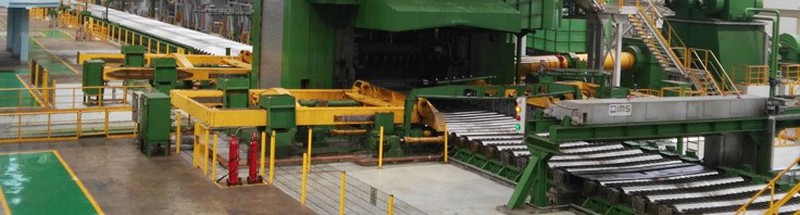
- Stress Relief for Thick Plates: When you order custom cut 6083 T651 block, you are getting a plate that has been mechanically stretched to eliminate internal stresses. This is a critical step that prevents the material from warping or bowing during aggressive CNC machining, saving you time and money on rework.

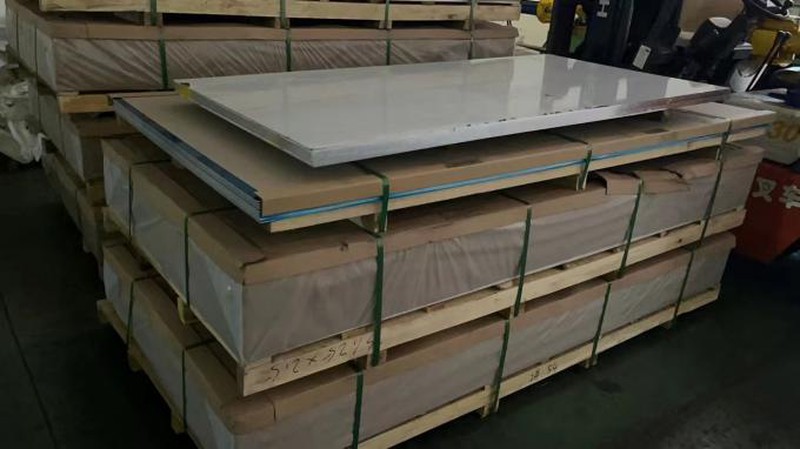
- Packaging for International Shipping: Receiving oxidized or damaged material is a common sourcing pain point. We solve this with a multi-layer export packaging process:
Step 1: PVC film or paper interleaving to protect the surface.
Step 2: Wrapping in waterproof kraft paper.
Step 3: Securing the stack on strong, fumigated wooden pallets (ISPM 15 compliant) with steel bands to prevent shifting during transit.