

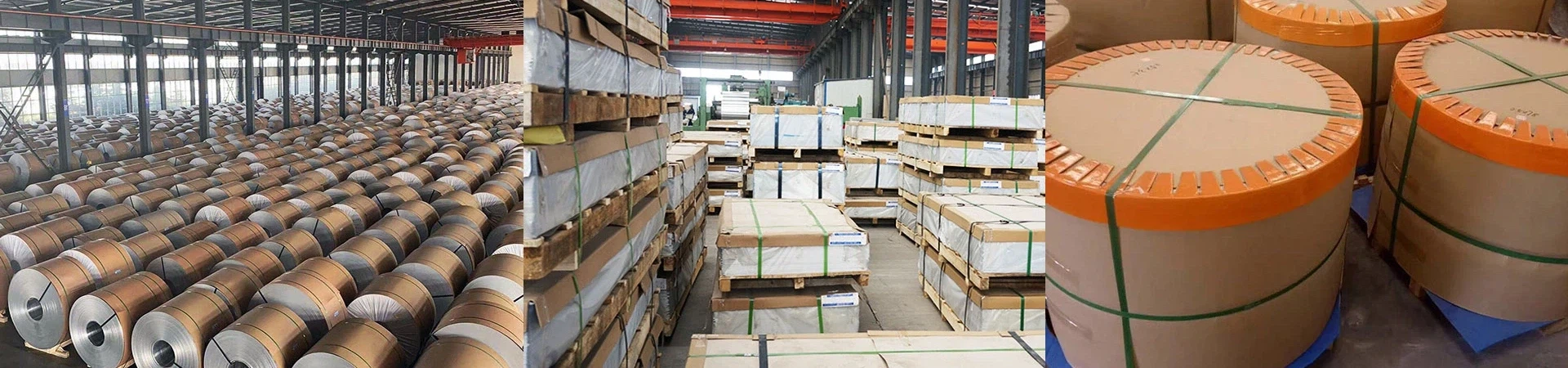
When a procurement manager or an engineer searches specifically for a "3003 hot-rolled aluminum plate," I already know they are dealing with a project that requires serious material performance.
Of the materials you encounter online, 90% consist of continuously cast (CC) cold-rolled aluminum. While CC material is sufficient for basic bending operations, it proves inadequate if your production line involves high-intensity deep drawing, complex spin forming, or high-end anodizing processes-or if you require plates exceeding 8 millimeters in thickness. In such instances, you need to opt for direct-chill (DC) hot-rolled material.
At GNEE, we are a primary 3003 hot-rolled aluminum plate supplier serving global fabrication facilities.
Chemical Composition of 3003 Hot-Rolled Aluminum Plate
Before we talk about the milling process, let's look at the basic chemistry. The 3003 alloy is a workhorse in the 3xxx series. Its defining feature is the addition of Manganese (Mn), which makes it roughly 20% stronger than commercially pure 1100 series aluminum without sacrificing corrosion resistance.
At GNEE, our hot-rolled ingots are strictly controlled to meet ASTM B209 standards.
| Element | Symbol | Typical Percentage (%) | The Factory Purpose |
| Aluminum | Al | Balance (~96.8 - 99.0) | The lightweight base material. |
| Manganese | Mn | 1.0 - 1.5 | The core strengthener. Improves grain structure during hot rolling. |
| Iron | Fe | ≤ 0.7 | Impurity limit. We keep this tight to prevent edge cracking during milling. |
| Silicon | Si | ≤ 0.6 | Impurity limit. Closely monitored alongside Iron. |
| Copper | Cu | 0.05 - 0.20 | Adds a very slight strength boost and refines the metal's structure. |
| Zinc | Zn | ≤ 0.10 | Restricted to maintain the alloy's excellent corrosion resistance. |
DC 3003-O Aluminum Sheet vs. CC Aluminum
If you are buying a DC 3003-O aluminum sheet (Direct Chill, Hot Rolled, Annealed), you are paying a higher processing fee than you would for a CC (Continuous Cast) sheet.
The Hot Rolling Process:
We start with a massive aluminum ingot, often weighing several tons. This ingot is heated to over 400°C (750°F). It is then passed back and forth through a reversing breakdown mill, crushing the thick ingot down into a thinner plate.
Because the metal is deformed at such a high temperature, the internal grain structure recrystallizes. The grains become fine, uniform, and evenly distributed.
Why Choose Hot-Rolled 3003 Aluminum?
- Deep Drawing Capabilities: If you are manufacturing deep pressure cookers or seamless chemical tanks, hot-rolled 3003-O is mandatory. Its uniform grain structure prevents uneven, wavy edges and tearing during deep press operations. CC metal will often split in the press.
- Perfect Anodizing: CC metal often has segregated impurities that show up as dark streaks when anodized. Hot-rolled 3003 provides a flawless, uniform surface for decorative or protective anodizing.
- Thick Plate Availability: Continuous casting cannot effectively produce plates thicker than 8 mm. If you need a heavy-duty base plate, it must be hot-rolled.
| Feature | Hot Rolled | Cold Rolled |
| Grain Structure | Uniform, fine, isotropic | Elongated, directional |
| Deep Drawing Quality | Exceptional (No tearing/earing) | Poor to Average |
| Anodizing Quality | Excellent (Uniform finish) | Poor (Prone to streaking) |
| Thickness Limits | Can produce very thick plates (up to 200mm+) | Generally limited to thin sheets (<8 mm) |
| Price Point | Higher processing cost | Lower, more economical |
Mechanical Properties of Thick 3003 Aluminum Alloy Plate
When you order a thick 3003 aluminum alloy plate straight from the hot mill, it is generally supplied in the F temper (As Fabricated) or, after thermal treatment, the O temper (Fully Annealed).
Here are the mechanical properties for the tempers directly associated with the hot-rolled and annealed processes:
| Temper | Tensile Strength (MPa) | Yield Strength (MPa) | Elongation (%) | Best Factory Application |
| O (Soft/Annealed) | 95 - 130 | ~35 | 25% - 30% | Deep drawing, severe forming, complex spinning. Maximum ductility. |
| F (As Fabricated) | Variable | Variable | Variable | Thick plates used for machining heavy blocks or molds where specific temper isn't required. |
Note: For thick plates (e.g., 50mm and above), elongation values will naturally decrease slightly due to the massive cross-section.
Send the GNEE engineering team your CAD drawings and die specifications. We will analyze your setup and quote the exact hot-rolled DC aluminum blank you need to reduce scrap rates.
Request a Free Technical Consultation Now
Applications for Hot Rolled 3003 Aluminum Plate
At GNEE, we supply this specific material for high-end, demanding applications:
1. High-End Cookware and Pressure Cookers
Deep pots and pressure cookers require a flat aluminum disc to be punched into a deep cylindrical shape in a single stroke. Only hot-rolled 3003-O has the isotropic grain structure to handle this stretch without the bottom tearing out or the top edge becoming highly uneven.

2. Chemical and Liquid Storage Tanks
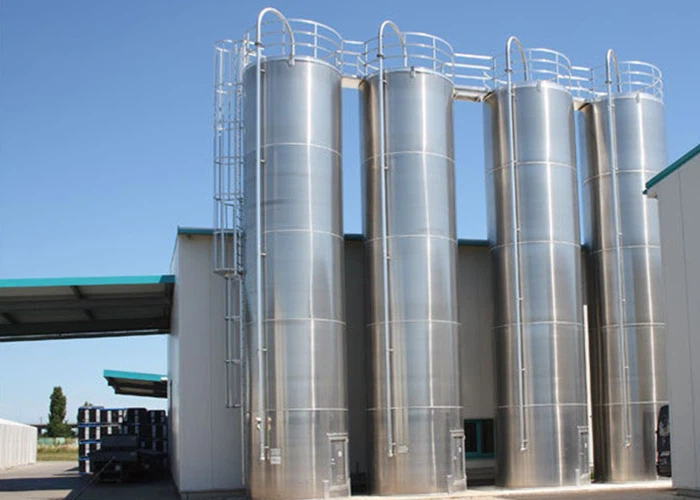
Large industrial tanks holding mild chemicals or water require thick, weldable materials. Hot rolled plates offer excellent weldability. The natural corrosion resistance of the 3003 alloy ensures the tanks last for decades without requiring internal epoxy coatings.
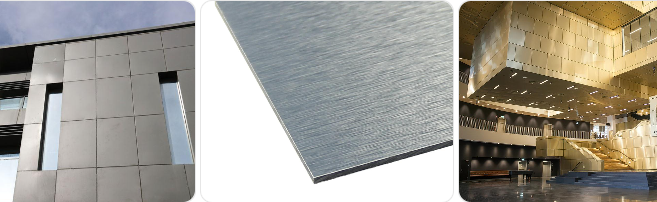
3. Architectural Curtain Walls (Anodized)
For high-end skyscraper facades, architects demand an absolutely uniform surface color. Because hot rolling distributes the manganese evenly, these plates can be anodized or color-coated without any visual banding or structural defects showing through the finish.
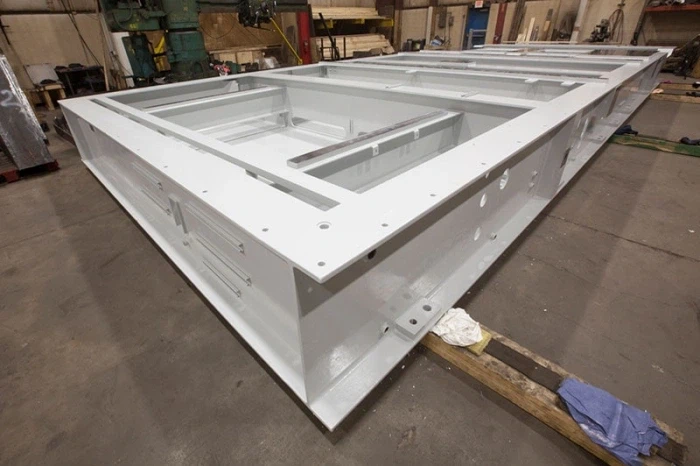
4. Machined Base Plates
For industrial machinery, engineers often need a hot rolled 3003 aluminum block to CNC machine into custom brackets, base plates, or low-pressure mold bases. The F-temper hot-rolled blocks provide excellent dimensional stability during heavy milling operations.
How GNEE Calculates the Price
We do not hide our pricing structure. Your bulk order is calculated simply:
Current SME (Shanghai Metal Exchange) Aluminum Price + DC Milling Processing Fee + Logistics.
Procurement Tip: DC (Hot Rolled) processing fees are naturally higher than CC processing fees because heating and rolling massive ingots requires significantly more energy and specialized machinery. However, by reducing your factory scrap rate (due to better formability) and eliminating anodizing failures, the total ROI on DC 3003 is often much better for high-end products.
Quality Control and Bulk Packaging
- Ultrasonic Testing (UT): For very thick plates, GNEE conducts UT inspections to guarantee there are no internal gas pockets, porosity, or cracking that could ruin your CNC machining process.
- Surface Protection: Hot-rolled plates can be interleaved with acid-free paper or covered with PVC film to protect the smooth finish.
- Export Pallets: Heavy plates are strapped tightly to custom fumigated wooden pallets. We use heavy-duty plastic encapsulation and generous amounts of silica gel desiccants to prevent "white rust" caused by ocean humidity.
Send GNEE your exact thickness, width, length, and monthly tonnage requirements. We will provide a transparent SME-based quote within 24 hours.


