

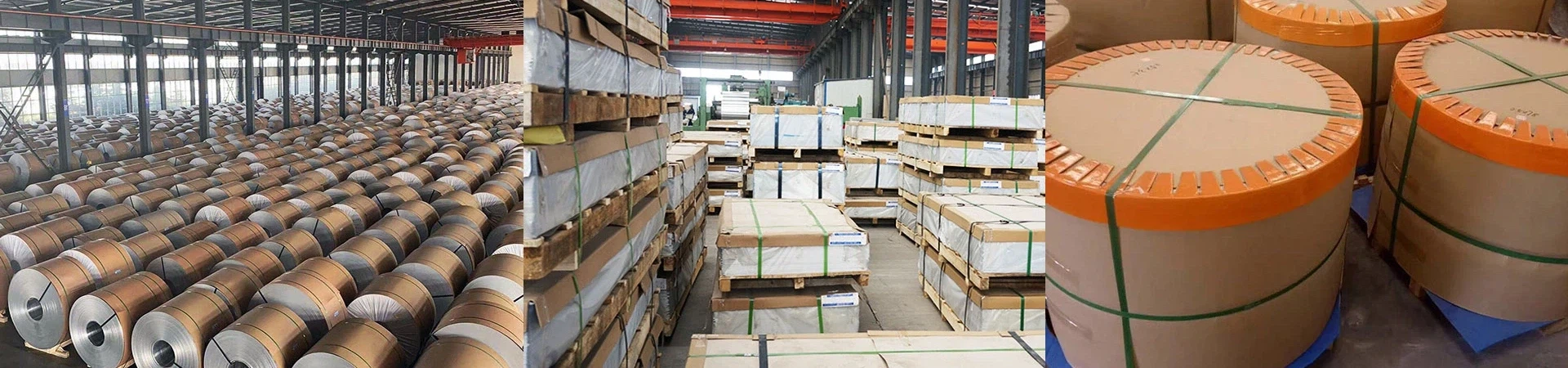
Defining the 3003 Aluminum Plate
3003 aluminum is a non-heat-treatable wrought alloy. By alloying standard aluminum with approximately 1.2% Manganese, the resulting metal becomes roughly 20% stronger than 1100 series aluminum.
Crucially, this strength increase does not ruin the material's workability or its excellent natural resistance to atmospheric and chemical corrosion.
Chemical Composition of 3003-O Aluminum Sheet
Whether you are ordering flat sheets or a bulk 3003-O aluminum coil, the base chemistry must remain strictly within international standards to ensure consistent production without material failure. At GNEE, our mill test certificates (MTCs) verify adherence to the ASTM B209 standard.
| Element | Symbol | Typical Percentage (%) | Factory Reality / Purpose |
| Aluminum | Al | ~96.8 - 99.0 | The base matrix. |
| Manganese | Mn | 1.0 - 1.5 | The primary alloying element. It refines the grain structure and provides the 20% strength boost. |
| Iron | Fe | ≤ 0.7 | Impurity. Tightly controlled at the GNEE mill to ensure the sheet won't crack during cold rolling. |
| Silicon | Si | ≤ 0.6 | Impurity limit. |
| Copper | Cu | 0.05 - 0.20 | Added in trace amounts to slightly increase tensile strength. |
| Zinc | Zn | ≤ 0.10 | Restricted to maintain the alloy's high resistance to corrosion. |

Mechanical Data for 3003-H14 Aluminum Sheet Specs
A common mistake buyers make is simply asking for "3003 aluminum." You must specify the temper. Because 3003 cannot be hardened in an oven (non-heat-treatable), its strength is determined by how much it is cold-worked (rolled) at the mill.
The most common request we receive is for 3003-H14 aluminum sheet specs. "H14" means it is half-hard. Here is how the mechanical properties break down across the most common tempers we produce:
| Temper | Tensile Strength (MPa) | Yield Strength (MPa) | Elongation (%) | Machining Characteristics |
| O (Soft/Annealed) | 110 | 40 | ~30% | Extremely ductile. Ideal for severe deep drawing and complex spinning. |
| H14 (Half Hard) | 150 | 145 | 8% - 16% | The industry standard. Balances strength with good 90-degree bending capabilities. |
| H18 (Full Hard) | 200 | 185 | ~4% | Very rigid. Used for flat panels or corrugated profiles. Will crack if bent sharply. |
| H24 (Half Hard) | 150 | 145 | 8% - 16% | Strain-hardened and partially annealed. Similar to H14 but with better ductility. |
Send GNEE your CAD drawings and bending radius requirements. Our metallurgists will review your process and recommend the exact temper to minimize your scrap rate.
Request a Free Technical Review Now
Fabrication of Custom 3003-H24 Aluminum Tread Plate
Bending and Forming
If your production involves standard 90-degree bends-like making HVAC ductwork or equipment housings-the H14 or H24 temper is your best choice. It can typically sustain a bend radius of 1 to 1.5 times the material thickness (1t - 1.5t) without fracturing the outer grain. For custom 3003-H24 aluminum tread plate (often called diamond plate), the formability remains excellent, making it perfect for custom toolboxes or trailer flooring.
Welding Realities
3003 is highly weldable using standard TIG or MIG methods. It does not require extreme pre-heating.
Shop Floor Tip: If you are welding 3003 to itself, use a 1100 filler rod. If you are welding 3003 to a structural alloy like 6061 or 5052, switch to a 4043 filler rod. Be aware that the heat from the welding torch will create a Heat Affected Zone (HAZ), which locally reduces the metal back to an "O" (soft) temper, lowering its strength around the weld seam.

Common Uses for 3003-H18 Aluminum Roofing Sheet
- Commercial Kitchen Equipment: Due to its non-toxic nature and excellent thermal conductivity, 3003-O temper is widely deep-drawn into large commercial cooking pots, baking pans, and food storage containers. The aluminum naturally forms an oxide layer that prevents it from reacting with food.
- HVAC Systems and Heat Exchangers: Aluminum 3003 is the backbone of the heating and cooling industry. It is used extensively to manufacture evaporator coils, car radiators, and industrial pipe insulation jacketing. It transfers heat rapidly and won't rust from condensation.
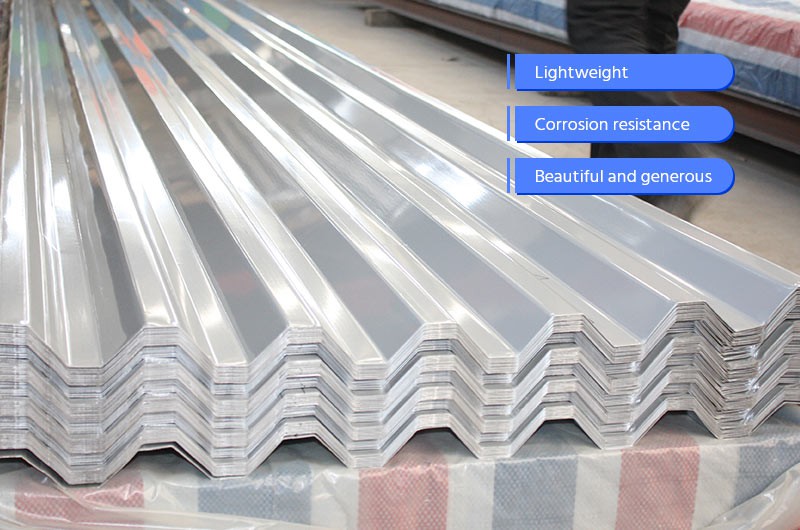
- Building and Roofing: For agricultural buildings, warehouses, and industrial structures, the 3003-H18 aluminum roofing sheet is a standard. The H18 full-hard temper gives corrugated profiles the rigidity needed to withstand wind and snow loads, while the manganese alloy ensures decades of rust-free performance.
- Chemical Equipment: For storage tanks holding mild chemicals, 3003 offers an economical, weldable, and corrosion-resistant alternative to expensive stainless steel.
Factory Sourcing of ASTM B209 3003 Aluminum Supplier
Your Price = Current SME (Shanghai Metal Exchange) Aluminum Ingot Rate + Mill Conversion Fee + Ocean Freight.
Why source your 3003 orders directly from GNEE?
- No Supply Chain Bottlenecks: We stock massive quantities of raw ingots, allowing us to rapidly roll 3003 sheets, coils, or plates to your exact custom width and thickness tolerances.
- Marine-Grade Export Packaging: Aluminum is susceptible to "white rust" if moisture gets trapped between sheets during ocean transit. GNEE uses heavy-duty waterproof kraft paper, plastic encapsulation with industrial desiccants, and solid fumigated wooden pallets. Your material arrives dry, clean, and ready for the stamping press.
- Strict Thickness Tolerances: Cheap suppliers will send you material that varies in thickness, causing your automated CNC feeders to jam. We strictly adhere to ASTM B209 thickness tolerances.
Send us your exact specifications-alloy, temper, thickness, dimensions, and estimated order volume. The GNEE wholesale team will provide a transparent, SME-based quotation within 24 hours.
Contact GNEE Wholesale Sales Team


