


Pure aluminum (like the 1100 series) is incredibly soft and highly resistant to rust, but it lacks the structural integrity needed for most commercial applications. The 3003 alloy belongs to the 3xxx series, meaning its primary alloying element is Manganese (Mn).
By adding roughly 1.0% to 1.5% manganese, 3003 becomes about 20% stronger than pure 1100 aluminum. Crucially, this boost in strength does not ruin the metal's natural workability or its resistance to corrosion. Because it contains very few other alloying elements (under 4% total), it is classified as a non-heat-treatable wrought alloy. You cannot harden it in an oven; it only gains strength through cold working (like rolling it thinner at the mill).
This perfect balance of moderate strength, high formability, and low cost is why wholesale 3003 aluminum sheet is the baseline material for everything from HVAC systems to truck trailers.
Chemical Composition of 3003-O Aluminum Plate
To ensure consistent performance on your automated production lines, the chemical makeup of the metal must be strictly controlled. At GNEE, our production complies with the ASTM B209 standard. Whether you are ordering a hard temper or a bulk 3003-O aluminum plate (fully annealed/soft), the chemistry remains the same:
| Element | Symbol | Typical Percentage (%) | Function in the Alloy |
| Aluminum | Al | ~96.8 – 99.0 | The base material. |
| Manganese | Mn | 1.0 – 1.5 | Provides the 20% strength boost over pure aluminum. |
| Iron | Fe | ≤ 0.7 | Impurity limit. Kept strictly under control to prevent cracking. |
| Silicon | Si | ≤ 0.6 | Impurity limit. |
| Copper | Cu | 0.05 – 0.20 | Adds a very slight increase in overall strength. |
| Zinc | Zn | ≤ 0.10 | Kept low to maintain excellent corrosion resistance. |
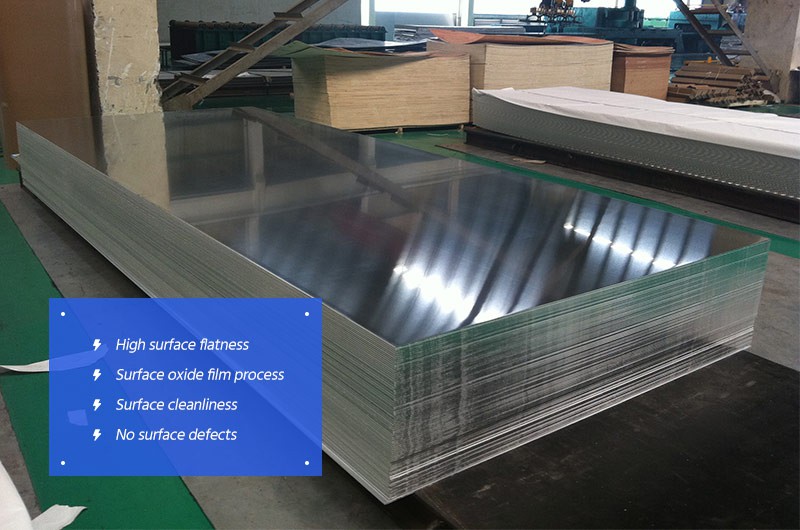
Mechanical Properties of 3003-H14 Aluminum
Here is a realistic look at the mechanical properties and what they actually mean for your factory floor:
| Temper | Tensile Strength (KSI) | Yield Strength (KSI) | Elongation (%) | Best Factory Application |
| 3003-O (Soft) | 14 – 19 | 6 | ~30% | Deep drawing (e.g., stamping deep food trays or complex spun parts). Highly ductile. |
| 3003-H14 (Half Hard) | 20 – 26 | 21 | ~8% - 16% | The industry standard. Excellent for 90-degree bending without cracking. |
| 3003-H18 (Full Hard) | 27+ | 27 | ~4% | Flat panels, roofing, and structural jacketing. Do not attempt sharp bends. |
Note: Elongation determines how much the metal can stretch before it tears. If you are doing CNC press brake work, pay close attention to this number.
Unsure which temper your production line requires?
Don't risk ordering material that will crack in your press machines. Send your CAD drawings or bending radius requirements to the GNEE engineering team. We will recommend the exact temper and thickness you need.
Request a Free Technical Consultation Now
Bending and Welding Custom 3003 Aluminum sheet
Bending and Forming
If you need to bend metal, custom 3003 aluminum strip or sheet (specifically in the H14 temper) is arguably the best candidate on the market. It has a generous gap between its yield strength and tensile strength, meaning you can bend it permanently into shape without easily snapping it. H14 can typically be bent to a tight radius (often 1t to 2t, where "t" is the thickness of the metal) without fracturing the outer grain structure.
Welding Characteristics
Unlike the 7000 series, which is notoriously difficult to weld, 3003 is highly weldable using standard TIG or MIG processes. It does not require extreme pre-heating.
Tip: When welding 3003 to itself or to pure 1100 aluminum, we recommend using an 1100 filler rod. If you are welding 3003 to a different alloy class (like 5052 or 6061), you should switch to a 4043 filler rod to prevent weld cracking and ensure a solid joint.
Uses for 3003-H24 Aluminum Tread Plate and Sheets
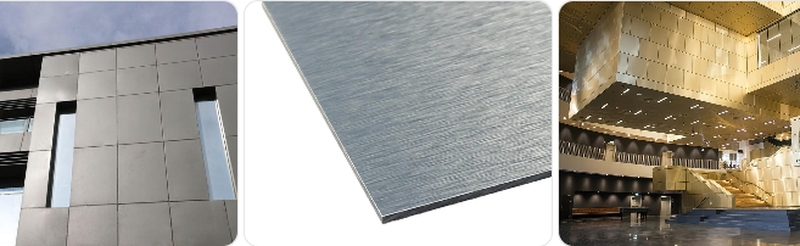
- HVAC and Insulation Jacketing: 3003 sheet is the undisputed king of air conditioning ducts, refrigerator panels, and industrial pipe jacketing. It is lightweight, conducts heat efficiently, and won't rust from condensation.
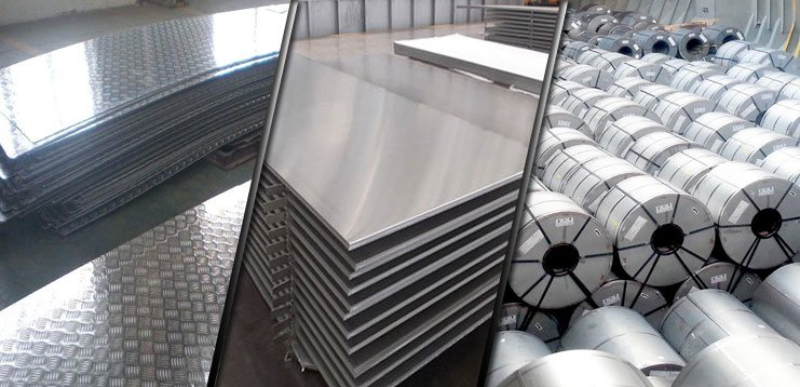
- Commercial Transportation: Because it balances weight reduction with moderate strength, 3003-H24 aluminum tread plate is heavily used for trailer roofing, interior protective kick plates, and truck beds where non-slip, rust-proof surfaces are required.
- Food and Chemical Handling: 3003 is non-toxic and resists mild chemicals. It is widely stamped into storage containers, large cooking vessels, and chemical storage tanks.
- General Architecture: From folded acoustic ceilings to exterior siding and garage doors, its excellent weather resistance makes it a staple in construction.
How We Price 3003 Aluminum Sheet (vs. 5052)
Current SME Aluminum Ingot Price + Mill Processing Fee (Rolling/Cutting/Packaging) + Ocean Freight.
Here is the reality of the market: The base alloy of 5052 contains Magnesium, which makes it harder, much more resistant to saltwater (marine grade), but significantly harder to roll at the mill. Therefore, the mill processing fee for 5052 is noticeably higher than for 3003.
If your product is not going into a highly corrosive marine environment or doesn't require the higher tensile strength of 5052, 3003 is almost always the more cost-effective choice. It is easier to mill, easier to source in bulk, and costs less per metric ton.
GNEE Supply Chain
When you order wholesale 3003 aluminum from us:
- Surface Protection: Depending on your needs, we can supply mill finish or apply PE/PVC protective film to prevent scratching during your stamping process.
- Anti-White Rust Packaging: We wrap all coils and flat sheets in thick waterproof kraft paper, encapsulate them in plastic film with industrial desiccants, and secure them with steel bands to fumigated wooden pallets.
- Tolerance Control: We guarantee strict thickness and width tolerances so your automated CNC feeders never jam.
Send GNEE your required alloy, temper, dimensions, and estimated monthly volume. We will provide a detailed, competitive quote based on today's SME prices within 24 hours.
Contact GNEE Wholesale Sales Team Now


