


Key Takeaways
- 5052 (Mg 2.2–2.8%) and 5086 (Mg 3.5–4.5%) are both non-heat-treatable Al–Mg alloys; the magnesium difference drives a roughly 20% gap in typical ultimate tensile strength.
- Chemical composition and mechanical limits are defined by ASTM B210 (drawn seamless tube) and ASTM B241 (extruded seamless tube and pipe); the Aluminum Association Teal Sheets are the controlling composition reference.
- Specify 5052 for bent, low-stress fluid lines when ductility and cost matter most; specify 5086 for welded, load-bearing, or classification-approved marine structures.
- Both alloys resist seawater corrosion; 5086 is the safer specification for welded joints and continuous immersion.
- Accept material only against a Mill Test Certificate (MTC) showing actual heat chemistry and tensile results - never rely on the label alone.
Why Alloy Selection Matters for Marine Piping
Fuel lines on a commercial workboat, hydraulic circuits on an offshore platform, and deck railing structures fail for the same reasons when the alloy is wrong: chloride pitting, vibration fatigue, and strength loss at welded joints. Saltwater exposure, engine vibration, and high-pressure fluid transfer leave no margin for guesswork. Both 5086 and 5052 are 5xxx series (Al–Mg) alloys designed for saltwater service, but they are not interchangeable.
This guide compares the two alloys by chemistry, mechanical properties, weldability, corrosion behavior, and typical applications so that a buyer or design engineer can write the correct specification before sourcing. All composition and property figures below are traceable to the standards and references listed at the end of this article; production lots are verified per batch by the Mill Test Certificate (MTC) that ships with every GNEE order.
Chemical Composition of 5086 And 5052 Aluminum: The Magnesium Difference
Both alloys are strengthened by magnesium in solid solution (non-heat-treatable), so strength and corrosion resistance come from magnesium content rather than heat treatment. The composition limits below follow the Aluminum Association International Alloy Designations and Chemical Composition Limits (Teal Sheets) and ASTM B210/B241 Table 1.
| Element (wt%) | 5086 - limits | 5052 - limits |
|---|---|---|
| Silicon (Si) | 0.40 max | 0.25 max |
| Iron (Fe) | 0.50 max | 0.40 max |
| Copper (Cu) | 0.10 max | 0.10 max |
| Manganese (Mn) | 0.20–0.70 | 0.10 max |
| Magnesium (Mg) | 3.5–4.5 | 2.2–2.8 |
| Chromium (Cr) | 0.05–0.25 | 0.15–0.35 |
| Zinc (Zn) | 0.25 max | 0.10 max |
| Titanium (Ti) | 0.15 max | 0.15 max |
| Others (each / total) | 0.05 / 0.15 | 0.05 / 0.15 |
| Aluminum | Balance | Balance |
Data source: Aluminum Association Teal Sheets; ASTM B210/B241 Table 1 (see References). The controlling reference for composition is the Teal Sheets; cross-check every delivery against the MTC heat analysis.
Magnesium is the decisive difference: 5052 sits near a 2.5% Mg midpoint, 5086 near 4.0%. More magnesium means higher solid-solution strengthening - and a more stable, self-healing oxide film in saltwater. It also means less formability and higher cost per ton. That trade-off is exactly what the rest of this article quantifies.
Mechanical Properties by Temper
Properties depend on temper as much as on alloy. "Typical" values below are representative mill data used for preliminary design; the ASTM minimums for drawn seamless tube (ASTM B210) are the contractual floor. The MTC values for your specific heat are the ones that govern acceptance.
| Alloy & Temper | Ultimate Tensile (typical) | Yield Strength (typical) | Elongation (typical) | ASTM B210 minimums (drawn tube) | Typical service role |
|---|---|---|---|---|---|
| 5052-O (annealed) | 195 MPa (28 ksi) | 90 MPa (13 ksi) | 25% | UTS 172–241 MPa (25–35 ksi); YS ≥ 69 MPa (10 ksi) | Extreme bending radii, forming |
| 5052-H32 | 230 MPa (33 ksi) | 195 MPa (28 ksi) | 12% | UTS ≥ 214 MPa (31 ksi); YS ≥ 159 MPa (23 ksi) | General fluid transfer |
| 5086-O (annealed) | 260 MPa (38 ksi) | 115 MPa (17 ksi) | 22% | UTS 241–317 MPa (35–46 ksi); YS ≥ 97 MPa (14 ksi) | Formed structural parts |
| 5086-H32 | 290 MPa (42 ksi) | 205 MPa (30 ksi) | 12% | UTS ≥ 276 MPa (40 ksi); YS ≥ 193 MPa (28 ksi) | Structural marine welding |
| 5086-H111 (extruded) | 275 MPa (40 ksi) | 145 MPa (21 ksi) | 14% | Per ASTM B241 (extruded); confirm with MTC | Extruded marine structure |
Two physical constants are worth noting for piping design: density is 2.68 g/cm³ for 5052 and 2.66 g/cm³ for 5086; elastic modulus is approximately 71 GPa (10,000 ksi) for both; melting range is 607–649 °C for 5052 and 585–640 °C for 5086 (Aluminum Association published data). Weight savings versus steel remain the headline reason shipyards specify aluminum piping at all.
Temper selection rule: for drawn seamless tube per ASTM B210, standard tempers are O and H32/H34/H36/H38; for extruded seamless tube and pipe per ASTM B241, tempers are O, H111, H112, and F. State the temper explicitly on the purchase order - "5086 tube" alone is not a complete specification.
Weldability and Corrosion Resistance
Welding
Both alloys weld readily with gas tungsten arc (GTAW) and gas metal arc (GMAW) processes. Use ER5356 filler wire (AWS A5.10) for 5086-to-5086, 5086-to-5052, and 5052-to-5052 joints; ER5654 is an acceptable alternative for 5052-to-5052. ER5356 provides the best joint strength, color match, and saltwater corrosion resistance for the 5xxx family.
One claim needs to be stated precisely: an annealed (O-temper) 5086 weld retains most of its base-metal strength, because O-temper strength comes from magnesium in solid solution rather than cold work. Strain-hardened tempers (5052-H32, 5086-H32, 5086-H111) do soften in the heat-affected zone (HAZ) - design welded joints on as-welded or annealed properties, not on the full H-temper values. This applies to both alloys, and it is why classification-society rules ask for welded-joint qualification data.
A second service-limit note: 5086 contains more than 3% magnesium, so continuous service above roughly 65–80 °C can promote sensitization over long exposure. Confirm elevated-temperature limits for your specific application with the classification society or the design authority.
Corrosion resistance
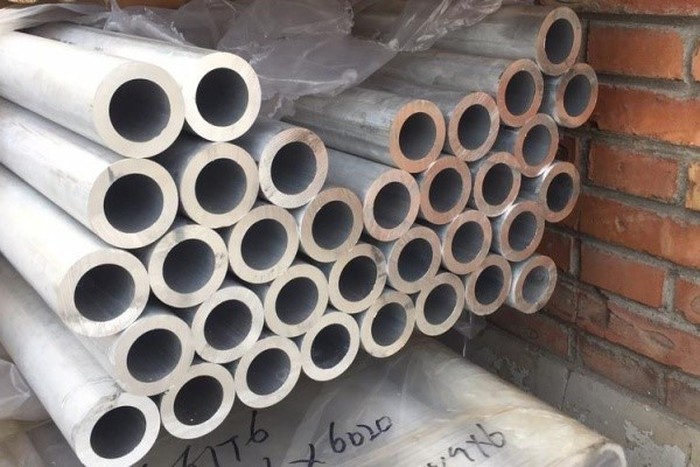
Both alloys offer outstanding resistance to seawater and marine atmospheres; their natural oxide film self-repairs after damage. In practice, 5086's higher magnesium content gives a tougher, more stable film, which is why it is the preferred tube alloy for permanently submerged or spray-zone service.
For hull plate and sheet, ASTM B928 defines marine-grade 5086 (tempers H116/H321) with stress-corrosion screening; for tube and pipe, compliance is demonstrated through the MTC and, where required, classification-society survey (ABS, DNV, LR, BV). Where aluminum piping contacts stainless steel or copper alloys, use dielectric isolation to prevent galvanic corrosion.
Application Selection Guidance
Do not over-engineer a system and inflate the budget. Shipyards and industrial manufacturers typically split applications as follows.
Specify 5052 when:
- Complex routing and tight-radius bending dominate (instrument air lines, vent tubes, interior conduits).
- Service is low-pressure fluid transfer at ambient temperature.
- The part is non-structural: interior handrails, consoles, trim, general tubular frames.
- Cost and stock availability outweigh strength margin.
Specify 5086 when:
- The tube is welded into a load-bearing structure: masts, booms, deck railings, davit crane frames, patrol-boat framing.
- High-pressure marine hydraulic or firewater systems demand stronger seamless pipe.
- The line is continuously submerged or in the direct spray zone of an offshore installation.
- The project must pass classification-society inspection (ABS, DNV, LR, BV).
Quick decision checklist for a new line or structure:
- Does it carry structural load? → yes: 5086
- Is it extensively welded? → yes: 5086 (O or as-welded design properties)
- Continuous seawater immersion or spray? → yes: 5086
- Classification approval required? → yes: 5086, with class documentation
- Severe bending with minimal load? → yes: 5052
- Budget-limited, low-risk service? → yes: 5052
Manufacturing: Seamless vs. Porthole-Extruded
For marine-grade tubing, the production route matters as much as the alloy. Two seamless routes are specified in the standards: ASTM B210 drawn seamless tube - an extruded hollow is drawn over a mandrel to tight outer-diameter and wall tolerances, suitable for precise fluid transfer, instrumentation, and coiled supply; and ASTM B241 seamless extruded tube and pipe - produced directly by die-and-mandrel extrusion in larger sizes, with O/H111/H112 tempers, suited to structural service.
Structural (porthole) extrusion produces tubes with a longitudinal weld seam; these are fine for non-pressurized structural members but should not be specified where hydraulic pressure surges are possible. For high-pressure service, GNEE recommends drawn or mandrel-extruded seamless 5086: with no longitudinal seam, there is no joint to split under pressure cycling. A complete delivery includes the MTC with heat number, actual chemistry, and tensile results, so the buyer can verify compliance against the specification without a third-party retest.
GNEE Capabilities and Certifications
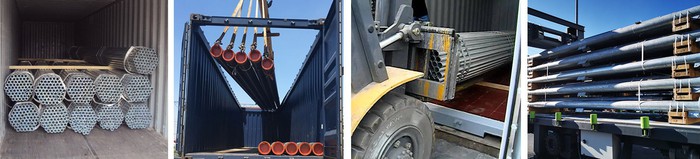
- Size range: outer diameter 4–600 mm; wall thickness 1–25 mm; standard 6 m length or precision cut-to-length.
- Product forms: drawn seamless tube (ASTM B210) and extruded seamless tube/pipe (ASTM B241); tempers O, H32, H111, H112.
- Quality assurance: every batch ships with a detailed Mill Test Certificate (MTC) verifying chemical composition and mechanical strength.
- Marine compliance: tubing can be supplied to ABS, DNV, LR, and BV requirements for global shipbuilding projects.
- Tolerance control: outer diameter and wall thickness controlled to ASTM B210 and ASTM B241 tolerance tables to ensure fit-up with standard fittings.
- Corporate background: HENAN GNEE NEW MATERIAL CO., LTD operates as a direct manufacturer with five subsidiary corporations in Anyang, Tianjin, Hong Kong, and Singapore.


Get a Specification-Checked Quote
Send your alloy, temper, outer diameter, wall thickness, length, and quantity - or upload a CAD drawing - and the GNEE engineering team will reply with a datasheet-matched quotation, including MTC documentation and, where required, classification-society paperwork. From a single bundle of 5052 pipe for a repair to 20 metric tons of 5086 seamless tube for a new vessel build, the same factory-direct traceability applies.


