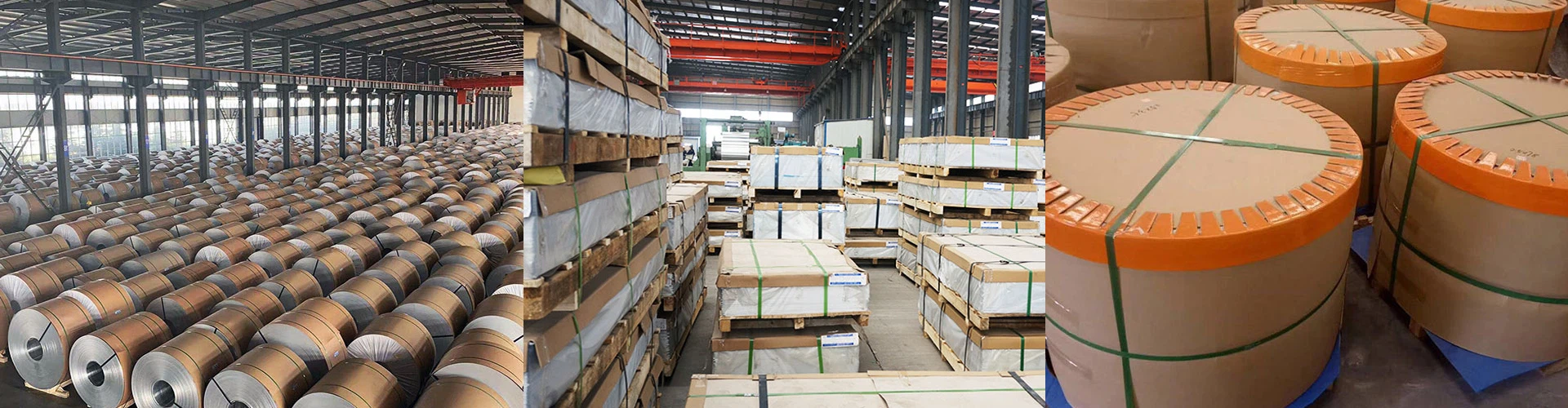

Yes, 5083 aluminum is a premier marine-grade alloy. Known for its exceptional seawater corrosion resistance and ability to retain extreme strength after welding, it is widely specified for shipbuilding, offshore platforms, and marine grade aluminum pipes. It operates in harsh salt environments without requiring protective coatings.
Why 5083 Aluminum Is Considered the Ultimate Marine-Grade Alloy
When engineers design systems for ocean environments, the primary enemy is intergranular corrosion caused by saltwater.
The secret to 5083 marine aluminum lies in its high magnesium (Mg) content, which ranges strictly between 4.0% and 4.9%. This specific chemistry allows the metal to instantly form a highly dense, self-repairing oxide layer when exposed to the atmosphere or seawater.
Furthermore, unlike the 6xxx series alloys which lose up to 50% of their structural integrity in the Heat Affected Zone (HAZ) after welding, 5083 retains nearly all of its base-metal strength. This makes it the absolute industry standard for heavy-duty welded marine structures.
5083 Marine Aluminum Chemical & Mechanical
To understand why it performs so well, you need to look at the mill data. At GNEE, our 5083 aluminum products are strictly controlled to meet global maritime standards.
5083 Aluminum Chemical Composition
| Element | Percentage (%) | Engineering Purpose |
| Magnesium (Mg) | 4.0 - 4.9 | Core driver for high strength and marine corrosion resistance. |
| Manganese (Mn) | 0.4 - 1.0 | Enhances tensile strength without reducing ductility. |
| Chromium (Cr) | 0.05 - 0.25 | Prevents stress-corrosion cracking in harsh environments. |
| Iron (Fe) | 0.40 Max | Kept low to prevent material brittleness. |
| Aluminum (Al) | Remainder | Core matrix. |
5083 Mechanical Properties (Typical Marine Tempers)
Note: The temper you choose depends on whether you are buying flat plates or extruded tubes.
| Temper | Tensile Strength | Yield Strength | Elongation | Best For |
| O (Annealed) | 275 MPa | 125 MPa | 16% | Complex forming and deep drawing. |
| H111 (Extrusions) | 275 MPa | 165 MPa | 12% | Marine grade aluminum pipe and extruded profiles. |
| H116 / H321 (Plate) | 305 MPa | 215 MPa | 10% | Ship hulls and heavy load-bearing decks. |
Where Is 5083 Aluminum Used in the Marine Industry?
You will find 5083 specified in blueprints where structural failure means catastrophic loss.
- Shipbuilding: Commercial vessel hulls, military patrol boats, and luxury yacht superstructures.
- Offshore Platforms: Oil rig helicopter decks and structural columns.
- Fluid Routing Systems: High-pressure hydraulic lines and fuel transfer systems (This is where seamless piping becomes critical).
Why 5083 Aluminum Tubes Are Critical in Marine Systems
Not only is the vessel's hull primarily constructed from 5083 aluminum plates, but its piping system also relies on 5083 aluminum tubes.
Engineers specifically choose the 5083 aluminum tube for boats and offshore rigs because standard steel piping is simply too heavy and rusts rapidly. Transitioning to a 5083 tubing system offers massive weight savings (up to 50% lighter than steel) which directly translates to better fuel efficiency and higher payload capacity.
Common applications for our custom marine pipe include:
- High-pressure saltwater desalination lines.
- Welded tubular mast structures and heavy-duty deck railings.
- Below-deck diesel fuel systems and hydraulic fluid routing.
5083 vs 5086 vs 5052 Marine Aluminum Tube: Which to Choose?
If you are designing a piping system, you might be confused between the 5xxx series alloys. Here is the direct breakdown from our technical team:
| Alloy Grade | Structural Strength | Seawater Corrosion Resistance | Typical Tubing Application |
| 5052 Aluminum Tube | Medium | Good | Interior lines, low-pressure fuel routing, tight bends. |
| 5086 Aluminum Tube | High | Excellent | Structural framing, welded manifolds, deck hardware. |
| 5083 Aluminum Tube | Extreme | Excellent | Heavy-duty marine pipelines, extreme pressure systems. |
If you are comparing 5083 vs 5086 marine aluminum, 5083 is harder and stronger, making it better for extreme load-bearing pipes. However, 5086 is slightly easier to bend and form. Choose based on your specific CNC bending capabilities.
Standards & Certifications for Marine Piping
If your pipes do not have the right paperwork, the classification society will not let your ship leave the port.
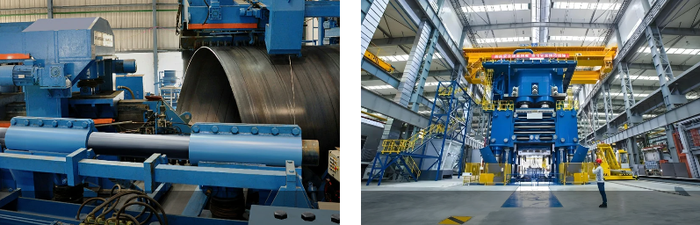
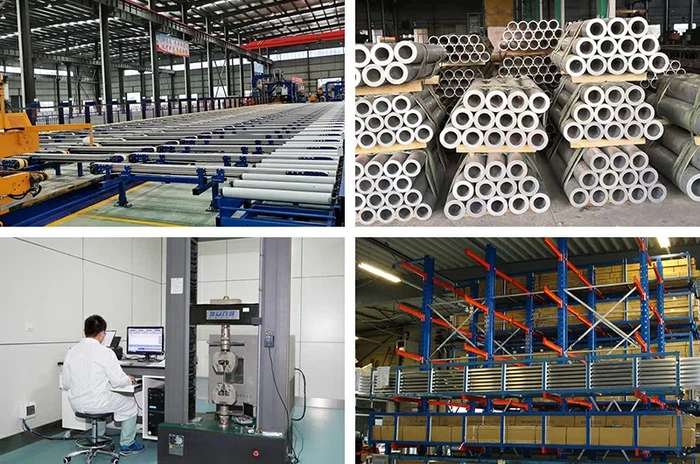
When you source from GNEE, a leading 5083 aluminum tube supplier from China, we manufacture our seamless and structural extruded tubes strictly in accordance with:
- ASTM B241 / ASTM B210 (Standard Specifications for Aluminum Seamless Pipe and Extruded Tube).
- EN 755 / EN 485 European standards.
- Marine Society Approvals: Available with DNV, ABS, LR, or BV mill test certificates (MTC) upon your project's request.
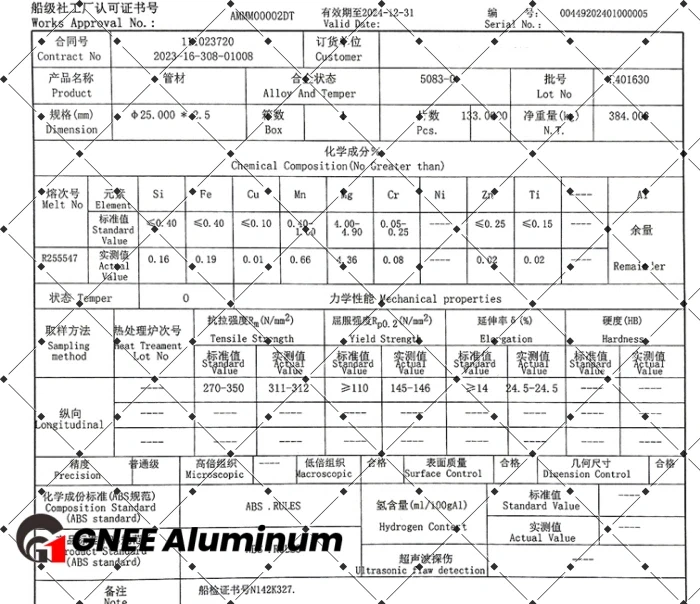
Looking for a Marine Aluminum Pipe Supplier?
Stop risking your maritime projects on unverified trading companies. As a direct manufacturer, GNEE provides factory direct price advantages without compromising the engineering integrity of your materials.
We supply custom marine pipes globally with the following capabilities:
Available Tempers: O, H111 (Most common for tubes), and H112.
Size Range: Outer Diameter (OD) from 4 mm to 600mm; Wall Thickness up to 25 mm.
Types: Drawn Seamless Pipes (for high pressure) and Porthole Extruded Tubes (for structural use).
Free material samples and 3.1 Mill Test Certificates are provided before bulk shipment.
Ready to specify your project?
Do not let supply chain delays hold up your shipyard.
Form Fields: Alloy (Default: 5083) | OD & Wall Thickness | Quantity | Application (Marine/Shipbuilding)