

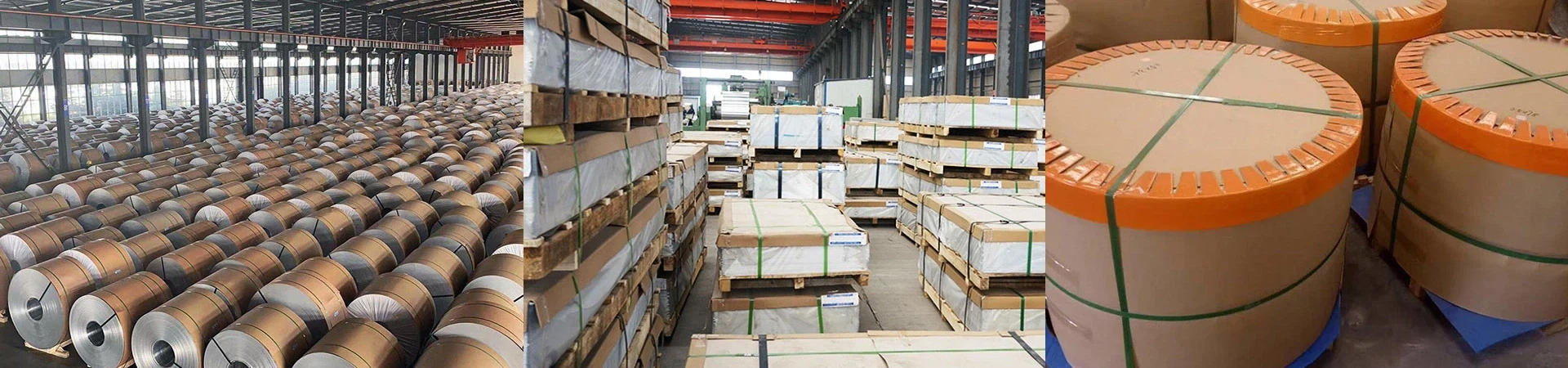
Is 6083 aluminum plate better than 6061? The direct answer is that neither is universally "better." It depends entirely on your engineering application. 6083 aluminum is better if your project requires superior corrosion resistance and welding stability in harsh or marine environments. Conversely, 6061 aluminum is better if your priority is maximum yield strength and high-speed CNC machinability for precision components.
Understanding the metallurgical differences between these two 6000-series structural alloys is critical for engineers and procurement managers. Specifying the wrong plate can lead to either premature corrosion failures or unnecessary material costs.
Chemical Differences Between 6083 and 6061 Structural Aluminum Plates
Both 6083 and 6061 belong to the Aluminum-Magnesium-Silicon (Al-Mg-Si) family. Because they contain magnesium and silicon, both alloys are heat-treatable, allowing them to achieve high strength through factory aging processes (like the T6 temper). The performance gap between them comes down to a single trace element: Copper (Cu).
| Element | 6083 Aluminum Plate | 6061 Aluminum Plate |
| Magnesium (Mg) | 0.60 – 1.20% | 0.80 – 1.20% |
| Silicon (Si) | 0.70 – 1.30% | 0.40 – 0.80% |
| Copper (Cu) | Very Low (≤ 0.10%) | Higher (0.15 – 0.40%) |
| Manganese (Mn) | ≤ 0.50% | ≤ 0.15% |
| Aluminum (Al) | Balance | Balance |
The Copper Factor:
6061 contains deliberately added copper to significantly boost its mechanical strength during heat treatment. However, copper is the enemy of corrosion resistance in aluminum. When exposed to saltwater or high humidity, the copper in 6061 can trigger galvanic micro-corrosion, causing the metal to pit. 6083 keeps copper strictly below 0.10%, sacrificing a tiny amount of peak strength to provide vastly superior natural resistance to rust and environmental degradation.

Mechanical Properties: 6083-T6 Aluminum Sheet vs 6061-T6
When structural engineers design load-bearing frameworks, yield strength is the primary metric. Below is a comparison of typical mechanical properties for both alloys in their standard T6 temper (solution heat-treated and artificially aged).
| Mechanical Property | 6083-T6 Aluminum | 6061-T6 Aluminum |
| Tensile Strength (Ultimate) | ~290 MPa (42,000 psi) | ~310 MPa (45,000 psi) |
| Yield Strength | ~240 MPa (35,000 psi) | ~276 MPa (40,000 psi) |
| Elongation at Break | ~10% | ~10% |
| Hardness (Brinell) | ~75 HB | ~95 HB |
Conclusion on Strength: 6061-T6 is structurally stronger and harder than 6083-T6. If your project involves heavy mechanical loads in a dry, indoor industrial setting, 6061 is technically the "better" load-bearing material.
Marine Grade 6083 Aluminum vs 6061 in Saltwater Environments
If your project is located outdoors, near the coast, or on a ship, the definition of "better" changes completely.
- 6061 in Wet Environments: Due to its copper content, bare 6061 aluminum will begin to pit and corrode when exposed to sea spray or continuous industrial moisture. It must be heavily anodized or painted to survive outdoors.
- Marine-Grade 6083 Aluminum: Because 6083 lacks copper, it forms a highly stable, self-healing oxide layer that naturally resists saltwater pitting. It is widely approved for marine auxiliary structures (such as ship deckhouses, walkways, and port equipment enclosures) without requiring expensive protective coatings.
Conclusion on Corrosion: For marine and highly corrosive outdoor environments, 6083 aluminum plate is significantly better than 6061.
6061-T651 Aluminum Plate vs 6083 Machining and Welding
How the metal behaves in your fabrication shop is just as important as how it performs in the field.
CNC Machining and the T651 Temper:
If your factory relies on CNC milling to produce precision parts (like base plates, hydraulic manifolds, or robotics mounts), 6061-T651 aluminum plate is the undisputed champion.
The higher hardness of 6061 allows cutting tools to shear the metal cleanly, producing small chips that clear easily. Furthermore, the "T651" temper means the plate was mechanically stretched at the mill to relieve internal stresses. When you mill away large amounts of a T651 plate, it will not warp or twist. 6083 is slightly softer and can be "gummy" during high-speed machining, causing tool wear.
Structural Welding:
If your primary assembly method is welding (TIG or MIG), 6083 takes the lead. It is less sensitive to hot-cracking during the welding process than 6061. When welded with the standard ER5356 filler wire, a 6083 joint provides excellent shear strength and maintains superior corrosion resistance in the heat-affected zone (HAZ).

Are you struggling to decide between the high machinability of 6061-T651 and the corrosion resistance of 6083-T6 for your next blueprint? Over-specifying materials wastes budget, while under-specifying risks safety. Send your CAD drawings and operating environment details to our engineering team today for a free alloy evaluation and a direct factory quotation.
6083 vs 6061 Aluminum Cost and Availability
Budget constraints often dictate procurement decisions.
- 6061 Aluminum Availability: As the most common general-purpose structural aluminum in the world, 6061 is highly commoditized. It is generally easy to source in standard sizes, but thick T651 plates carry a processing premium.
- 6083 Aluminum Cost: 6083 is a more specialized structural alloy. However, because it is primarily used for welded framing rather than precision aerospace machining, its base production costs are highly competitive. In wholesale volumes, 6083 often presents a more cost-effective solution for large-scale outdoor construction projects than sourcing and painting 6061.
Which One Should You Choose?
To summarize the comparison, use this straightforward decision-making matrix for your procurement team:
Specify 6061 Aluminum Plate If:
- High yield strength and maximum load-bearing capacity are your top priorities.
- The manufacturing process requires heavy, high-speed CNC precision machining (specify T651 temper).
- The final product will be used in dry environments, or you plan to apply a thick protective coating.
Specify 6083 Aluminum Plate If:
- The structure will be installed outdoors, in humid conditions, or near marine environments.
- The primary fabrication method is structural TIG/MIG welding.
- You need a balanced, cost-effective material that does not require expensive anti-corrosion painting.
GNEE Factory Supply
GNEE is a leading Chinese manufacturer and direct exporter of industrial aluminum plates.
Our Core Advantage: Mixed-Alloy and Multi-Size Supply
GNEE specializes in multi-alloy supply chain consolidation. We proudly accept mixed orders. We will manufacture your complete, diverse Bill of Materials (BOM), custom-cut the plates to minimize your scrap rate, and ship the consolidated order in a single, highly efficient container.
Real Factory Information & Industrial Capabilities:
- Advanced Stretching Equipment: We operate an 4000-ton hydraulic stretching machine. This massive equipment ensures that our thick 6061-T651 aluminum plates are 100% stress-relieved and perfectly flat, guaranteeing zero warping for your CNC operators.
- Quality Inspection (UT Testing): Internal voids in thick structural plates can cause catastrophic machinery failure. Every heavy plate we export undergoes rigorous Ultrasonic Testing (UT) to ASTM B594 standards to ensure zero internal porosity. We provide certified Mill Test Certificates (MTC) conforming to ASTM B209 and EN 485 with every shipment.

Export-Grade Seaworthy Packaging Standards
Aluminum plates are highly susceptible to oxidation and water stains (white rust) if exposed to trapped humidity during ocean freight. GNEE employs a strict, export-grade packaging protocol to protect your investment:
- Moisture Isolation: Every single plate is interleaved with moisture-absorbing kraft paper to prevent surface-to-surface scratching.
- Waterproof Sealing: The entire stack is wrapped tightly in heavy-duty waterproof polyethylene film, with industrial silica gel desiccants placed inside to absorb any trapped ambient humidity.
- Structural Security: The bundle is secured with heavy galvanized steel strapping onto ISPM-15 compliant fumigation-free wooden pallets, ensuring the plates remain perfectly flat and undamaged during rough ocean transit.


