

5083 H111 aluminum is a non-heat-treatable Al-Mg (aluminum-magnesium) alloy in a lightly strain-hardened condition. Compared with H116 and H321 tempers, H111 offers lower tensile strength but significantly better formability and ductility, making it highly suitable for manufacturing processes that require extensive bending, forming, or welding. It is widely used in commercial vehicle bodies, tank structures, and general fabrication where extreme marine classification certification is not strictly required.
Decoding the "H111" Temper
To understand exactly how this material performs in a workshop environment, engineers must break down its metallurgical designation:
- 5xxx Series Aluminum: The base alloy is 5083, which means magnesium is the primary alloying element. This provides excellent inherent corrosion resistance and outstanding weldability.
- Non-Heat-Treatable: Like all 5xxx alloys, 5083 cannot be strengthened through thermal treatment (heating and quenching). It only gains strength through cold working (strain hardening).
- H111 Condition: The "H11" indicates a slightly strain-hardened state. The final "1" indicates that some limited work hardening occurs during the forming processes (such as stretching or leveling), but it does not reach the minimum strength required for a full H11 temper.
Summary: 5083 H111 is essentially a "semi-soft" condition. It prioritizes workability and ductility over raw tensile strength, making it ideal for fabrication.

Chemical Composition of 5083 H111 Aluminum
The performance of 5083 H111 relies strictly on its precise chemical makeup. The high magnesium content is what provides the plate its base strength and weldability.
| Element | Content (%) | Engineering Function |
| Magnesium (Mg) | 4.0 – 4.9 | Provides core strength and excellent weldability. |
| Manganese (Mn) | 0.4 – 1.0 | Increases tensile strength and refines grain structure. |
| Chromium (Cr) | 0.05 – 0.25 | Helps resist stress corrosion cracking. |
| Silicon + Iron (Si + Fe) | ≤ 0.4 | Kept low to prevent brittleness during heavy welding. |
| Zinc (Zn) | ≤ 0.25 | Limited to protect the alloy's anti-corrosion properties. |
| Titanium (Ti) | ≤ 0.15 | Acts as a grain refiner during the casting phase. |
| Aluminum (Al) | Remainder | The base matrix. |
Mechanical Properties of 5083 H111 Aluminum plate
When fabricating 5083 H111, the mechanical properties are highly forgiving. It allows for tight bending radii without cracking, which is crucial for manufacturing vehicle tanks or complex bracketry.
| Property | Typical Value |
| Tensile Strength (Ultimate) | ≈ 270 – 300 MPa (39,000 – 43,500 psi) |
| Yield Strength | ≈ 125 – 145 MPa (18,000 – 21,000 psi) |
| Elongation (in 50mm) | ≥ 12 – 20% (Highly dependent on thickness) |
| Hardness (Brinell) | ≈ 65 HB |
Crucial Engineering Note: Compared with marine tempers (H116 and H321), H111 has lower yield strength but significantly better elongation. This means it bends and shapes much easier before reaching the point of structural failure.
Are you calculating the bending radius for a new tank or vehicle body design? Contact our engineering team with your drawing, and we will recommend the exact plate thickness and temper for your application.
Key Differences of 5083 H111 vs. H116 vs. H321
Procurement teams frequently confuse the tempers of 5083 aluminum. Choosing the wrong temper can either make fabrication impossible (too hard) or cause structural failure (wrong corrosion resistance). Here is the core comparison:
| Feature / Temper | 5083 H111 | 5083 H116 | 5083 H321 |
| Condition | Lightly strain-hardened | Strain-hardened (Corrosion optimized) | Strain-hardened + Stabilized |
| Yield Strength | Lower (~145 MPa) | Higher (~215 MPa) | Higher (~215 MPa) |
| Formability | Excellent (Easy to bend) | Poor (Prone to cracking if bent sharply) | Fair to Poor |
| Marine Certification | Rarely requested | Mandatory (ABS, DNV, LR) | Mandatory (ABS, DNV, LR) |
| Exfoliation Test | Not mandatory | Mandatory (ASTM G66) | Mandatory (ASTM G66) |
| Best Used For | Bending, tanks, general fabrication | Heavy marine structures, ship hulls | Shipbuilding, LNG tanks, offshore |
Summary: H111 focuses strictly on workability and fabrication ease, while H116 and H321 are specialized tempers designed for maximum structural strength and durability in harsh marine environments.
Applications of 5083 H111 Aluminum
Because of its excellent balance between strength, corrosion resistance, and formability, 5083 H111 is heavily utilized across multiple industries:
- Vehicle Bodies and Transportation: Extensively used to manufacture dump truck beds, heavy-duty trailers, and railway cars where the metal needs to be formed into structural channels.
- Tank Structures: The high ductility makes it the standard material for manufacturing road tankers, fuel storage tanks, and pressure vessels.
- General Fabrication: Used in heavy industrial manufacturing for machine bases, structural brackets, and architectural panels.
- Welded Structures: Because the heat-affected zone (HAZ) during welding does not lose much strength, it is perfect for complex welded assemblies.
- Marine Parts (Non-Critical): Used in marine applications above the waterline, such as interior cabin bulkheads or control consoles, where severe salt spray is minimal and bending is required.
When to Choose 5083 H111
To ensure project safety and cost efficiency, follow these procurement guidelines:
Choose 5083 H111 if:
- Your manufacturing process involves extensive CNC bending, rolling, or pressing.
- You require highly reliable weldability using standard MIG or TIG processes.
- You are building road transport vehicles, silos, or standard industrial tanks.
- Your project is cost-sensitive and does not require strict marine classification testing.
Do NOT choose 5083 H111 if:
- The plate will be used for below-waterline ship hull structures.
- The project involves long-term, direct seawater exposure (offshore platforms).
- The final customer strictly requires classification certification like ABS, DNV, or LR (choose H116 or H321 instead).
Planning a mixed procurement list involving different aluminum grades and tempers? Send us your Bill of Materials (BOM) today to see how we can consolidate your order and save on logistics.
GNEE Supply Capability for 5083 Aluminum Plates
Sourcing aluminum with specific tempers requires a manufacturing partner with precise heat treatment controls and flexible supply chain capabilities. As a professional aluminum manufacturer, GNEE, a leading Chinese supplier, supplies a full range of 5083 aluminum tempers including H111, H116, H321, and O temper.
✔ Multi-Alloy & Multi-Specification Supply
- Alloy availability: 5083, 5086, 5454, 5052, and 6061.
- Temper options: H111 for forming, H116/H321 for marine use, and H32 for general industry.
- Custom dimensions: We provide custom thicknesses, extreme widths (up to 2600mm), and cut-to-length services to drastically reduce your fabrication scrap.
- Support for Mixed Orders: GNEE supports multi-grade and multi-size procurement in one shipment. You can mix H111 plates for tanks and H321 plates for hulls in the same container, helping customers reduce sourcing complexity, eliminate high MOQ hurdles, and lower overall freight costs.
✔ Advanced Production Equipment
- Hot rolling production lines: Ensuring a dense, defect-free internal structure.
- Precision leveling machines: Guaranteeing strict flatness tolerances, which is critical for CNC cutting and automated welding.
- Heat treatment systems: Precisely controlling the strain-hardening and stabilization processes to meet international ASTM/EN standards.
- Ultrasonic testing (UT): Ensuring heavy plates have zero internal delamination.
✔ Strong Production Capacity
- Monthly output: 5,000+ tons of industrial aluminum.
- Fast delivery time: Standard production cycles run 7–25 days.
- Stable supply: We are the reliable backbone for large-scale vehicle manufacturing and fabrication projects globally.
Packaging & Delivery
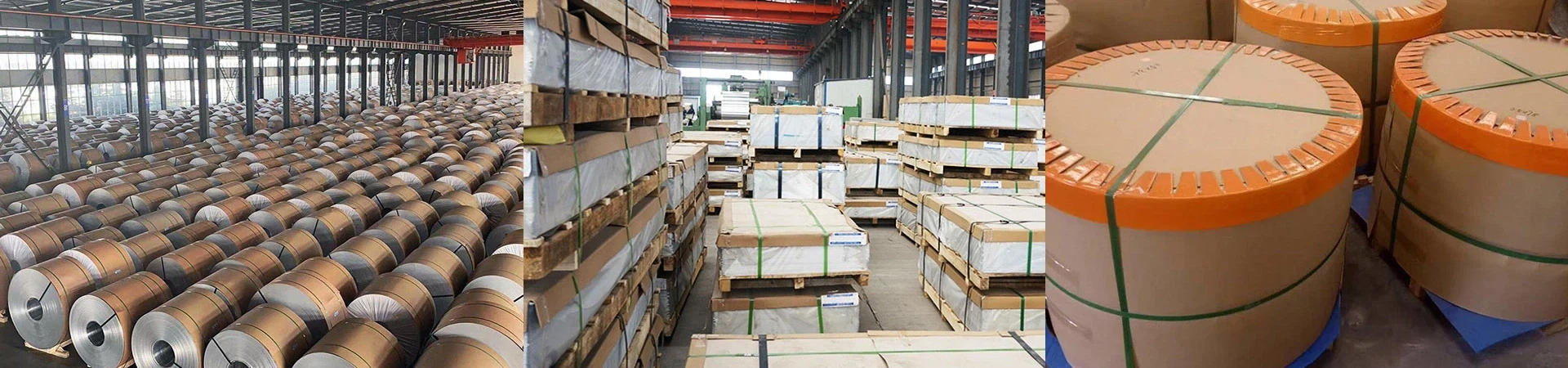
GNEE adopts rigorous export-standard packaging to ensure your aluminum plates arrive at your workshop without scratches, oxidation, or edge damage:
- Seaworthy wooden pallets: Heavy-duty and fumigated to support large payloads.
- Waterproof film + kraft paper: Each plate is thoroughly wrapped to block moisture and prevent white rust (oxidation) during ocean transit.
- Edge protection: Hardened guards are applied to prevent denting from lifting slings and forklift operations.
- Customized export packaging: We can adapt our packing to your specific warehouse unloading requirements.


Conclusion
5083 H111 aluminum is an indispensable material for industries that demand a balance of strength, weldability, and exceptional formability. Whether you are manufacturing road tankers, commercial vehicles, or heavy structural brackets, choosing the H111 temper ensures your fabrication process runs smoothly without material cracking.
Ready to secure high-quality 5083 H111 aluminum for your fabrication facility? Send us your specifications, required dimensions, or drawing details today. Our sales engineers will review your needs and reply with a competitive proposal within 24 hours.


