

The 6061 aluminum elbow price per kg is an important purchasing consideration for industrial piping, compressed-air systems, hydraulic lines, structural piping and equipment fabrication. However, the price of a finished 6061 aluminum elbow should not be evaluated only by comparing it with the raw aluminum price.
The final quotation depends on the 6061 aluminum billet or tube cost, SMM aluminum benchmark, elbow size, wall thickness, manufacturing method, temper, quantity, surface finish, dimensional tolerance, testing requirements, packaging and delivery terms.
As a market reference, the latest publicly available SMM A00 aluminum ingot price on August 14, 2026 is USD 3,530.96/tonne, equivalent to approximately USD 3.53/kg. SMM's 6061 aluminum billet pricing is quoted as a premium on top of the SMM A00 benchmark, meaning that a finished 6061 aluminum elbow normally carries additional costs for alloy conversion, extrusion/tube production, bending or forming, machining, inspection and packaging.
For this reason, the SMM A00 aluminum price should be used as a raw-material market benchmark, rather than as the final selling price of a 6061 aluminum elbow.
What is a 6061 Aluminum Elbow?
A 6061 aluminum elbow is a pipe fitting used to change the direction of an aluminum piping system, most commonly by 45° or 90°. Aluminum alloy 6061 is a heat-treatable Al-Mg-Si alloy that provides a useful combination of strength, corrosion resistance, machinability and weldability.
6061-T6 is one of the most commonly specified tempers for structural and industrial aluminum components. Depending on the forming process and application, elbows may also be supplied in other tempers or with locally adjusted mechanical properties.
Typical applications include:
- Industrial aluminum piping
- Compressed-air systems
- Hydraulic and pneumatic equipment
- Water and utility piping
- Marine and transportation equipment
- HVAC and process equipment
- Lightweight structural piping
- Equipment skids and manifolds

What Standard is Used for 6061 Aluminum Elbows?
The applicable standard depends on the elbow design, manufacturing route and project requirements.
Common specifications and references include:
- ASTM B241/B241M for aluminum and aluminum-alloy seamless pipe and seamless extruded tube
- ASTM B221/B221M for aluminum-alloy extruded products
- ASME B16.9 where the fitting is designed to meet the dimensional requirements for factory-made butt-welding fittings
- ASTM B209/B209M where aluminum plate or sheet is used for fabricated fittings
- EN 755 / EN 573 for European aluminum products
- GB/T standards for aluminum alloy tube and extrusion products
- ASTM B241 covers aluminum and aluminum-alloy seamless pipe and seamless extruded tube, and its published data include 6061-T6 mechanical-property requirements. For 6061-T6 extruded pipe, the standard lists a minimum tensile strength of 260 MPa and a minimum yield strength of 240 MPa, with elongation requirements depending on product dimensions.
For a specific project, the purchaser should identify the required fitting standard, tube standard, welding method, dimensions and pressure requirements before ordering.
6061 Aluminum Elbow Price per kg
The price of a 6061 aluminum elbow consists of several components rather than a single aluminum market price.
As of August 14, 2026, the publicly displayed SMM A00 aluminum ingot benchmark is:
| Price Reference | Date | Price |
|---|---|---|
| SMM A00 Aluminum Ingot | Aug. 14, 2026 | USD 3,530.96/tonne |
| Equivalent raw aluminum benchmark | Aug. 14, 2026 | USD 3.53/kg |
The SMM A00 figure is a primary aluminum benchmark. A 6061 aluminum elbow normally costs more because 6061 alloy production, billet or tube conversion, forming, cutting, machining, inspection and export packaging must be added.
SMM's published 6061 billet pricing methodology also illustrates this relationship: 6061 billet is quoted as a premium on top of SMM A00, with the premium varying by location and market conditions.
Indicative 6061 Aluminum Elbow Price Structure
| Cost Component | Typical Effect on Final Price |
|---|---|
| SMM A00 aluminum benchmark | Main raw-aluminum reference |
| 6061 alloy premium | Adds alloying and billet conversion cost |
| Tube / extrusion cost | Depends on OD, wall thickness and production route |
| Elbow forming | Depends on angle, radius and forming method |
| Machining | Adds cost for precision ends, grooves or special dimensions |
| Heat treatment | Applies when T6 properties are required |
| Surface finish | Mill finish is normally lowest cost |
| Inspection | PMI, dimensional, tensile or pressure testing may add cost |
| Quantity | Larger orders generally reduce unit processing cost |
| Packaging | Export wooden cases, pallets and protection add cost |
| Freight / Incoterms | FOB, CFR, CIF and DDP produce different delivered prices |
Important: SMM A00 aluminum is a market benchmark and should not be presented as the final price of a 6061 aluminum elbow. The actual GNEE quotation should be based on the customer's exact size, specification, quantity and delivery terms.
Factors Affecting the Price of 6061 Aluminum Elbows
The price of a 6061 aluminum elbow is influenced by both the aluminum market and the cost of converting aluminum into a finished fitting.
| Price Factor | How It Affects 6061 Elbow Price | Buyer Consideration |
|---|---|---|
| SMM Aluminum Price | Changes the underlying aluminum material cost | Check the quotation date |
| 6061 Billet Premium | Adds alloy and billet conversion cost | Confirm whether premium is included |
| Outside Diameter | Larger elbows consume more material | Specify exact OD |
| Wall Thickness | More material increases weight and processing cost | Provide actual wall thickness |
| Elbow Angle | 45°, 90° and custom angles require different forming | Confirm required angle |
| Centerline Radius | Long-radius and short-radius elbows use different tooling | Specify LR or SR |
| Manufacturing Method | Extruded, formed, forged or machined fittings have different costs | Select according to application |
| Temper | T6 requires controlled heat treatment | Confirm temper on PO |
| Surface Finish | Machining, polishing or anodizing increases cost | Avoid unnecessary finishing |
| Tolerance | Tight dimensional tolerances increase production cost | Specify only required tolerances |
| Quantity | Larger orders generally reduce unit conversion costs | Compare trial and bulk pricing |
| Testing | PMI, tensile, dimensional or pressure testing adds cost | List mandatory tests |
| Certification | MTC, EN 10204 3.1 or third-party inspection may add cost | Confirm documentation |
| Packaging | Export-grade packing affects total cost | Compare on the same packing basis |
| Freight | Destination and Incoterm affect delivered price | Compare FOB/CFR/CIF consistently |
How to Calculate the Weight of a 6061 Aluminum Elbow
For purchasing and cost estimation, the theoretical weight of a 6061 aluminum elbow can be estimated from its dimensions.
For a straight aluminum tube, a simplified theoretical weight calculation is:
Weight (kg/m) ≈ 0.002827 × (OD² − ID²)
where:
OD = outside diameter in mm
ID = inside diameter in mm
For an elbow, the actual weight depends on the centerline radius, bend geometry, wall thickness, end preparation and machining allowance.
For example, if a tube has an outside diameter of 50 mm and an inside diameter of 44 mm:
Weight ≈ 0.002827 × (50² − 44²)
≈ 1.59 kg/m
The actual elbow weight will differ because the fitting has a curved center section and may require end machining or additional material.
For accurate quotation, buyers should provide:
Outside diameter
Wall thickness
Elbow angle
Centerline radius
Temper
Quantity
Required standard
Surface finish
Destination port
6061 Aluminum Elbow Specifications
GNEE can supply 6061 aluminum elbows according to different dimensional and application requirements.
| Item | Typical Specification |
|---|---|
| Aluminum Alloy | 6061 |
| Common Temper | T6 |
| Elbow Angle | 45°, 90°, custom |
| Radius | Short Radius / Long Radius / Custom |
| Outside Diameter | Approx. 10–500 mm |
| Wall Thickness | Approx. 1–50 mm |
| Manufacturing | Extruded / Formed / Machined / Fabricated |
| Surface | Mill Finish / Machined / Polished / Anodized |
| Connection | Butt Weld / Socket / Customized Ends |
| Standard | ASTM B241, ASTM B221, ASME B16.9 or project specification |
| Length | Customized |
| Inspection | Dimensional, chemical composition, mechanical properties and visual inspection |
| Documentation | Mill Test Certificate available |
Actual size availability depends on the production route and tooling. Custom dimensions can be discussed for project orders.
6061 Aluminum Chemical Composition
Typical chemical composition requirements for 6061 aluminum include:
| Element | Composition (%) |
|---|---|
| Si | 0.40–0.80 |
| Fe | ≤0.70 |
| Cu | 0.15–0.40 |
| Mn | ≤0.15 |
| Mg | 0.80–1.20 |
| Cr | 0.04–0.35 |
| Zn | ≤0.25 |
| Ti | ≤0.15 |
| Other Elements | Within applicable standard limits |
| Al | Balance |
The actual chemical composition should be confirmed against the applicable material standard and recorded on the MTC for each production lot.
6061-T6 Mechanical Properties
For 6061-T6 extruded aluminum pipe, ASTM B241 published requirements include a minimum tensile strength of approximately 260 MPa and minimum yield strength of approximately 240 MPa, with elongation depending on product size.
For a finished elbow, mechanical properties should be evaluated against the specified raw material standard and manufacturing condition rather than assuming that every formed fitting has exactly the same properties as straight extruded tube.
Why Choose 6061 Aluminum for Pipe Elbows?
6061 aluminum is widely selected for piping components where buyers need a balance between strength, weight and corrosion resistance.
Lightweight Construction
Aluminum has a much lower density than carbon steel and stainless steel. This can reduce the weight of piping assemblies, equipment frames and transportation systems.
Good Strength-to-Weight Ratio
6061-T6 provides significantly higher strength than many non-heat-treatable aluminum alloys. This makes it suitable for structural and industrial components where weight reduction is important.
Corrosion Resistance
6061 aluminum naturally forms a protective oxide layer. It can be suitable for many atmospheric and industrial environments, although the alloy must be evaluated carefully for specific chemicals, seawater exposure and galvanic-contact conditions.
Machinability
6061 is relatively easy to machine compared with many higher-strength aluminum alloys. This is useful for elbows requiring precision end preparation, grooves, threads or other machining.
Weldability
6061 aluminum can be welded, although welding can reduce the strength in the heat-affected zone. The welding procedure and post-weld requirements should therefore be considered during design.
Quality Control and Testing
Each production order can be inspected according to the agreed specification.
Typical inspection items include:
| Inspection | Purpose |
|---|---|
| Chemical Composition | Confirms 6061 alloy grade |
| Tensile / Yield Testing | Verifies mechanical properties |
| Dimensional Inspection | Checks OD, ID, thickness, angle and radius |
| Visual Inspection | Identifies cracks, dents and surface defects |
| PMI | Additional alloy identification when required |
| MTC | Provides material traceability |
| Pressure / Leak Testing | Available when required by the application |
For critical projects, additional inspection and third-party testing can be arranged according to the purchase specification.

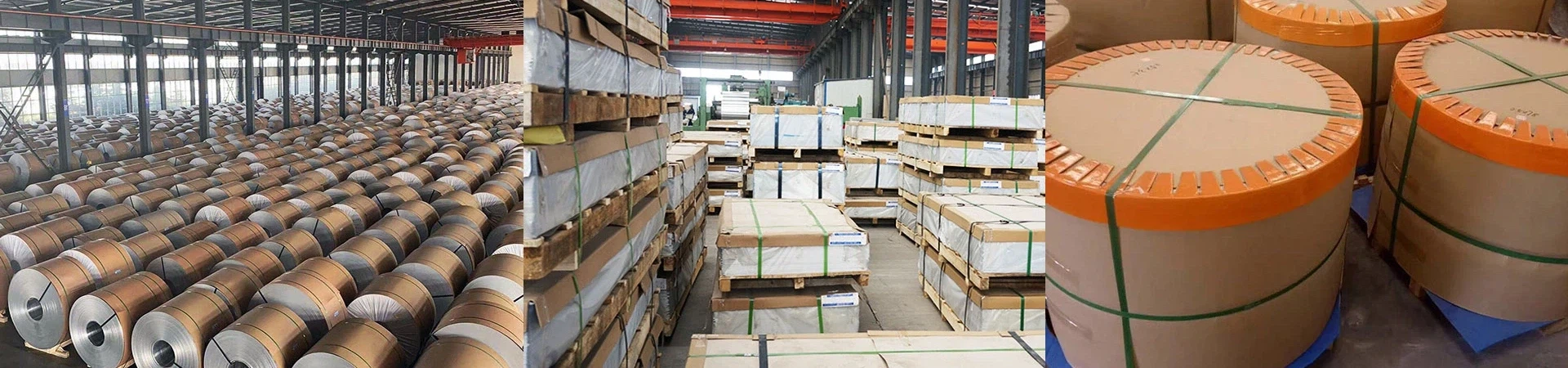
6061 Aluminum Elbow Packaging
GNEE uses export-oriented packaging according to product size and shipping requirements.
Typical packaging may include:
Plastic protection
PE or PVC film
Kraft paper where appropriate
Individual separation for finished fittings
Wooden pallets
Wooden cases for smaller or precision components
Reinforced packing for long-distance sea transportation
The packaging method can be customized according to the destination, container-loading method and customer's handling requirements.

Supplier and Manufacturer of 6061 Aluminum Elbows
GNEE supplies aluminum products and aluminum pipe fittings for international industrial buyers. Our supply capability covers different aluminum alloys, tempers, dimensions and customized processing requirements.
For 6061 aluminum elbows, we can support buyers with:
6061 and 6061-T6 material
45° and 90° elbows
Long-radius and short-radius designs
Customized OD and wall thickness
Different connection ends
Dimensional inspection
Chemical and mechanical test documentation
Customized packaging
Small trial orders and bulk orders
Export packing and international shipment
Rather than quoting a generic price per kilogram, GNEE can calculate the actual elbow cost from the customer's dimensions, quantity, specification and delivery terms.
FAQ


