

Silicon has a corrosive effect on cemented carbide. Although aluminum alloys with more than 12% Si are generally called high-silicon aluminum alloys, it is recommended to use diamond tools, but this is not absolute, and the destructive power of the tools will gradually increase as the silicon content gradually increases. Therefore, some manufacturers recommend the use of diamond tools when the silicon content exceeds 8%.
Aluminum alloys with a silicon content between 8% and 12% are a transition zone, either ordinary carbide or diamond tools can be used. However, the use of cemented carbide should use the PVD (physical coating) method, does not contain aluminum elements, and has a small film thickness. Because the PVD method and the small film thickness make it possible for the tool to maintain a sharper cutting edge (otherwise, in order to avoid the abnormal growth of the film layer at the cutting edge, it is necessary to passivate the cutting edge sufficiently, and the cutting aluminum alloy will not be sharp enough) , and the film material containing aluminum may cause the blade film to interact with the workpiece material and destroy the bond between the film and the tool substrate. Because the super-hard coating is mostly a compound of aluminum, nitrogen, and titanium, it may cause chipping due to a small amount of peeling of the cemented carbide substrate with the peeling of the film layer.
One of the following three types of knives is recommended:
1. Uncoated ultra-fine grain carbide cutting tools
2. Carbide cutting tools with non-aluminum coating (PVD), such as TiN, TiC, etc.
3. With a diamond tool
The chip space of the tool should be large, and it is generally recommended to use 2 teeth, and the rake angle and relief angle should be large (such as 12°-14°, including the end tooth relief angle).
If it is just general face milling, you can use an indexable face milling cutter with a 45° lead angle and a blade specially designed for processing aluminum alloys, which should have a better effect.
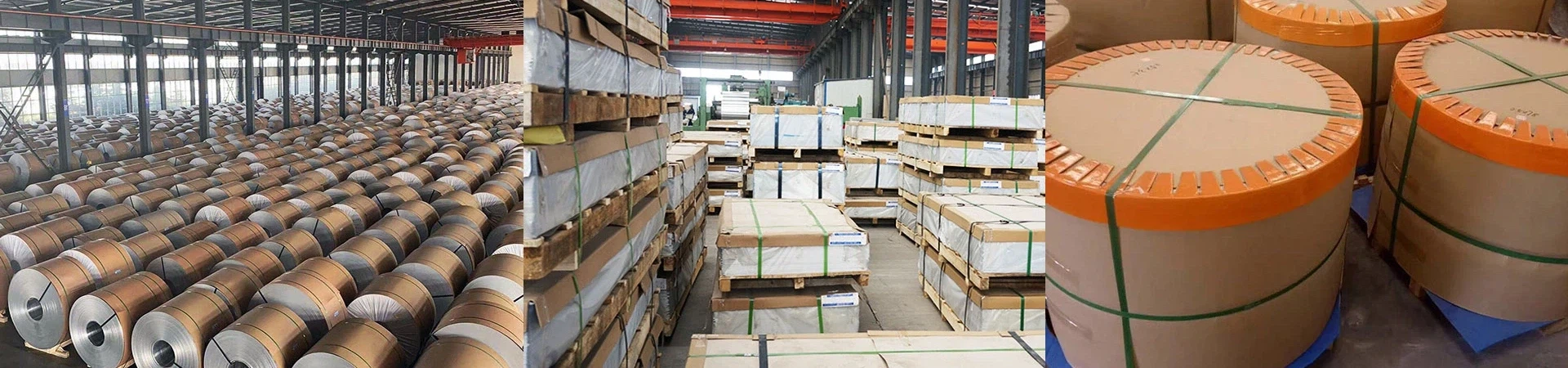
Alumina was turned into aluminum by electrolysis in the laboratory in 1808, and it has been used as a building material on the top of the Washington Monument in the United States since 1884; the aluminum alloy material synthesized by adding various metal elements to aluminum has been widely used in the construction industry in every aspect. The thickness of commonly used aluminum alloy plates: the advanced metal roof (and curtain wall) system is generally 0.8-1.2mm (while the traditional one is generally ≥2.5mm).
Mar 14, 2023
Leave a message
Aluminum Coil Processing Technology
Send Inquiry


