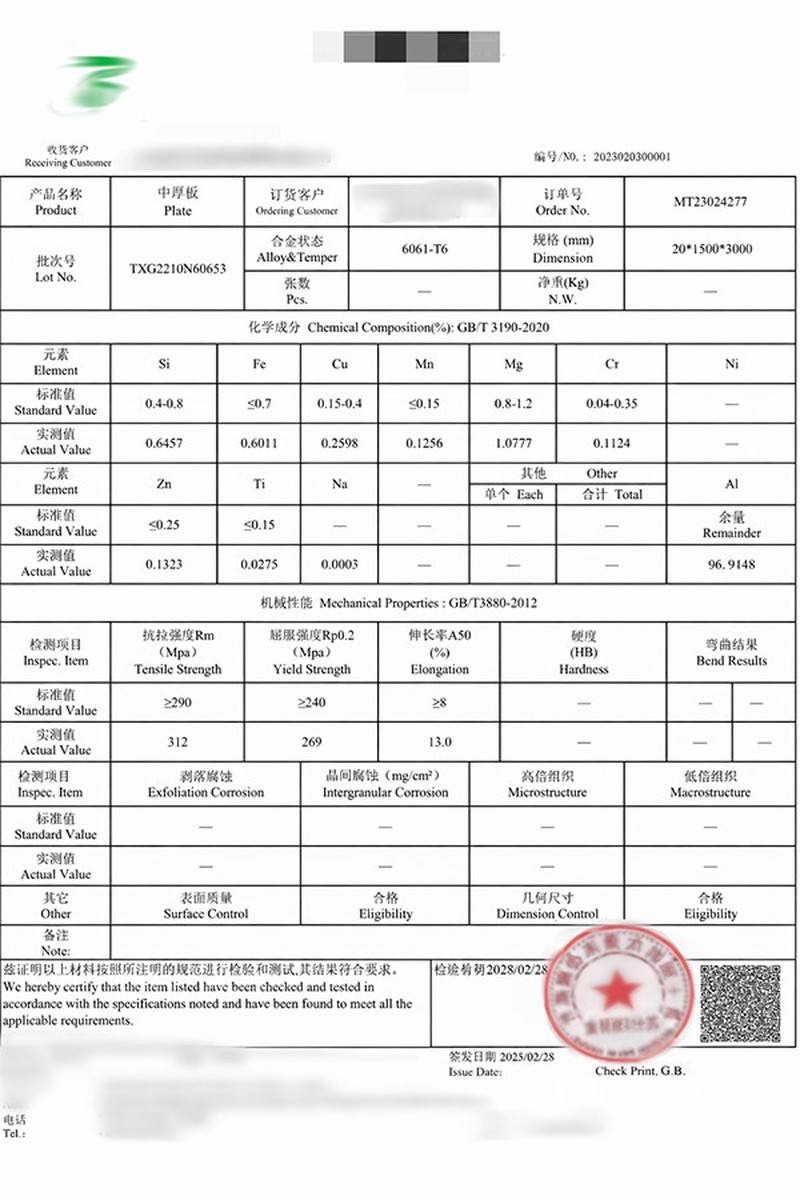
When evaluating materials for industrial manufacturing, 1050A and 6061 aluminum plates differ significantly in strength, chemical composition, and final application.
- 1050A aluminum plate is a commercially high-purity aluminum (minimum 99.5% Al) known for its excellent formability, extreme ductility, and high electrical conductivity. It has low mechanical strength.
- 6061 aluminum plate is an alloy containing magnesium and silicon. It is a heat-treatable material engineered for much higher strength, structural performance, and excellent CNC machinability.
The procurement rule is straightforward: In most load-bearing or structural applications, 6061 aluminum plate is the better choice. Conversely, 1050A is exclusively used for non-structural applications requiring deep forming, chemical resistance, or electrical conductivity.
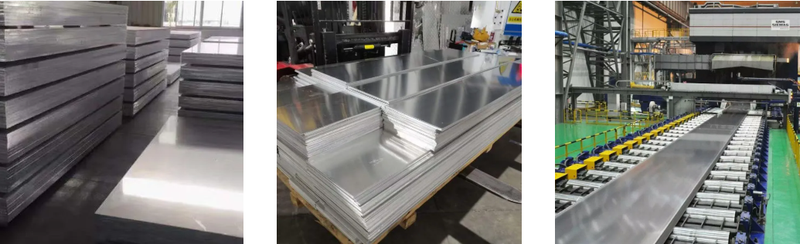
1050A vs 6061 Aluminum Plate
For engineers and buyers needing immediate data, here is the high-level comparison between the two materials.
| Property | 1050A Aluminum Plate | 6061 Aluminum Plate |
| Aluminum Content | ≥ 99.5% (High Purity) | ~97.9% (Alloyed) |
| Strength Level | Low | High |
| Heat Treatment | Non-heat-treatable | Heat-treatable (e.g., T6) |
| Corrosion Resistance | Excellent (Best in pure environments) | Good |
| Formability | Excellent (Deep drawing) | Medium (Limited bending in T6) |
| Machinability (CNC) | Poor (Gummy) | Excellent (Chips break easily) |
| Typical Use | Conductors, chemical tanks | Structural frames, machined parts |
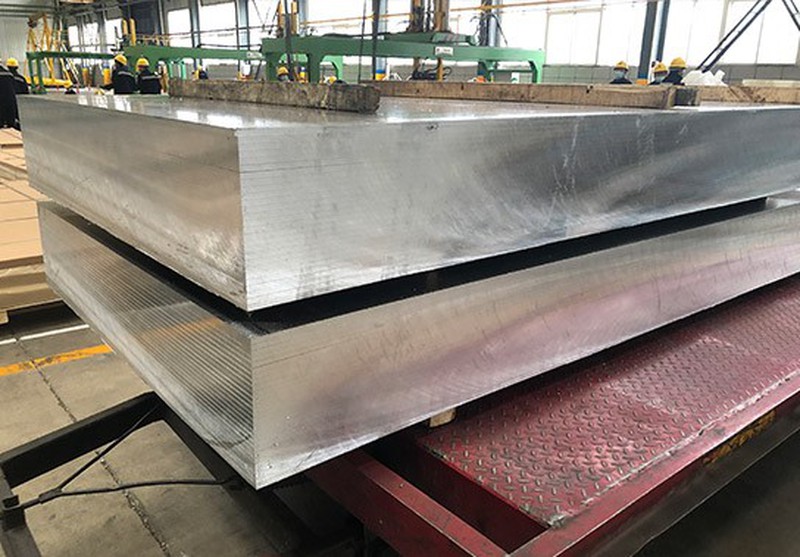
1050A vs 6061 Aluminum Chemical Composition Difference
To understand why you should buy 6061 aluminum plate for a structural frame but a 1050A plate for a busbar, we must look at their exact chemical limits.
| Element | 1050A Aluminum (%) | 6061 Aluminum (%) |
| Aluminum (Al) | ≥ 99.5 | Balance |
| Magnesium (Mg) | - (Trace) | 0.8 – 1.2 |
| Silicon (Si) | ≤ 0.25 | 0.4 – 0.8 |
| Copper (Cu) | ≤ 0.05 | 0.15 – 0.40 |
| Iron (Fe) | ≤ 0.40 | ≤ 0.70 |
The Crucial Engineering Explanation:
The addition of Magnesium (Mg) and Silicon (Si) in 6061 is the game-changer. During the heat treatment process, these two elements combine to form Magnesium Silicide (Mg2Si) precipitates within the aluminum matrix. This precipitation hardening drastically increases the material's strength.
On the other hand, 1050A's extreme high purity means there are no elements to restrict the movement of the aluminum crystal lattice. This results in very low strength but exceptional ductility.
1050A-H12 vs 6061-T6 Mechanical Properties Comparison
How do these chemical differences translate to the factory floor? Let's compare them in their most common industrial tempers: 1050A in H12 (strain hardened, 1/4 hard) and 6061 in T6 (solution heat-treated and artificially aged).
| Mechanical Property | 1050A-H12 Aluminum | 6061-T6 Aluminum |
| Tensile Strength | 95 – 125 MPa | 260 – 310 MPa |
| Yield Strength | ≥ 65 MPa | ≥ 240 MPa |
| Elongation | ≥ 10% | 8 – 12% |
| Brinell Hardness | ~30 HB | ~95 HB |
Core Conclusion: 6061 aluminum plate is significantly stronger than 1050A. In fact, looking at the yield strength-the point where the metal permanently bends under load-6061-T6 is nearly four times stronger than 1050A-H12.
In-Depth Case Study: The EV Battery Enclosure Dilemma
To illustrate the stark differences between these two plates, let us share a real sourcing problem we solved for a client manufacturing battery enclosures for electric vehicles (EVs).
The Initial Mistake:
The client's procurement team wanted to reduce material costs. They ordered thick wholesale 1050A aluminum plate to manufacture both the main structural base of the battery box and the internal conductive busbars. They assumed aluminum was just aluminum.
The Failure on the Factory Floor:
- Machining Nightmare: When their CNC machines tried to mill the heavy base out of the 1050A block, the material was too soft. Instead of breaking into clean chips, the 1050A aluminum was "gummy." It melted onto the cutting tools (causing Built-Up Edge, or BUE), resulting in a terrible surface finish and broken end mills.
- Structural Collapse: During the load test, the heavy lithium-ion battery modules caused the 1050A baseplate to deform and sag immediately, threatening the integrity of the entire battery pack.
Our Technical Intervention:
Our engineers reviewed their drawings and separated the Bill of Materials (BOM).
- For the structural baseplate, we supplied custom cut 6061-T651 aluminum plates. The T651 temper provided the massive yield strength (over 240 MPa) needed to hold the battery weight, and the internal stress relief allowed their CNC machines to run at top speed with clean, precise cuts.
- For the internal busbars, we continued to supply the 1050A aluminum sheet. Why? Because 6061 has poorer electrical conductivity due to its alloying elements. The high-purity 1050A was exactly what they needed to conduct high-voltage current efficiently without overheating.
The Lesson: Never mix up structural alloys with conductive/forming alloys. Knowing exactly what each plate does saves thousands of dollars in scrapped parts.
Not sure which aluminum plate is right for your project? Making the wrong choice can lead to machining failures or structural collapse. Send your drawings, load specifications, or processing methods to our team. We will provide a free material assessment and an accurate factory quote within 24 hours.
1050A vs 6061: Key Differences for Manufacturers
1. Strength and Structural Performance
- 6061 Aluminum: Specifically engineered for load-bearing structures. It can handle dynamic loads, impacts, and heavy static weights.
- 1050A Aluminum: Fundamentally not suitable for structural use. It will bend, dent, or fail under moderate mechanical stress.
2. Formability and Bending
- 1050A Aluminum: Excellent for deep drawing, extreme spinning, and tight-radius bending. It will stretch significantly before tearing.
- 6061 Aluminum: Limited formability in the T6 temper. If you try to bend a thick 6061-T6 plate at a sharp 90-degree angle, it will likely crack. It must be formed in the O (annealed) temper and heat-treated later, or bent with a very large inner radius.
3. Machinability (CNC Milling and Turning)
- 6061 Aluminum: One of the most machinable aluminum alloys available. It produces small, easily clearable chips and leaves a brilliant surface finish.
- 1050A Aluminum: Not ideal for machining. Its softness causes it to drag on the tool, requiring highly specialized tool geometries, heavy coolant, and slower feed rates to prevent surface tearing.
4. Corrosion Resistance
- 1050A Aluminum: Unbeatable in pure environments. Because it lacks copper and magnesium, there are no internal galvanic micro-cells to trigger corrosion. It is highly resistant to industrial chemicals and weather.
- 6061 Aluminum: Good corrosion resistance, but slightly lower than 1050A. It is perfectly adequate for standard outdoor applications but may require anodizing in harsh environments.
Which Aluminum Plate Should You Choose?
Here is your direct procurement guide.
Choose 1050A Aluminum Plate When:
- You need extreme ductility for deep drawing (e.g., cooking pots, custom enclosures).
- Maximum electrical or thermal conductivity is required (e.g., heat sinks, busbars, transformers).
- The application is strictly non-structural and prioritizes chemical corrosion resistance.
Need high purity material? See the full specs for our 1050a-aluminum-plate.
Choose 6061 Aluminum Plate When:
- You need high strength and reliable load-bearing capabilities.
- You are building structural frames, base plates, or heavy machinery components.
- Your manufacturing process relies heavily on precision CNC machining, drilling, and tapping.
Need structural strength? Check the pricing for our 6061-aluminum-plate.
1050A vs 6061 Application Comparison
| Industrial Application | Recommended Alloy | Engineering Reason |
| Electrical Equipment & Busbars | 1050A | Highest electrical conductivity. |
| Chemical Storage Containers | 1050A | Exceptional resistance to chemical corrosion. |
| Structural Frames & Supports | 6061 | High yield strength to prevent collapse under weight. |
| Automotive Base Plates | 6061 | High strength-to-weight ratio for impact safety. |
| CNC Machined Precision Parts | 6061 | Chips break cleanly; holds tight dimensional tolerances. |
| Light Reflectors | 1050A | Excellent surface finish and reflectivity. |
1050A vs 6061 Cost vs Performance
For procurement managers, the final factor is cost.
- 1050A Cost: Generally has a lower processing cost. It does not require complex thermal treatments. It is simply cast, rolled, and strain-hardened.
- 6061 Cost: Has a higher processing cost. Achieving the T6 temper requires the mill to perform solution heat treatment (heating to over 500°C, quenching in water) followed by artificial aging in an oven.
- The Business Verdict: While 1050A is cheaper per kilogram, 6061 provides a much better strength-to-performance ratio. If your part requires any structural integrity, buying cheaper 1050A will result in product failure. You must pay the slight premium for 6061's heat treatment to ensure safety and performance.
Common Buyer Questions (FAQ)
Q: Is 6061 stronger than 1050A aluminum?
A: Yes, 6061 is significantly stronger. Because 6061 contains magnesium and silicon, it can undergo heat treatment (like the T6 temper). This makes its yield strength nearly 4 times higher than standard 1050A.
Q: Can 1050A replace 6061 in manufacturing?
A: No, not in structural applications. If an engineer specified 6061, it is because the part needs to hold a specific load. Replacing it with 1050A will cause the part to bend or break. 1050A can only replace 6061 in non-load-bearing parts where deep forming is suddenly required.
Q: Which aluminum is better for CNC machining?
A: 6061 aluminum is one of the best alloys for machining. It is hard enough to cut cleanly. 1050A is too soft and gummy, making it very difficult to machine without specialized tooling and slow cutting speeds.
Q: Can both plates be welded?
A: Yes, both have excellent weldability. However, you must use the correct filler wire. 6061 is typically welded with 4043 or 5356 wire, while 1050A is usually welded with pure aluminum wire like 1100 or 1050 to maintain its corrosion resistance.
Are you setting up a new production line that requires various grades of aluminum? We supply both wholesale 1050A and 6061 plates. We support custom CNC cutting, thick block UT testing, and mixed-alloy container loading to save you logistics costs. Send us your Bill of Materials (BOM) today for an itemized factory quotation.