





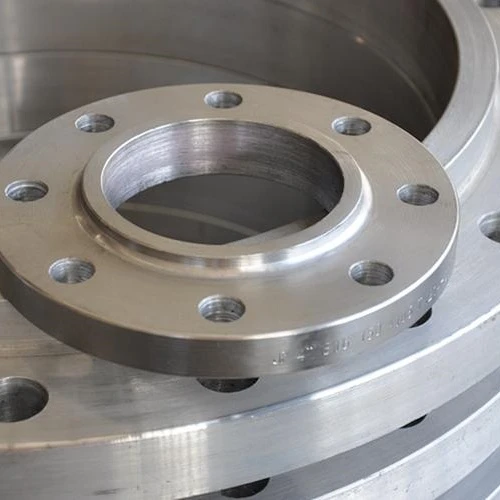
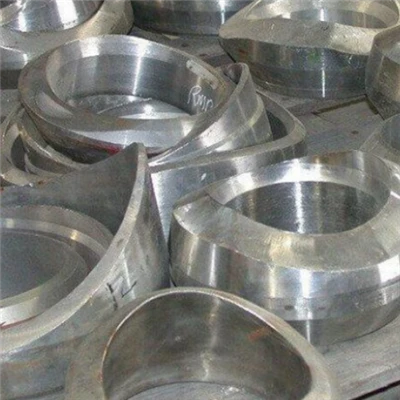
ASME B16.5 Aluminum Socket Weld Flange
Standard: ASME B16.5 (dimensions); ASME B31.3 Appendix L (rating basis); ASTM B247 (forging)
Technique: Forged, socket bored, faced and drilled to class
Surface treatment: Machined finish; gasket face Ra 3.2-6.3 µm
Outside diameter: NPS 1/2 - 2 standard (DN 15 - DN 50); NPS 3 and 4 on request
Wall thickness: Flange thickness 11.2 mm at NPS 1/2 Class 150, 19.1 mm at NPS 2 Class 150
Length: Socket depth 9.7 mm at NPS 1/2, 12.7 mm at NPS 1, 17.5 mm at NPS 2
MOQ: Flexible; small trial orders and large-volume orders both accepted
Lead time: 15 - 30 days from drawing confirmation
Certificate: EN 10204 3.1 per order; 3.2 and third-party inspection by arrangement
HS code: 7609.00
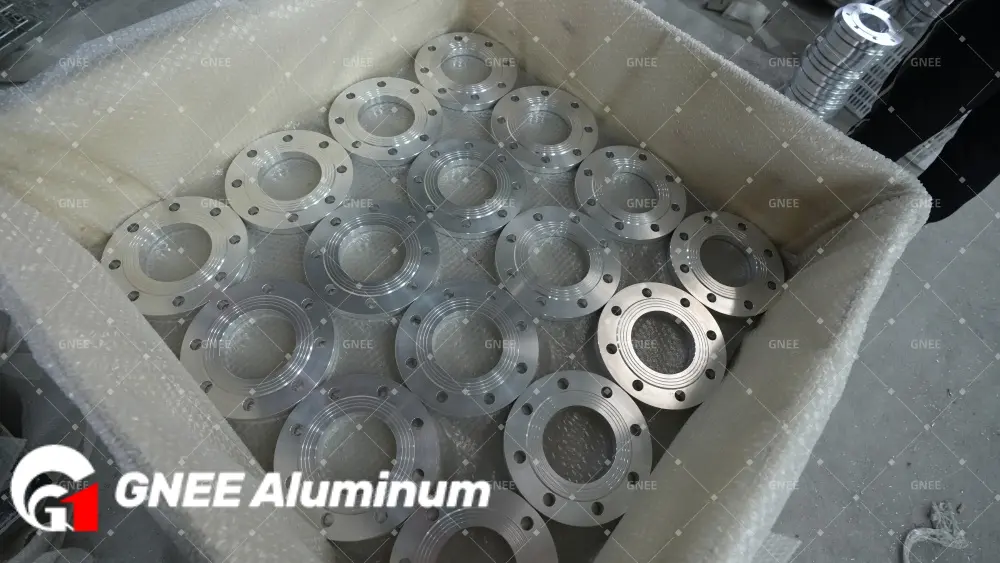
Transport package: Crates by NPS and class, heat-treated wood to ISPM 15, gasket face capped
Customer service is online. Enter the chat to get the latest quotation.
 Spot stock
 Customize
 Factory direct sale
 7 days delivery
Aluminum Socket Weld Flanges
GNEE Aluminum has supplied aluminum flanges since 2008 from China, and ships to more than 100 countries and regions. The socket weld flange is forged in 6061-T6, socket bored and faced to ASME B16.5, and rated under ASME B31.3 Appendix L for small bore aluminum lines.
The socket weld flange is the small bore flange of aluminum piping: the socket sets the alignment without a bevel, a root gap or a line-up clamp, and one fillet weld closes the joint. 6061-T6 carries most orders because it is the forged aluminum alloy with both the strength and a tabulated rating in the piping code.
Stock range is NPS 1/2 to 2 in Class 150, 300 and 600, with NPS 3 and 4 quoted on request, raised face or flat face, and the socket bored to the outside diameter and wall of the pipe that will be welded into it. Send the pipe specification with the class and quantity, and the reply carries the bore, the socket depth, the weight per piece and the price.
Send your requirements to GNEE to get the latest flange quotes.
Reference price of aluminum socket weld flanges
An aluminum flange is quoted as an SMM metal base plus a conversion charge, and on a socket weld flange the conversion is the larger part because every piece is forged, bored, faced and drilled. The figures below use the SMM A00 spot settlement of 22,950 CNY/t (about 3,441 USD/t at 6.67 CNY per USD) on 17 November 2026. Treat the result as a budgeting figure, not a firm offer.
| Alloy & Temper | NPS | Class | Type | Surface | SMM base, CNY/t | Conversion, CNY/t | Reference, CNY/t | Reference, USD/t |
|---|---|---|---|---|---|---|---|---|
| 6061-T6 | 1/2 | 150 | Forged, socket weld | Raised face | 22,950 | 12,000 | 34,950 | 5,240 |
| 6061-T6 | 1 | 150 | Forged, socket weld | Raised face | 22,950 | 10,500 | 33,450 | 5,015 |
| 6061-T6 | 2 | 150 | Forged, socket weld | Raised face | 22,950 | 9,500 | 32,450 | 4,865 |
| 6061-T6 | 1 | 300 | Forged, socket weld | Raised face | 22,950 | 11,000 | 33,950 | 5,090 |
| 6061-T6 | 2 | 300 | Forged, socket weld | Raised face | 22,950 | 10,000 | 32,950 | 4,940 |
| 6061-T651 | 2 | 300 | Forged, socket weld | Raised face | 22,950 | 10,800 | 33,750 | 5,060 |
| 3003-H112 | 2 | 150 | Forged, socket weld | Raised face | 21,500 | 9,500 | 31,000 | 4,648 |
They are given for comparison only - a contract in USD is converted at the exchange rate on the contract date, so the settled amount can differ from the figures shown here. CNY figures include 13% VAT. Conversion charges are indicative and market-dependent, and a small order is priced piece by piece because the setup cost does not fall with quantity.
What an aluminum socket weld flange is
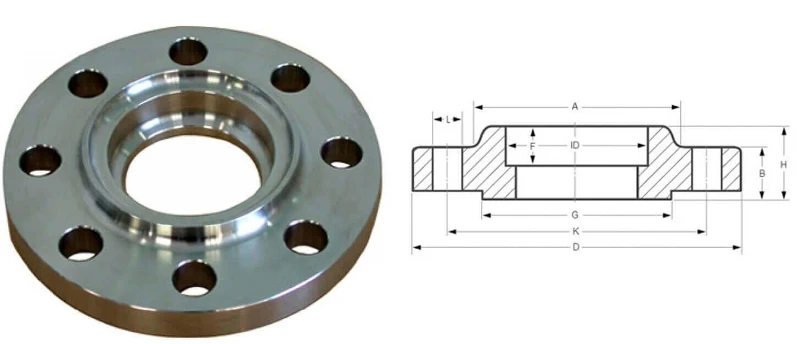
A socket weld flange has a counterbore cut into the back face. The bore runs through to the gasket face at the pipe size, and the counterbore behind it is larger and stops at a shoulder, so the pipe end goes in, meets the shoulder and takes one fillet weld on the outside of the body.
The outside shape is the same as a slip-on flange: same outside diameter, bolt circle, facing and class. A slip-on has a straight bore and takes two fillet welds, one at each face. The stepped bore gives one weld and stops the pipe in the same position on every joint.
Socket weld flange welding on aluminum pipe
Socket weld flange welding is a short operation, and most of the quality is decided before the arc starts. A qualified procedure runs in five steps.
- Cut and deburr - pipe end square to within half a degree, burr removed inside and out. A burr left on the end holds the pipe off the shoulder and closes the gap.
- Clean - oxide removed with a stainless steel brush kept for aluminum only, then wiped with acetone or isopropyl alcohol. The oxide film melts above 2,000 °C, so it is broken mechanically before welding.
- Fit up - pipe into the socket to the shoulder, marked, withdrawn about 1.5 mm, and the gap checked with a feeler gauge or the mark.
- Tack - three tacks at 120°, checked square to the flange face.
- Weld - one pass around the outside in one direction, arc kept on the thicker flange body and washed across to the pipe.
Aluminum socket weld flange materials and tempers
6061-T6 is the standard grade, forged to ASTM B247 and supplied with the temper confirmed on the certificate. The table gives the minimum properties of the product forms these flanges are made from.
| Grade and temper | Tensile strength | Yield strength | Modulus | Where it is used |
|---|---|---|---|---|
| 6061-T6 | 290 MPa min | 241 MPa min | 69 GPa | Standard grade for socket weld flanges, nozzles and instrument connections |
| 6061-T651 | 290 MPa min | 241 MPa min | 69 GPa | Thicker sections and larger sizes where flatness after machining matters |
| 5083-H112 | 275 MPa min | 125 MPa min | 71 GPa | Marine air, salt water adjacent duty and low temperature lines |
| 3003-H112 | 95 MPa min | 35 MPa min | 69 GPa | Low pressure water and utility lines; tabulated in Appendix L |
Minimum values for the product forms these grades are supplied in. Density runs 2.66 to 2.73 g/cm³ against 7.85 for carbon steel, so the flange weighs about a third of the steel part it replaces.
6061-T6 machines cleanly, holds a gasket face without smearing and welds with 4043 or 5356 filler. 5083-H112 is the marine and low temperature choice, with higher magnesium and better resistance in salt air; it is not one of the two alloys tabulated in Appendix L, so a 5083 flange is rated by project calculation. 3003-H112 is the low strength option and one of the two tabulated alloys, used on water and utility lines where the flange is sized by the standard.
Pressure and temperature ratings of aluminum socket weld flanges
The rating comes from ASME B31.3 Appendix L, which rates the socket weld form on its own line at a lower figure than the weld neck form.
| Alloy, temper and form | 100 °F | 150 °F | 200 °F | 250 °F |
|---|---|---|---|---|
| 6061-T6, socket weld, Class 150 | 185 | 180 | 175 | 175 |
| 6061-T6, socket weld, Class 300 | 480 | 475 | 465 | 450 |
| 6061-T6, socket weld, Class 600 | 960 | 945 | 935 | 905 |
| 3003-H112, socket weld, Class 150 | 40 | 40 | 35 | 35 |
| 3003-H112, socket weld, Class 300 | 105 | 100 | 95 | 95 |
| 3003-H112, socket weld, Class 600 | 205 | 200 | 195 | 185 |
Source: ASME B31.3-2018, Appendix L, Table L301.2U, Note (3) covering slip-on and socket welding flanges; pressures in psig. The 100 °F value applies down to −269 °C, linear interpolation between tabulated temperatures is permitted, and table L301.2M gives the same ratings in kPa. Values apply to forged flanges conforming to ASTM B247.
A 6061-T6 weld neck flange rates 275 psig in Class 150, 720 psig in Class 300 and 1440 psig in Class 600, while the socket weld form rates 185, 480 and 960 psig in the same alloy, temper and class, about two thirds of that figure. The gap is the weld: a full penetration butt weld at a hub, against a single fillet weld with its root inside a socket.
Two limits sit outside the table. The allowable stress basis for 6061-T6 runs to 204 °C, and above that there is no tabulated value. The ratings also apply to forged flanges of the listed alloys, so a flange machined from plate is qualified by calculation under the governing code.
Specification of aluminum socket weld flanges
| Product | Aluminum socket weld flange, |
|---|---|
| Alloy and temper | 6061-T6 standard; 6061-T651, 5083-H112 and 3003-H112 on request |
| Dimensional standard | ASME B16.5, NPS 1/2 to 4; EN 1092-4 on request for PN designated lines |
| Rating basis | ASME B31.3 Appendix L, Table L301.2U, Note (3), for forged 6061-T6 and 3003-H112 |
| Pressure class | Class 150, 300, 600 |
| Nominal size | NPS 1/2, 3/4, 1, 1-1/4, 1-1/2, 2 standard; NPS 3 and 4 on request |
| Socket bore | Machined to the ordered pipe outside diameter; 22.4 mm at NPS 1/2, 62.0 mm at NPS 2 in Class 150 |
| Socket depth | Per ASME B16.5; 9.7 mm at NPS 1/2, 12.7 mm at NPS 1, 17.5 mm at NPS 2 |
| Facing | Raised face 1.6 mm standard; flat face to order; RTJ quoted to drawing |
| Surface finish | Gasket face Ra 3.2–6.3 µm; machined elsewhere, mill finish on unworked surfaces |
| Marking | Manufacturer mark, ASTM B247 with alloy and temper, rating Class, B31.3L and NPS on the flange edge per MSS SP-25; heat number added |
| HS code | 7609.00 (aluminum pipe fittings and flanges); confirm with the destination customs tariff |
ASME B16.5 dimensions of an aluminum socket weld flange, Class 150
Outside diameter, thickness and drilling come from the standard and are shared with the slip-on flange of that size, which is why the two bolt to the same mating flange.
| NPS | Flange OD, mm | Thickness, mm | Socket bore, mm | Socket depth, mm | Bolt circle, mm | Bolts | Hole dia., mm |
|---|---|---|---|---|---|---|---|
| 1/2 | 88.9 | 11.2 | 22.4 | 9.7 | 60.3 | 4 | 15.9 |
| 3/4 | 98.6 | 12.7 | 27.7 | 11.2 | 69.9 | 4 | 15.9 |
| 1 | 108.0 | 14.2 | 34.5 | 12.7 | 79.4 | 4 | 15.9 |
| 1-1/4 | 117.3 | 16.0 | 43.2 | 14.2 | 88.9 | 4 | 15.9 |
| 1-1/2 | 127.0 | 17.5 | 49.5 | 16.0 | 98.6 | 4 | 15.9 |
| 2 | 152.4 | 19.1 | 62.0 | 17.5 | 120.7 | 4 | 19.1 |
| 3 | 190.5 | 23.9 | 90.7 | 20.6 | 152.4 | 4 | 19.1 |
Dimensions in millimetres from ASME B16.5 Class 150 socket welding flanges, raised face. Socket bore and depth are nominal and confirmed against the pipe that will be welded into the flange.
Class 300 aluminum socket weld flange dimensions
Class 300 keeps the same socket bore and depth for each size and grows in outside diameter, thickness and bolt size. A 2 in Class 300 flange is 165.1 mm across against 152.4 mm in Class 150, and carries eight bolts against four.
| NPS | Flange OD, mm | Thickness, mm | Socket bore, mm | Socket depth, mm | Bolt circle, mm | Bolts | Hole dia., mm |
|---|---|---|---|---|---|---|---|
| 1/2 | 95.3 | 14.2 | 22.4 | 9.7 | 66.7 | 4 | 15.9 |
| 3/4 | 117.3 | 16.0 | 27.7 | 11.2 | 82.6 | 4 | 19.1 |
| 1 | 124.0 | 17.5 | 34.5 | 12.7 | 88.9 | 4 | 19.1 |
| 1-1/4 | 133.4 | 19.1 | 43.2 | 14.2 | 98.6 | 4 | 19.1 |
| 1-1/2 | 155.4 | 20.6 | 49.5 | 16.0 | 114.3 | 4 | 22.4 |
| 2 | 165.1 | 22.4 | 62.0 | 17.5 | 127.0 | 8 | 19.1 |
Dimensions in millimetres from ASME B16.5 Class 300 socket welding flanges, raised face. Class 600 shares the Class 300 drilling from NPS 1/2 to 2 and is thicker; that table is issued with the drawing.
The bore comes back wrong most often, because it follows the pipe and not the nominal size. A 2 in aluminum pipe is 60.3 mm outside diameter at any schedule. Order the flange with the pipe outside diameter and wall in millimetres and the socket is machined to that pair.
Where aluminum socket weld flanges are used
Instrument and impulse lines, gauge and transmitter connections, drain and vent branches, sample points, compressed air drops, nitrogen and inert gas headers, water treatment skids, and the small nozzles on aluminum tanks and heat exchangers. The self-aligning socket is what makes it work on thin wall tube.
Aluminum socket weld flange compared with weld neck and slip-on flange
Three flanges do the same job on a small bore line and they differ on price, on inspection and on rating. The table puts the differences side by side for 6061-T6.
| Flange | Joint to the pipe | Rating, Class 150 | Usual size range | Examination | Cost index |
|---|---|---|---|---|---|
| Socket weld | Single fillet weld, pipe in a socket | 185 psig | NPS 1/2 to 2 | Visual and penetrant | 100 |
| Slip-on | Two fillet welds, one per face | 185 psig | NPS 1/2 to 24 | Visual and penetrant | 95 |
| Weld neck | Full penetration butt weld at a hub | 275 psig | NPS 1/2 to 24 | Visual, penetrant, radiography, ultrasonic | 130 |
Ratings from ASME B31.3 Appendix L for forged 6061-T6 at 100 °F, Note (2) for weld neck and Note (3) for socket weld and slip-on. Cost index is relative for the same size and class, indicative and market-dependent.
Socket weld and slip-on carry the same rating because both are fillet welded. The socket weld holds the fit-up: the shoulder stops the pipe in the same place on every joint and squares it to the face, which counts on thin wall tube. The slip-on costs less and can be welded from both sides where access allows. The weld neck is the choice where the joint has to be radiographed or the line is cyclic.
Custom aluminum socket weld flanges to drawing
Where the standard size does not fit, the flange is machined to the drawing: a socket bored to a non-standard tube outside diameter, a deeper socket for a set insertion, a bolt pattern outside B16.5, a reducing socket, a flat face on a class that is normally raised, or a flange with the socket on one size and the bore on another.
The socket bore and the gasket face are cut in the same set-up so the socket runs true to the face, the bolt circle is drilled after the facing, and the depth is checked against the shoulder with a depth gauge. The order line carries outside diameter, thickness, bolt circle and hole size, facing, socket bore and depth, alloy and temper, quantity, and the inspection requirement.
Send us your drawings to receive the most professional service.
Inspection and testing of aluminum socket weld flanges
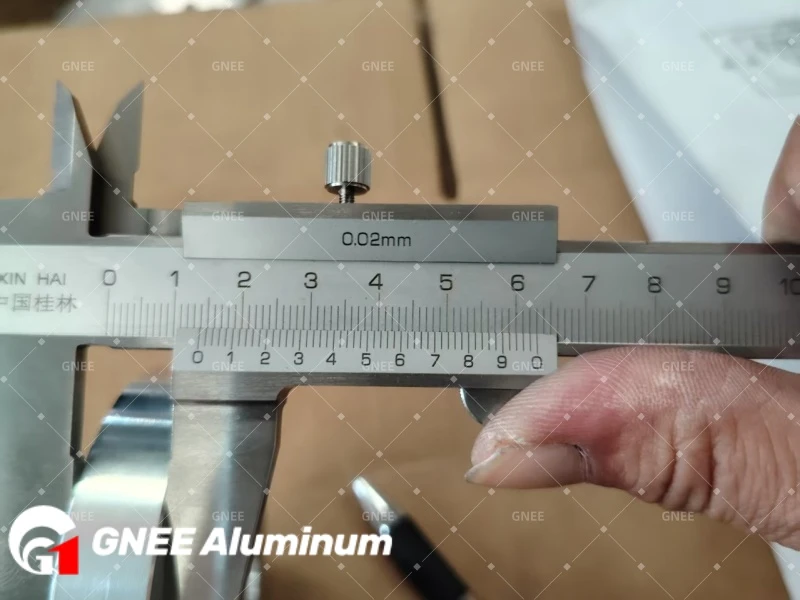
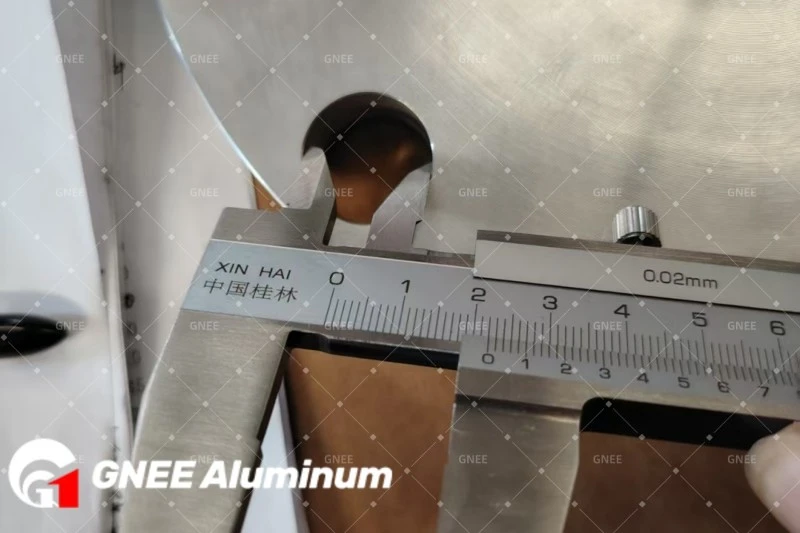
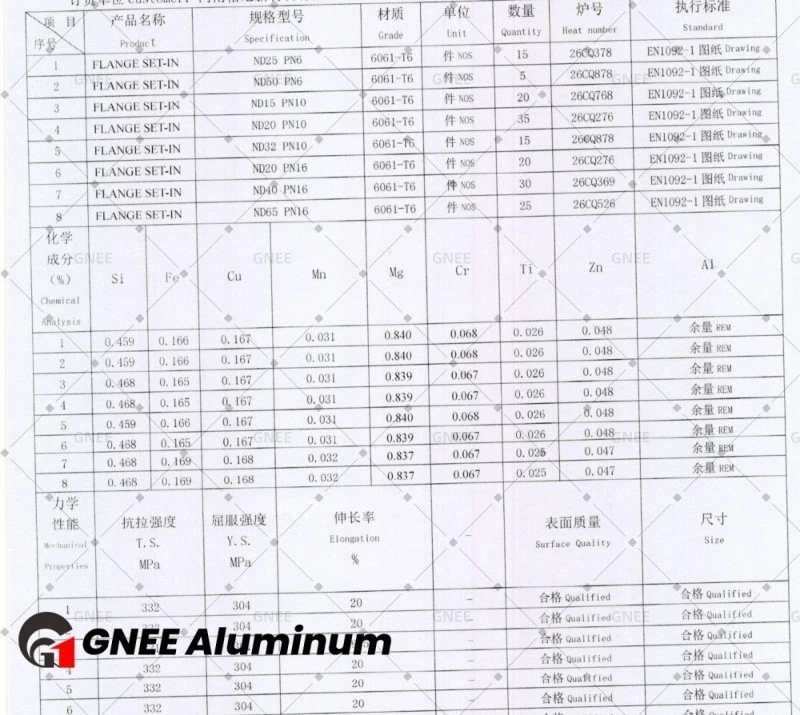
Each order is released against a dimensional record and a material certificate, checked flange by flange, because a mixed order of six sizes is six different parts.
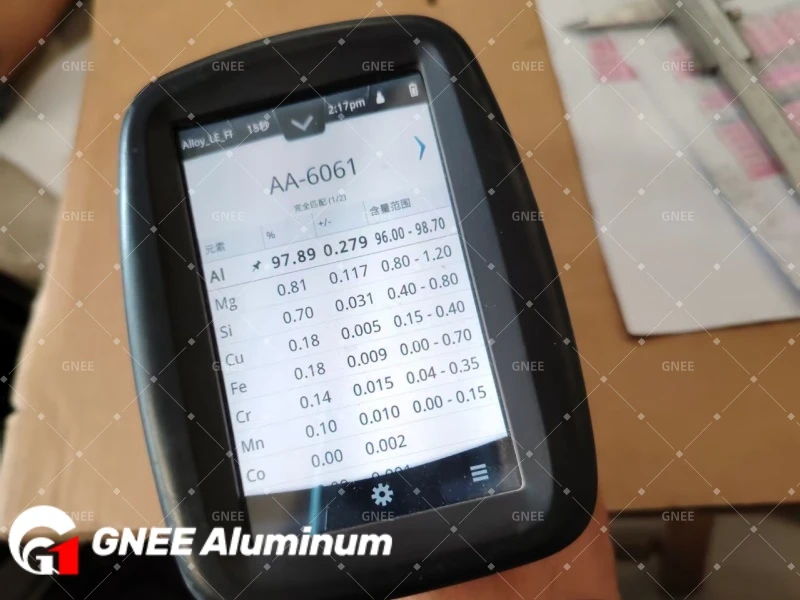
- Chemical composition - spectrometer check on the finished flange confirms 6061 (Mg 0.8–1.2%, Si 0.4–0.8%) and rules out a substitution that looks identical from outside.
- Mechanical properties - tensile and hardness from the certificate confirm T6, which counts on a part machined thin at the socket wall.
- Dimensional check - outside diameter, thickness, bolt circle, hole count and size, socket bore, socket depth, and the squareness of the socket to the face.
- Facing - raised face height, finish in Ra, and no chatter marks, dents or embedded iron at the gasket line.
- Traceability - heat number struck on the flange and carried on the certificate, so a part removed at site traces back to its cast.
Documents are issued as an EN 10204 3.1 inspection certificate with the dimensional record and a packing list keyed to the purchase order lines. Third-party inspection by SGS, BV or the client's surveyor, and a 3.2 certificate, are arranged when the order asks for them at quotation.
Packaging of aluminum socket weld flanges
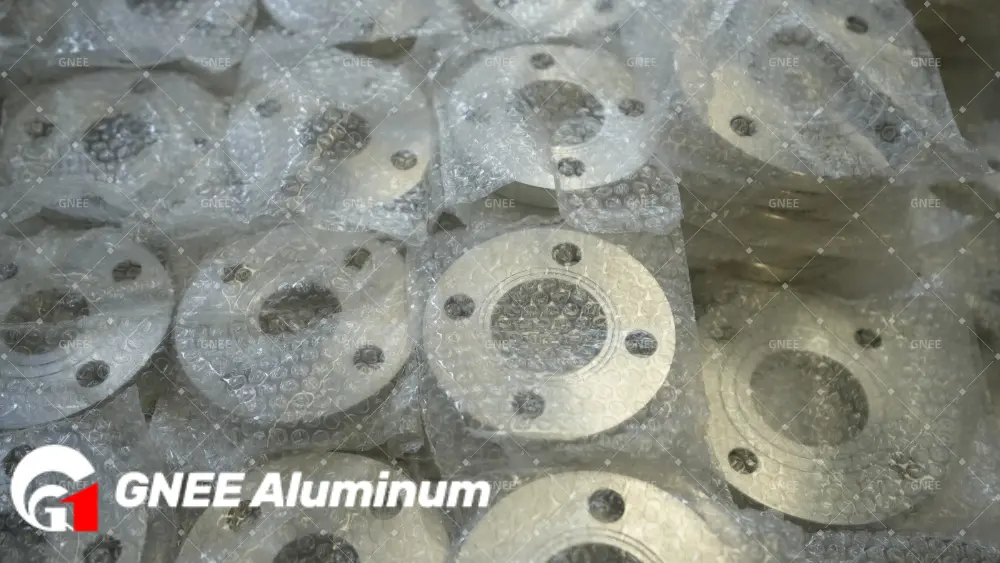
Aluminum marks easily and the gasket face is the surface that matters, so the packing job is to keep machined faces apart and the crate from shifting.
- Crated by size and class - Each crate marked with NPS, class, alloy, heat number and purchase order line, so the consignee books material in without opening every box.
- Gasket face capped - Faces stacked back to back with a divider, the raised face covered, and the bundle strapped so the sockets do not knock together in transit.
- Wood treated to ISPM 15 - Heat treated wood or plywood cases, marked for the phytosanitary requirement applied at the port of entry.
- Documents with the shipment - Commercial invoice, packing list, bill of lading, certificate of origin and inspection certificate, prepared before loading.
Small bore flanges ship in small volume, so a mixed order is consolidated into one crate with the sizes separated and labelled.
About GNEE
GNEE Aluminum has supplied aluminum and aluminum products since 2008 from Anyang, Henan, and ships to more than 100 countries and regions.
Product forms in one supply: plate, sheet, coil, foil, bar, tube, extruded profile, fittings and flanges.
Machining on site: turning, boring, facing, drilling, socket boring and bevel preparation, so a flange and its mating pipe follow the same drawing revision.
Forging to ASTM B247 with the alloy and temper certified on the finished part.
Export packing and documents for sea freight, including ISPM 15 wood and certificate sets keyed to the order lines.
Request a quote for aluminum socket weld flanges
Send the size and class, the alloy and temper, the pipe outside diameter and wall, the facing, the quantity and any inspection requirement. Where the socket has to match tube already on site, give the measured outside diameter, because the bore is cut to that number.
Commercial terms: MOQ flexible, so both small trial orders and large-volume orders including full container loads and long-term contracts are accepted. Lead time 15–30 days after drawing confirmation. FOB, CIF, T/T and L/C terms. Every inquiry is answered within 24 hours with the availability, the socket dimensions and the certificate scope for that order.
send the pipe specification with the class and quantity, and the reply comes back with the socket bore, the weight per piece and the price for that flange.
Ask for a quotation on aluminum socket weld flanges
FAQ
Q: What is an aluminum socket weld flange?
A: A pipe flange with a counterbore machined into the back face. The pipe goes into that socket to the shoulder, is pulled back about 1.5 mm, and is fixed with one fillet weld around the outside. The socket sets the alignment, so the joint needs no bevel and no root gap.
Q: What is the difference between a socket weld flange and a slip-on flange?
A: A slip-on has a straight bore and the pipe passes through it, with a fillet weld on each face. A socket weld flange has a stepped bore with a shoulder, and the pipe stops inside it with one weld on the back face. Both carry the same rating in ASME B31.3 Appendix L.
Q: What is the pressure rating of a 6061-T6 aluminum socket weld flange?
A: Under ASME B31.3 Appendix L, a forged 6061-T6 socket weld flange rates 185 psig in Class 150, 480 psig in Class 300 and 960 psig in Class 600 at 100 °F. At 250 °F the same flanges rate 175, 450 and 905 psig. The weld neck form in the same alloy and class rates 275, 720 and 1440 psig.
Q: How is socket weld flange welding carried out on aluminum pipe?
A: The pipe end is cut square, deburred, brushed with a stainless steel brush kept for aluminum and degreased. It goes into the socket, is withdrawn about 1.5 mm, tacked three times and welded with gas tungsten arc welding on alternating current using 4043 or 5356 filler. The fillet leg is at least 1.09 times the nominal pipe wall.
Q: Can a socket weld flange joint be radiographed?
A: No. The joint is a fillet weld with its root hidden inside the socket, so radiography gives no readable image. Inspection is visual plus liquid penetrant, which suits aluminum because the alloy is non-magnetic and magnetic particle testing does not apply. A weld neck flange on a butt weld is the joint that supports radiography.
Q: Can you machine aluminum socket weld flanges to a drawing?
A: Yes. Socket bore, socket depth, outside diameter, bolt circle, facing and alloy are all set from the drawing or a dimension list. Send the pipe outside diameter and wall, because the socket is bored to the pipe that will be welded into it.
Hot Tags: asme b16.5 aluminum socket weld flange, China asme b16.5 aluminum socket weld flange manufacturers
You Might Also Like


Send Inquiry